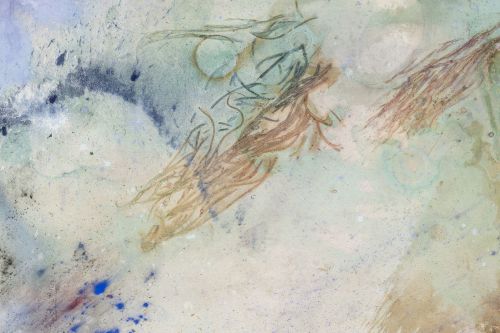
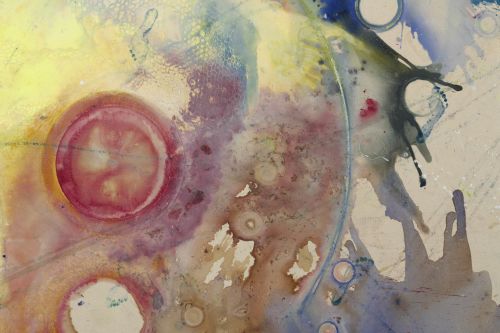
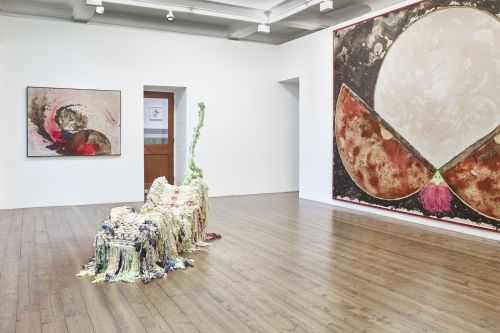
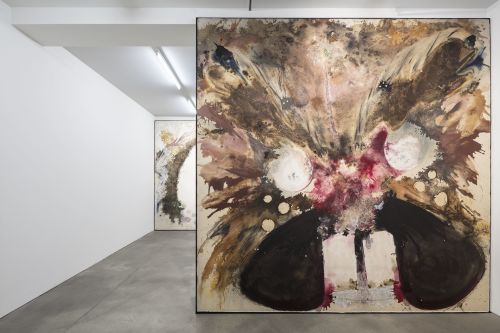
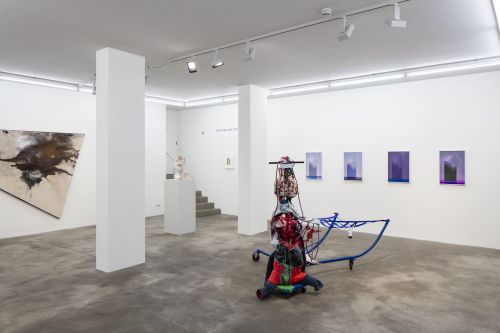
Lucy Dodd (*1981) has created a painterly universe that can be understood as a radical reinterpretation of lyrical abstraction and action painting. Her works—biomorphic topographies of random and intentional marks—resemble painted evocations of cosmological and spiritual landscapes. They are characterized by an emphatically process-oriented approach to painting and the use of unusual color pigments, which often derive from nature and Dodd’s personal environment. Exhibitions by the artist, who lives on the Moray Coast, in Scotland, often incorporate elements of ritual and theater.


Lucy Dodd
The good, the true and the beautiful
September 18–October 24, 2026
London
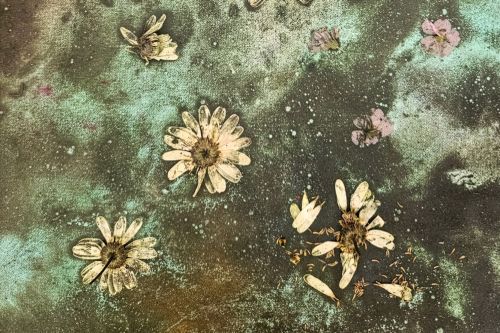
At the centre of Lucy Dodd’s forthcoming solo exhibition The good, the true and the beautiful at Sprüth Magers, London, stands the figure of Diana, the woodland huntress on earth and luminous celestial body in the sky. The figure carries both collective resonance and personal significance for Dodd, whose grandmother bore the name Diana, and extends outward to Diana Spencer, Princess of Wales: a mirror image rather than an equivalent. Where the goddess refused marriage, claimed her freedom and destroyed those who transgressed it, the Princess was hunted for the same desire for autonomy—a dynamic that remains violently unresolved today. Having recently relocated her life and studio from upstate New York to the Moray Coast in Scotland, Dodd draws the materials of her new surroundings directly into the work. Peat collected from the shores of the Findhorn River, copper ink, spirulina, cochineal, local herbs and powdered meteorite form a palette that contains, in material fact, the matter of the forest floor and traces of the cosmos above it. Employing circular formats for the first time, Dodd condenses multiple registers into a single geometry: lunar disc, huntress’ target, eye, breast. Grounding the mythological throughout are indexical traces, such as a child’s footprint or a brush set down and abandoned, leaving behind its impression in the pigment.