Robert Crumb
June 23–July 29, 2006
Munich

American artist and illustrator Robert Crumb is considered the founding father of underground comics. The movement started in the United States in the 1960s, where it emerged as a counterweight to the commercial comics industry.

Crumb draws his characters from social observations and current events, rendering them meticulously with an affectionate, if unsparing eye. It is a gaze he has also invariably turned on himself, to the extent that a number of his figures are recognizable alter-egos of the artist.

Crumb’s points of focus include the United States (the country of his birth, he is critical of the American way of life), sexuality and social satire. His characters, embodiments of the anti-establishment in the 1960s and ‘70s, have always drawn heavy controversy on account of their perceived sexual and political offensiveness. Comic strips show famed characters Mr. Natural, Angelfood McSpade, Honeybunch, and Fritz the Cat—loudmouthed, brilliant, drugged-out, anti-social, perpetually horny creatures—pursuing their erotic fantasies. Crumb has the characters live out his own fears, desires, fantasies, drug experiences, and fetishes, and often inserts himself as a figure in the scene.

The artist’s depictions of women as superwomen with monstrous legs and massive backsides have been a particular flashpoint, drawing accusations of sexism. Crumb has described the images as indicative of his fear of women—as further suggested by portrayals of himself as a skinny, lecherous old man or down-and-out loser.

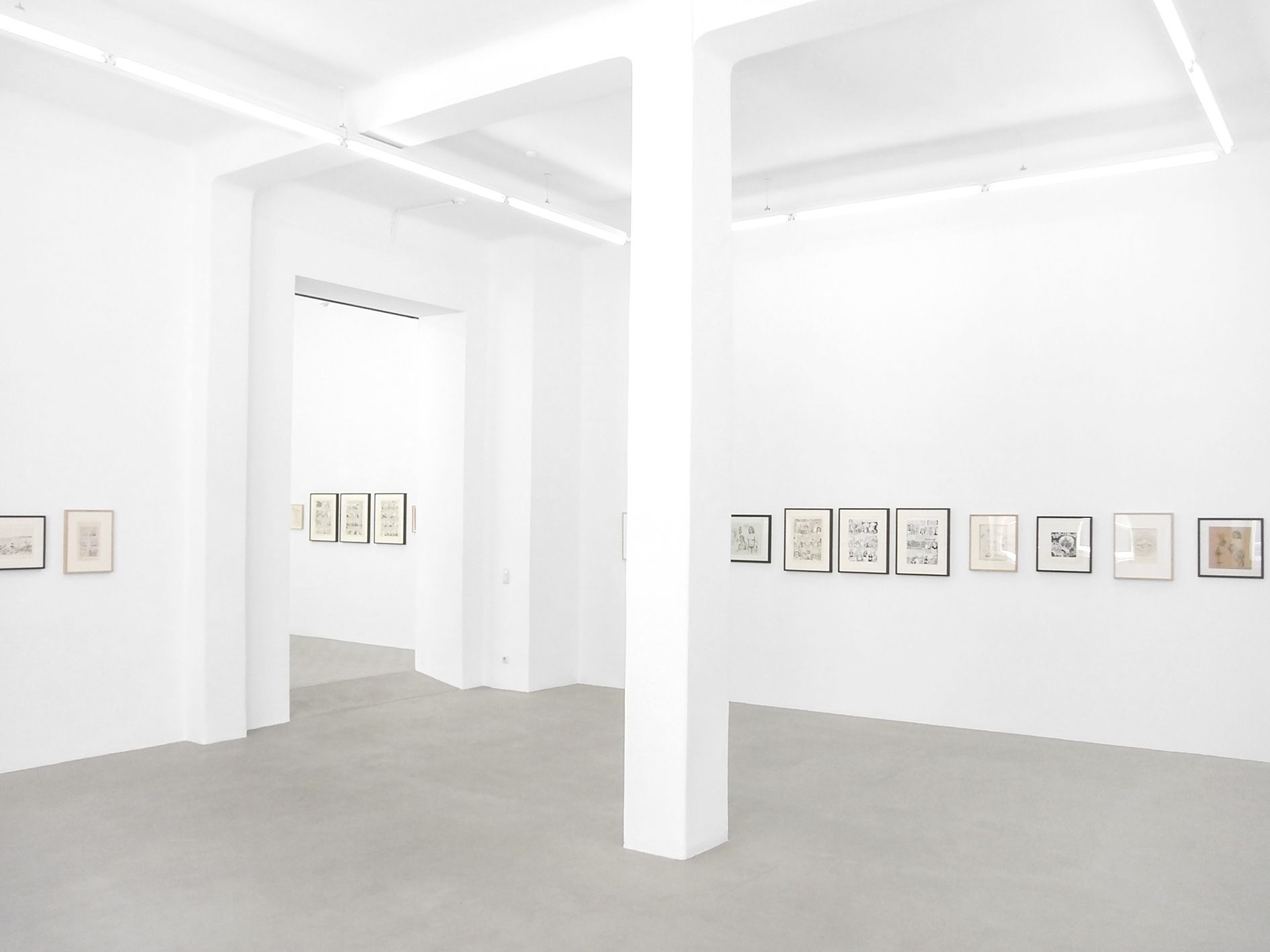
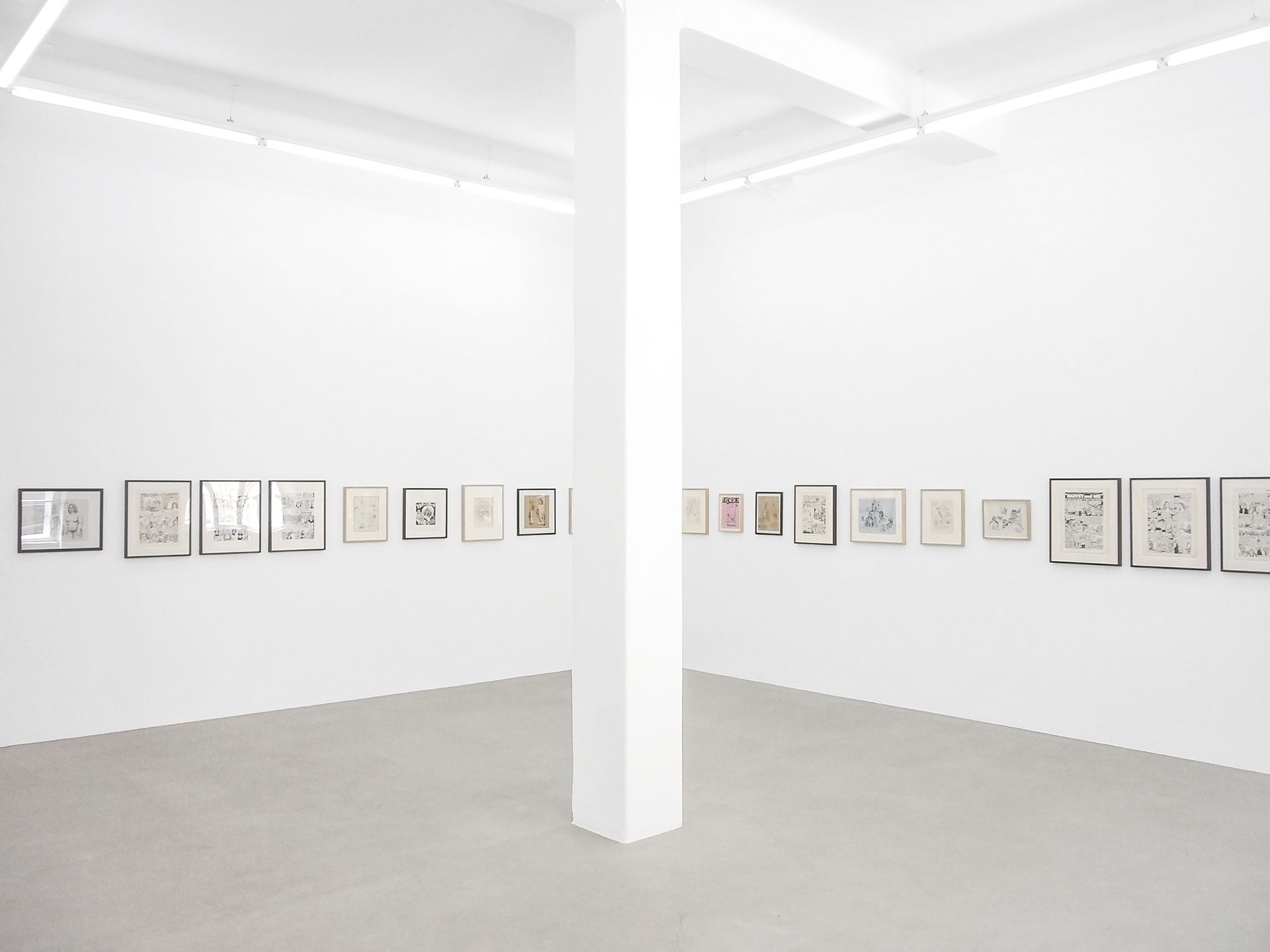
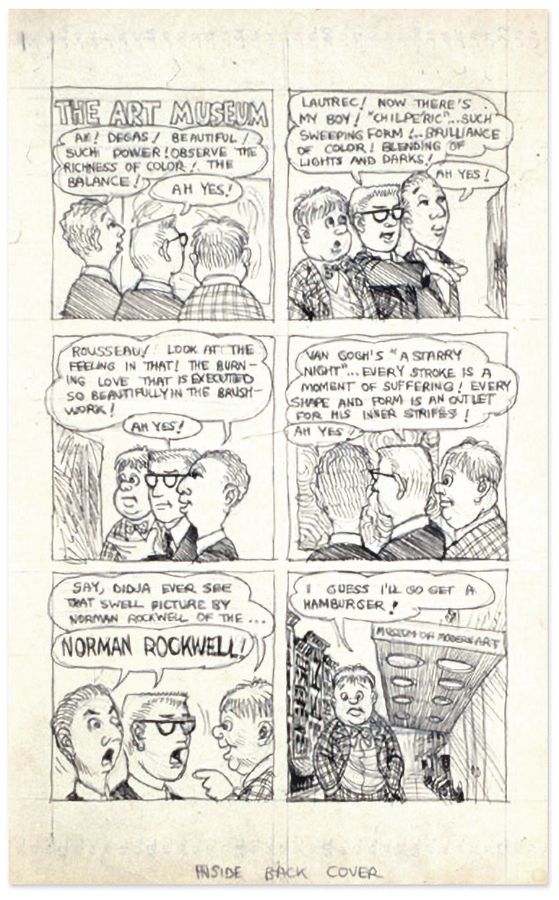
A solo exhibition of Robert Crumb’s work at Sprüth Magers Projekte features a selection of drawings from the 1960s and ‘70s to 2003, in formats ranging from multi-page and shorter comic strips to vignettes, scenes with or without text, sketches, and type studies.


Read more

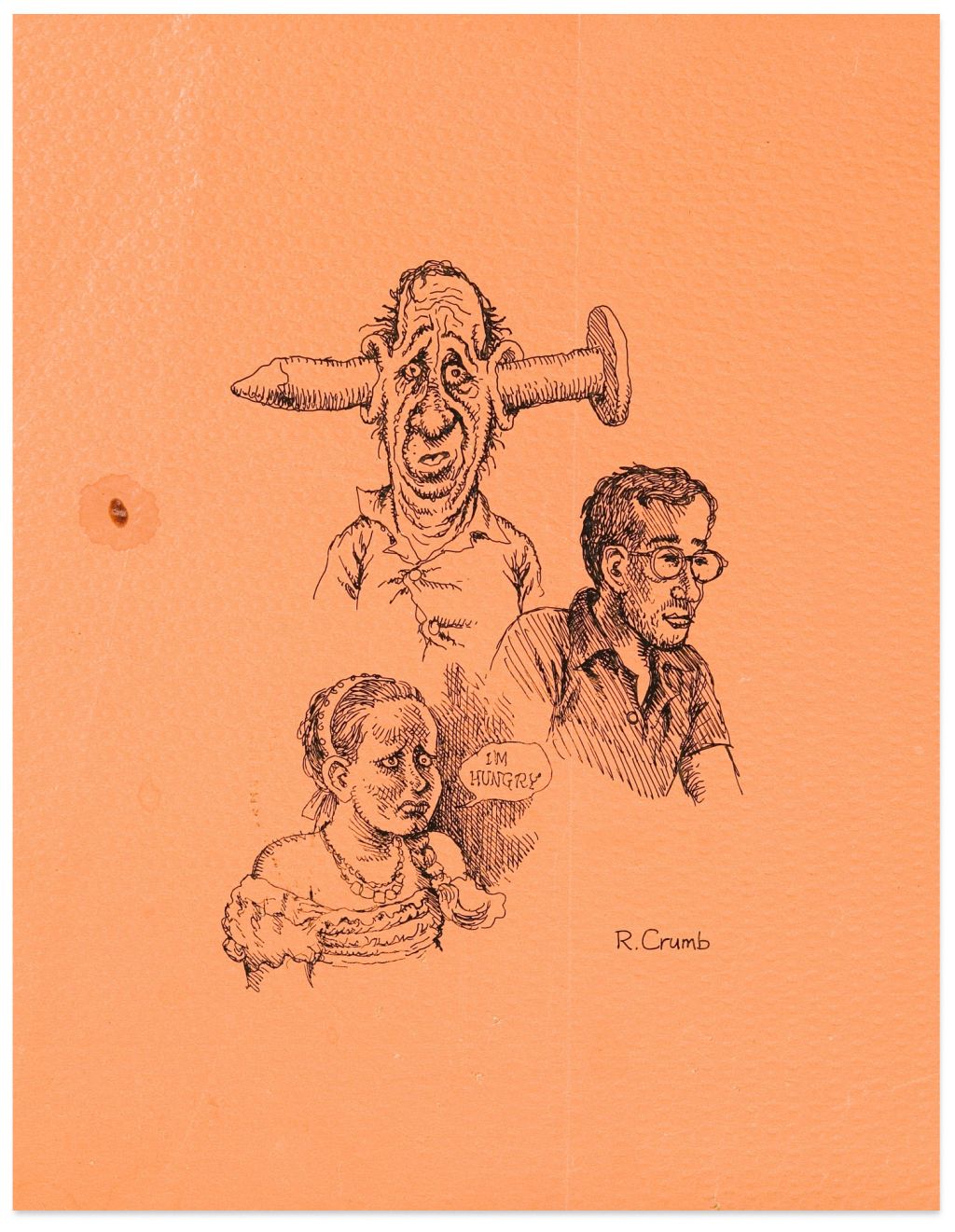
Crumb’s style is distinguished by a tight diagonal hatching, a technique that allows him to fill areas without inking them in completely and also adds a sculptural quality. Adding to the drawings’ allure is their extreme fetish for detail, regardless of where or on what they were drawn. Exemplifying this latter quality are the so-called placemat drawings; Crumb drew these on paper placemats from his favorite restaurants—between sauce and grease stains, but with biting precision nonetheless.

Robert Crumb was born in Philadelphia in 1943 and lives and works in Sauve, in the Languedoc-Roussillon region of France. His work was the subject of a solo exhibition at Museum Ludwig, Cologne in 2004—a presentation that naturally drew questions about the connection between comics and art, or the “art-worthiness” of his work. His radical left-wing, subversive attitude and disregard for boundaries have made him a hero to many younger artists, particularly those of a generation that no longer cares to distinguish between types of art or hierarchize cultural output.
 

Installation Views
Robert Crumb – Robert Crumb – Munich
Robert Crumb
Installation view, Sprüth Magers Projekte, Munich, June 23–July 29, 2006

Robert Crumb
Installation view, Sprüth Magers Projekte, Munich, June 23–July 29, 2006

Robert Crumb – Robert Crumb – Munich
Robert Crumb
Installation view, Sprüth Magers Projekte, Munich, June 23–July 29, 2006

Robert Crumb
Installation view, Sprüth Magers Projekte, Munich, June 23–July 29, 2006

Robert Crumb – Robert Crumb – Munich
Robert Crumb
Installation view, Sprüth Magers Projekte, Munich, June 23–July 29, 2006

Robert Crumb
Installation view, Sprüth Magers Projekte, Munich, June 23–July 29, 2006

" alt="" />
Details

Robert Crumb
Installation view, Sprüth Magers Projekte, Munich, June 23–July 29, 2006

Robert Crumb
Installation view, Sprüth Magers Projekte, Munich, June 23–July 29, 2006

Robert Crumb
Installation view, Sprüth Magers Projekte, Munich, June 23–July 29, 2006

Details
icon_fullscreen
1 of 3
Exhibited Works
Robert Crumb – Robert Crumb – Munich
Robert Crumb
Patricia Pig, 1996

Robert Crumb
Patricia Pig, 1996
Tinte auf Papier
24 × 32 cm

Robert Crumb – Robert Crumb – Munich
Robert Crumb
El Sombrero, 2001

Robert Crumb
El Sombrero, 2001
Tinte und Deckweiß auf Papier
25 × 34 cm

Robert Crumb – Robert Crumb – Munich
Robert Crumb
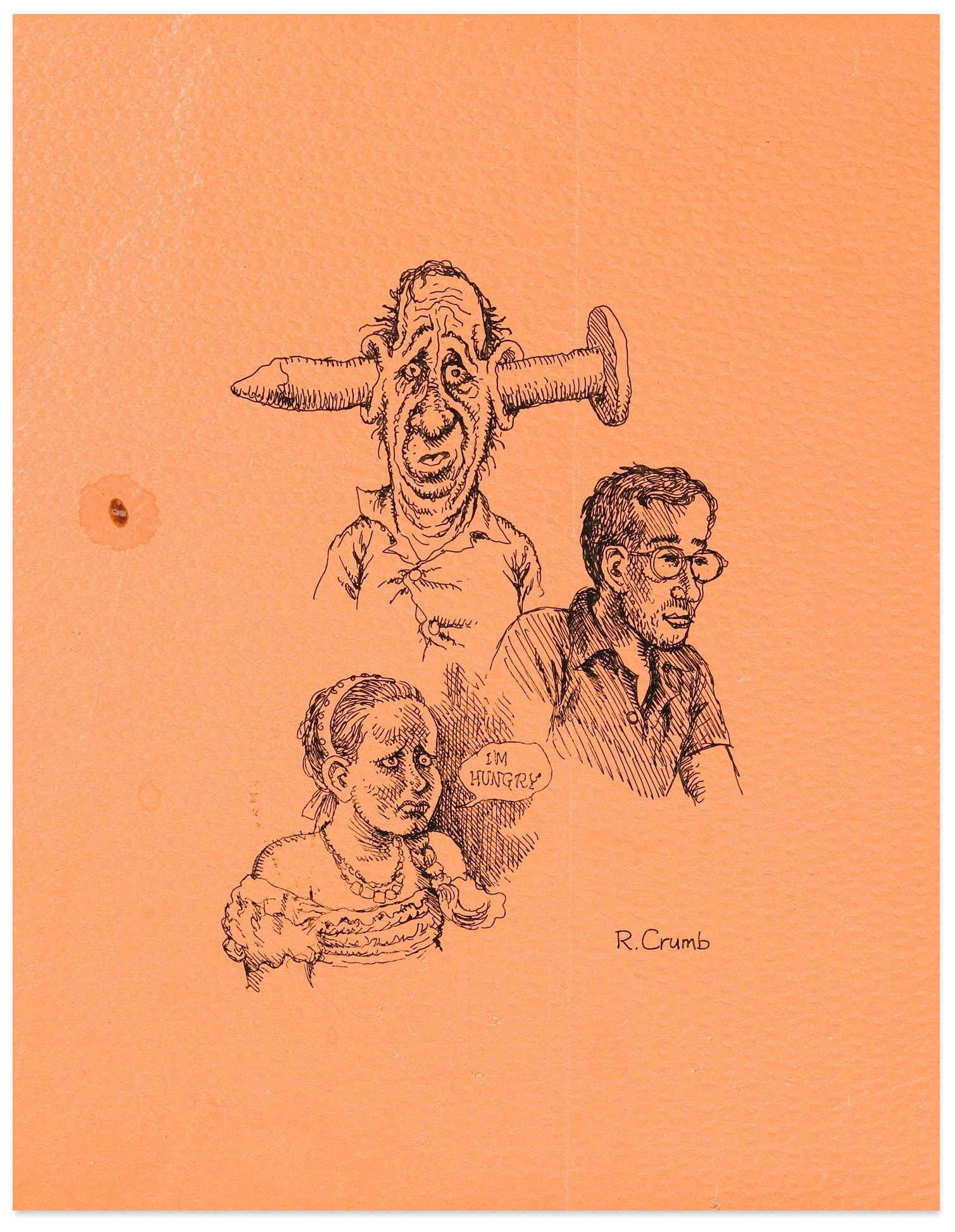
I‘m Hungry

Robert Crumb
I‘m Hungry
Tinte auf placemat
30 × 23.5 cm

Robert Crumb – Robert Crumb – Munich
Robert Crumb
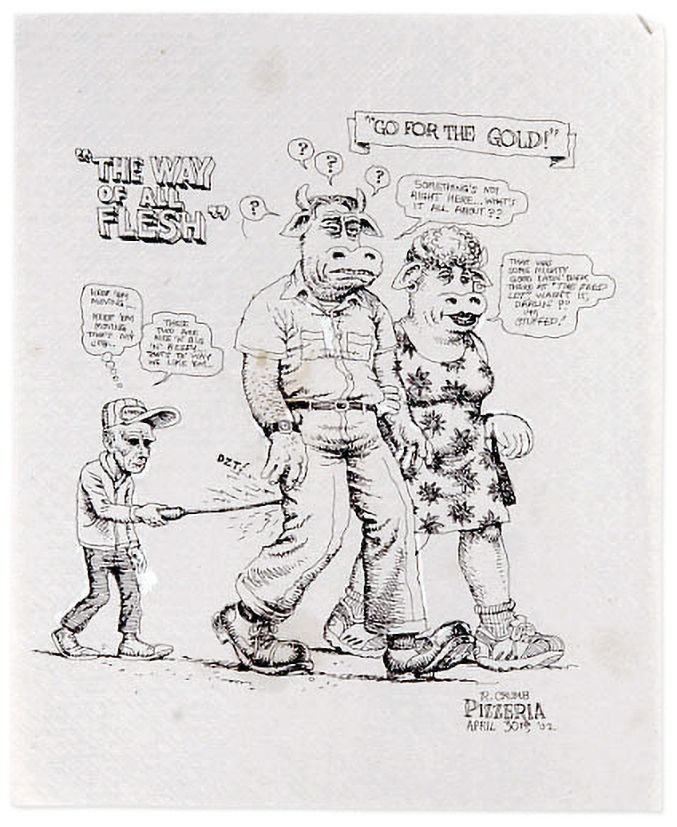
The Way of All Flesh, 2003

Robert Crumb
The Way of All Flesh, 2003
Tinte und Deckweiß auf Papier
30.5 × 24.5 cm

Robert Crumb – Robert Crumb – Munich
Robert Crumb
Judy Seigal, 1960er Jahre

Robert Crumb
Judy Seigal, 1960er Jahre
Tinte auf Papier
26 × 19.5 cm

Robert Crumb – Robert Crumb – Munich
Robert Crumb
Asper Oggus, 1969

Robert Crumb
Asper Oggus, 1969
Tinte auf Papier
24.5 × 19.5 cm

Robert Crumb – Robert Crumb – Munich
Robert Crumb
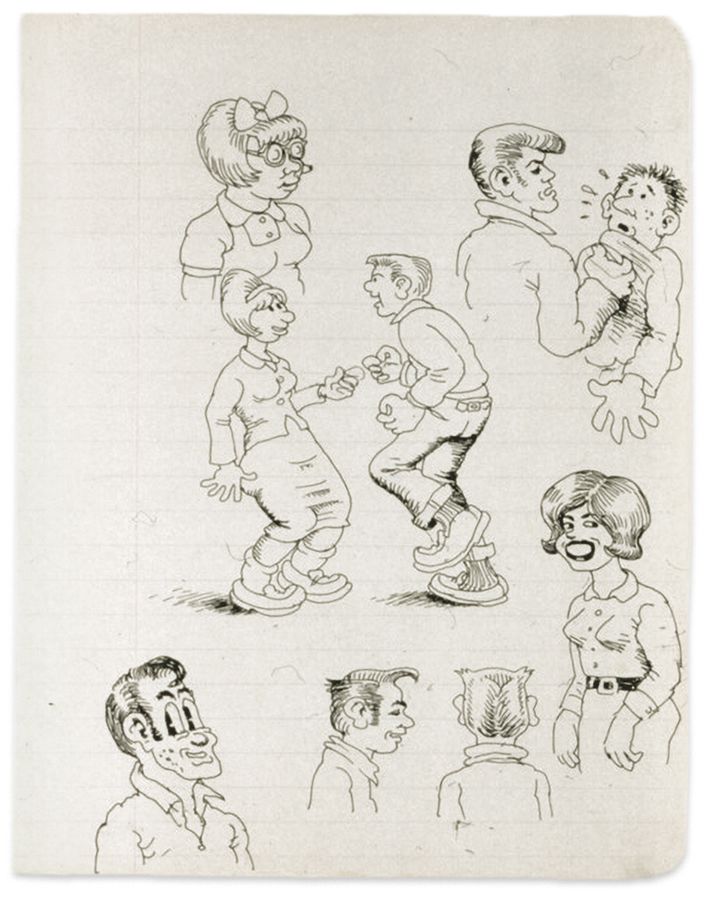
Dancing couple with portraits, 1960er Jahre

Robert Crumb
Dancing couple with portraits, 1960er Jahre
Tinte auf Papier
24.5 × 19.2 cm

Robert Crumb – Robert Crumb – Munich
Robert Crumb
The Art Museum, 1960er Jahre

Robert Crumb
The Art Museum, 1960er Jahre
Tinte auf Papier
25.2 × 16 cm

Robert Crumb – Robert Crumb – Munich
Robert Crumb
"La Belle Manouche" Art for Primitifs Du Futur C.D. "Trop de Routes, Trop de Trains", 1994

Robert Crumb
'La Belle Manouche' Art for Primitifs Du Futur C.D. 'Trop de Routes, Trop de Trains', 1994
Tinte und Deckweiß auf Papier
29 × 28 cm

Robert Crumb – Robert Crumb – Munich
Robert Crumb
How does it figure, Ed?, 1960er Jahre

Robert Crumb
How does it figure, Ed?, 1960er Jahre
Tinte auf Papier
24.5 × 19.2 cm

Robert Crumb – Robert Crumb – Munich
Robert Crumb
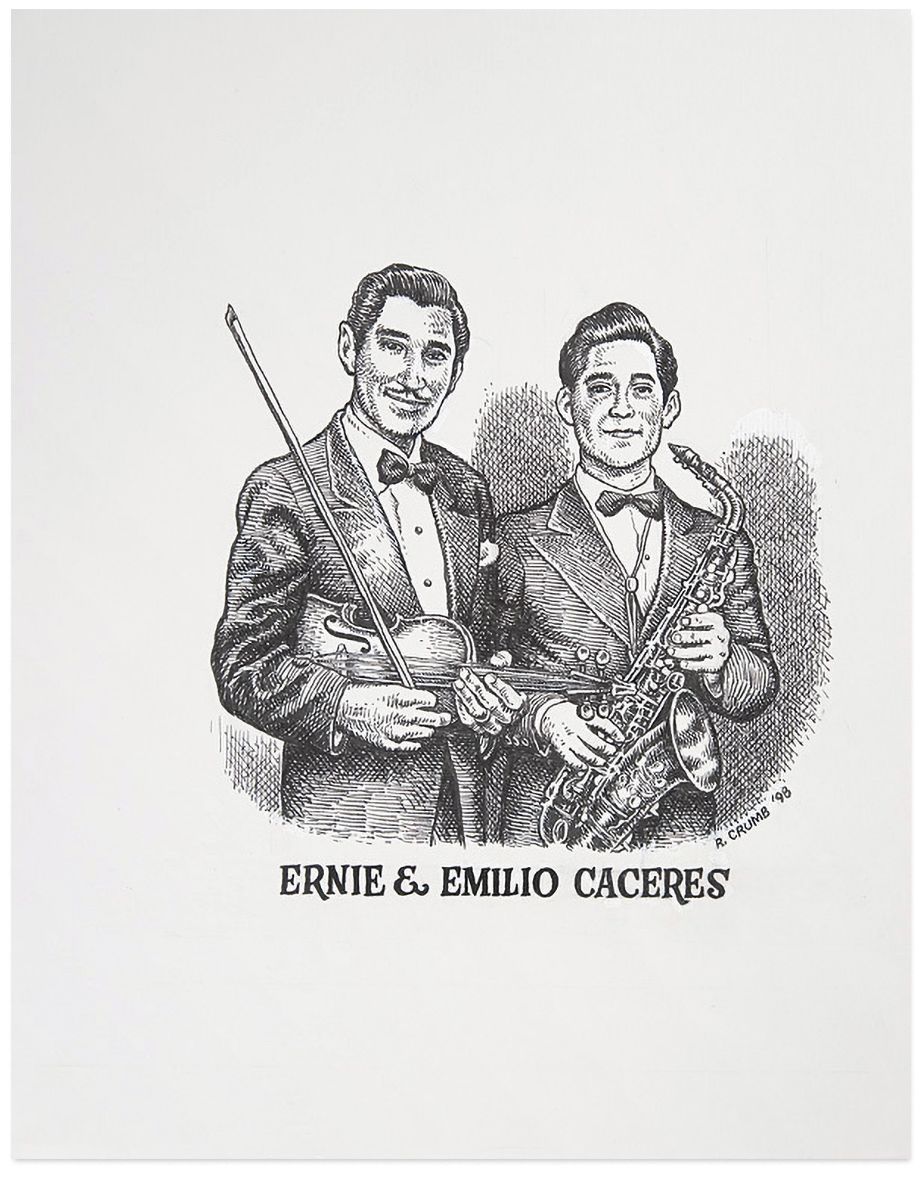
Ernie & Emilio Caceres, 1998

Robert Crumb
Ernie & Emilio Caceres, 1998
Tinte und Deckweiß auf Papier
35.5 × 28 cm

Robert Crumb – Robert Crumb – Munich
Aline Kominsky-Crumb
Harvey & Me, 2004

Aline Kominsky-Crumb
Harvey & Me, 2004
Tinte und Deckweiß auf Papier
42.5 × 34 cm

Robert Crumb – Robert Crumb – Munich
Robert Crumb
Yeti, 2003

Robert Crumb
Yeti, 2003
Ink and white out on paper,
Tinte und Deckweiß auf Papier
26.5 × 26.5 cm
10 1/2 × 10 1/2 in

Robert Crumb – Robert Crumb – Munich
Robert Crumb
Mr. Sicko Pervert, 2002

Robert Crumb
Mr. Sicko Pervert, 2002
Ink and white out on paper,
Tinte und Deckweiß auf Papier
29 × 34 cm
11 × 13 in

Robert Crumb – Robert Crumb – Munich
Robert Crumb
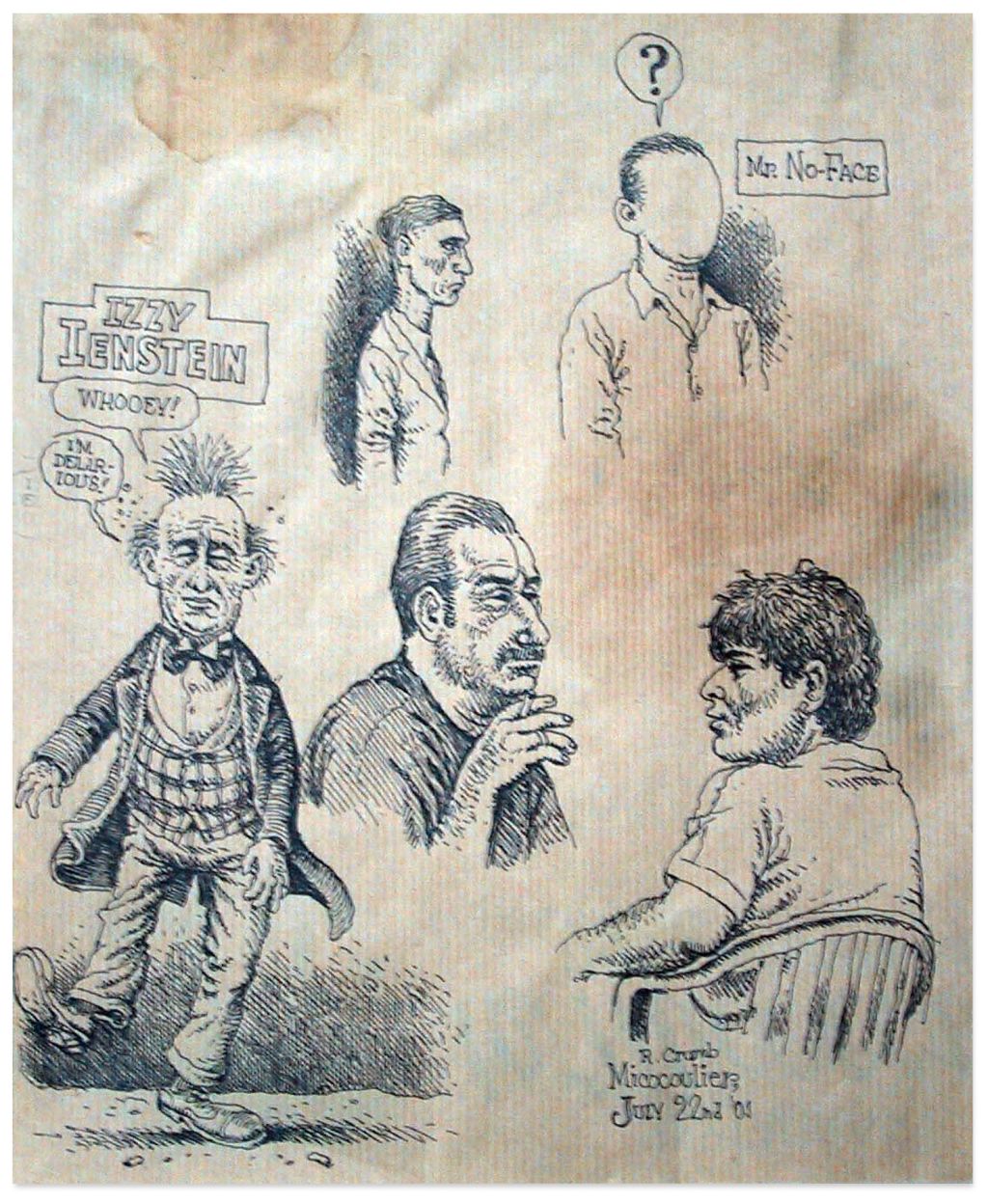
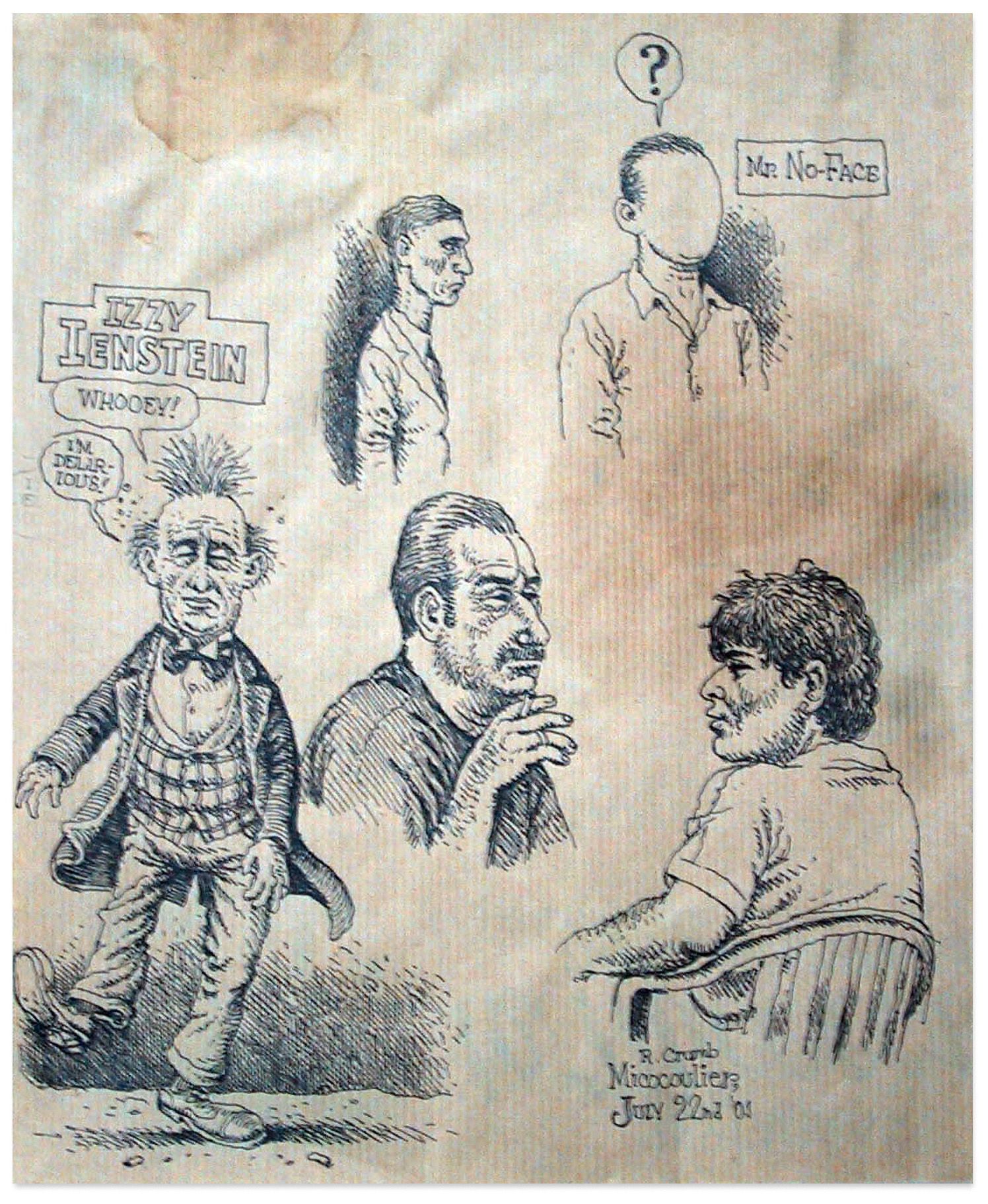
Mr. No Face, 2001

Robert Crumb
Mr. No Face, 2001
Tinte und Deckweiß auf Papier
Ink and white aut on paper
29.5 × 24 cm

Robert Crumb – Robert Crumb – Munich
Robert Crumb
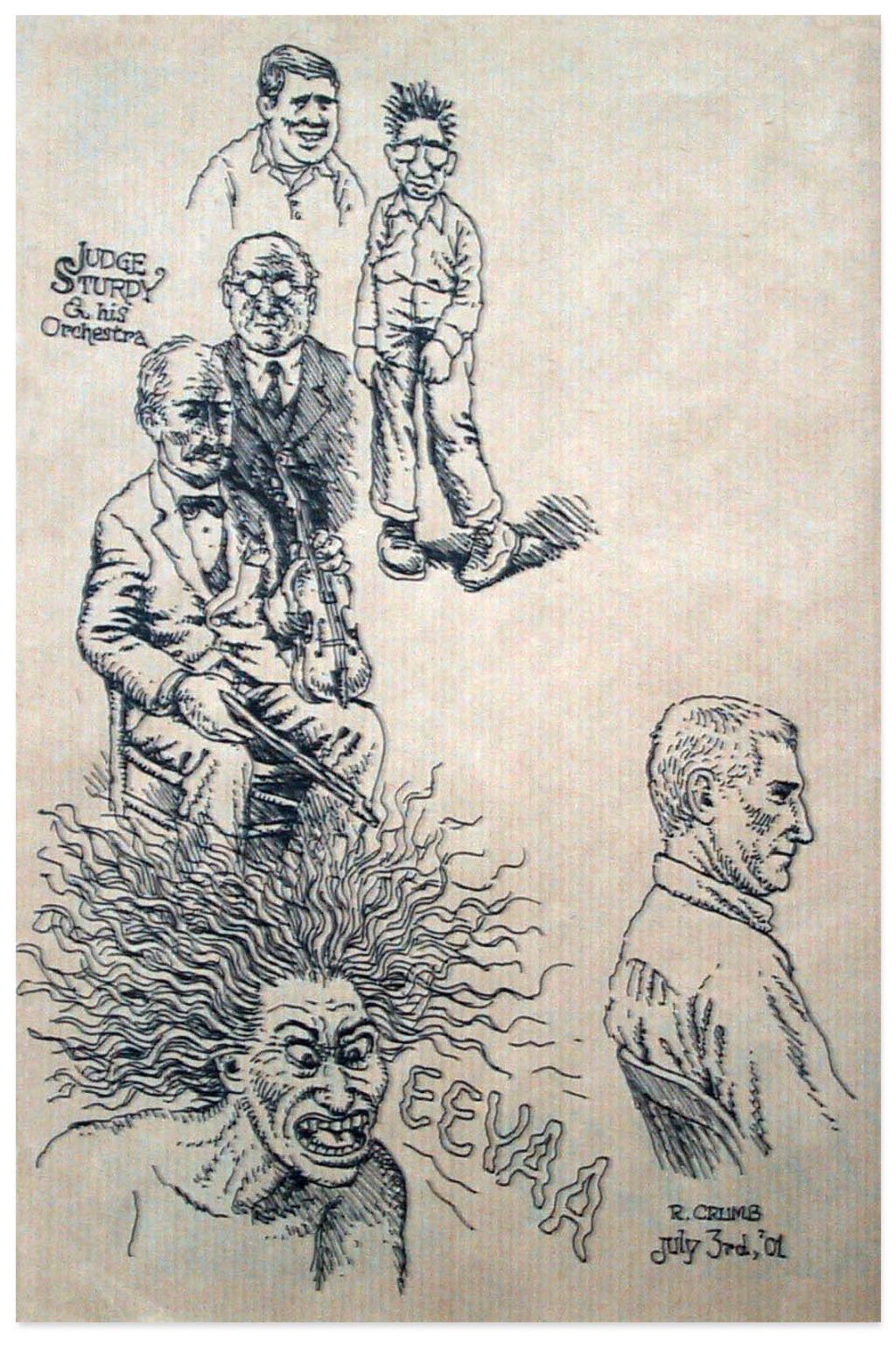
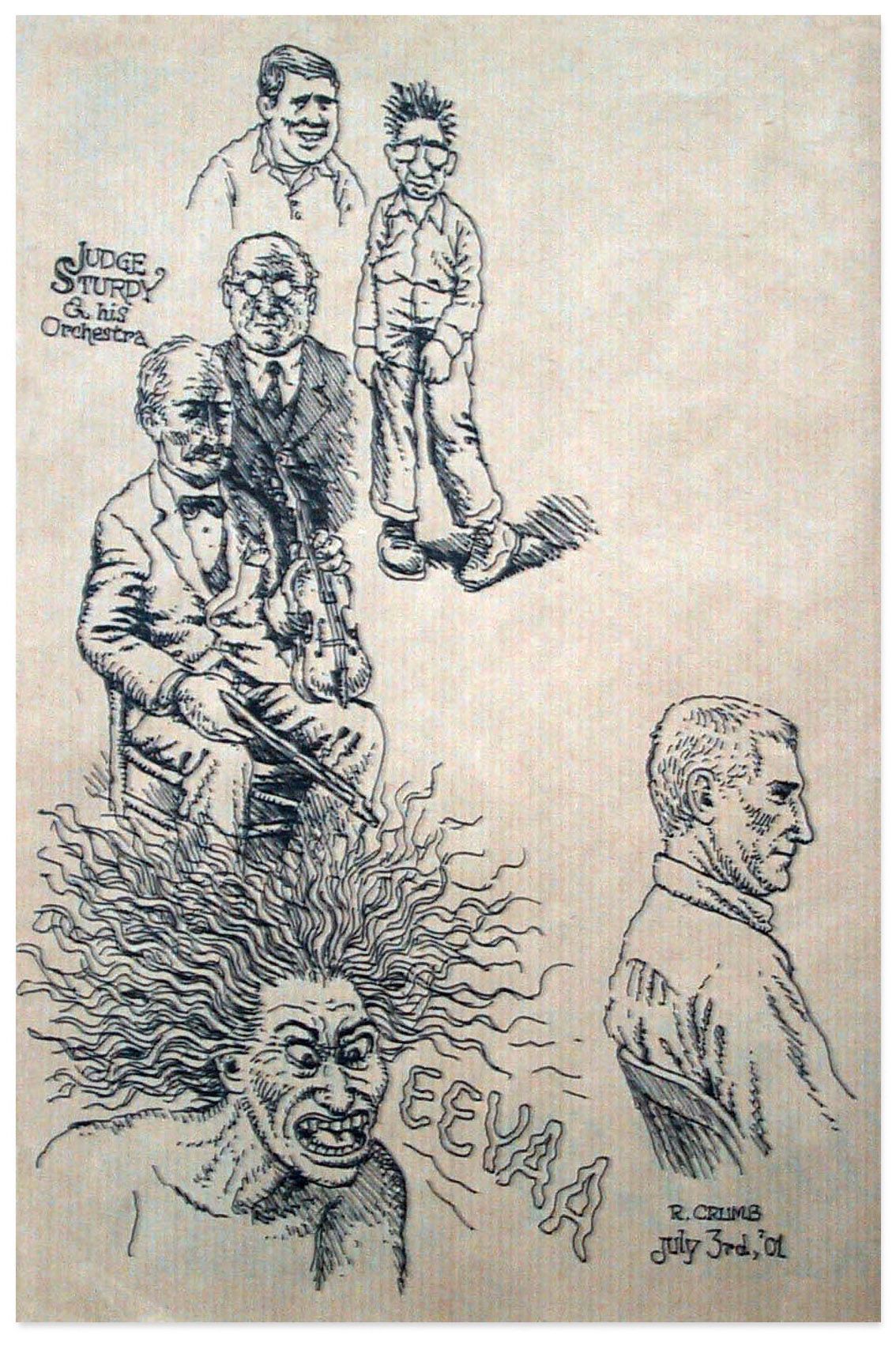
Judge Sturdy, 2001

Robert Crumb
Judge Sturdy, 2001
Ink and white aut on paper
29.5 × 21 cm
11 × 8 inches

" alt="" />
Details

Robert Crumb
Patricia Pig, 1996
Tinte auf Papier
24 × 32 cm

Robert Crumb
El Sombrero, 2001
Tinte und Deckweiß auf Papier
25 × 34 cm

Robert Crumb
I‘m Hungry
Tinte auf placemat
30 × 23.5 cm

Robert Crumb
The Way of All Flesh, 2003
Tinte und Deckweiß auf Papier
30.5 × 24.5 cm

Robert Crumb
Judy Seigal, 1960er Jahre
Tinte auf Papier
26 × 19.5 cm

Robert Crumb
Asper Oggus, 1969
Tinte auf Papier
24.5 × 19.5 cm

Robert Crumb
Dancing couple with portraits, 1960er Jahre
Tinte auf Papier
24.5 × 19.2 cm

Robert Crumb
The Art Museum, 1960er Jahre
Tinte auf Papier
25.2 × 16 cm

Robert Crumb
'La Belle Manouche' Art for Primitifs Du Futur C.D. 'Trop de Routes, Trop de Trains', 1994
Tinte und Deckweiß auf Papier
29 × 28 cm

Robert Crumb
How does it figure, Ed?, 1960er Jahre
Tinte auf Papier
24.5 × 19.2 cm

Robert Crumb
Ernie & Emilio Caceres, 1998
Tinte und Deckweiß auf Papier
35.5 × 28 cm

Aline Kominsky-Crumb
Harvey & Me, 2004
Tinte und Deckweiß auf Papier
42.5 × 34 cm

Robert Crumb
Yeti, 2003
Ink and white out on paper,
Tinte und Deckweiß auf Papier
26.5 × 26.5 cm
10 1/2 × 10 1/2 in

Robert Crumb
Mr. Sicko Pervert, 2002
Ink and white out on paper,
Tinte und Deckweiß auf Papier
29 × 34 cm
11 × 13 in

Robert Crumb
Mr. No Face, 2001
Tinte und Deckweiß auf Papier
Ink and white aut on paper
29.5 × 24 cm

Robert Crumb
Judge Sturdy, 2001
Ink and white aut on paper
29.5 × 21 cm
11 × 8 inches

Details
icon_fullscreen
1 of 16