Thomas Demand
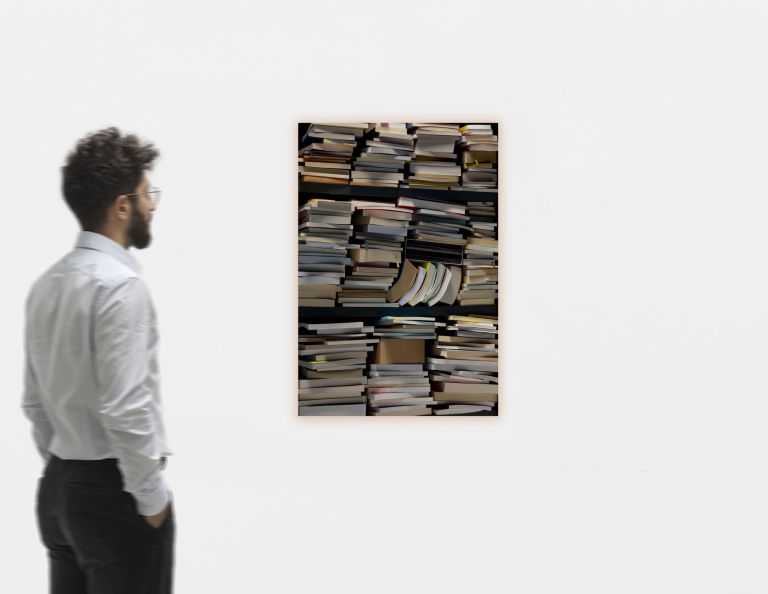
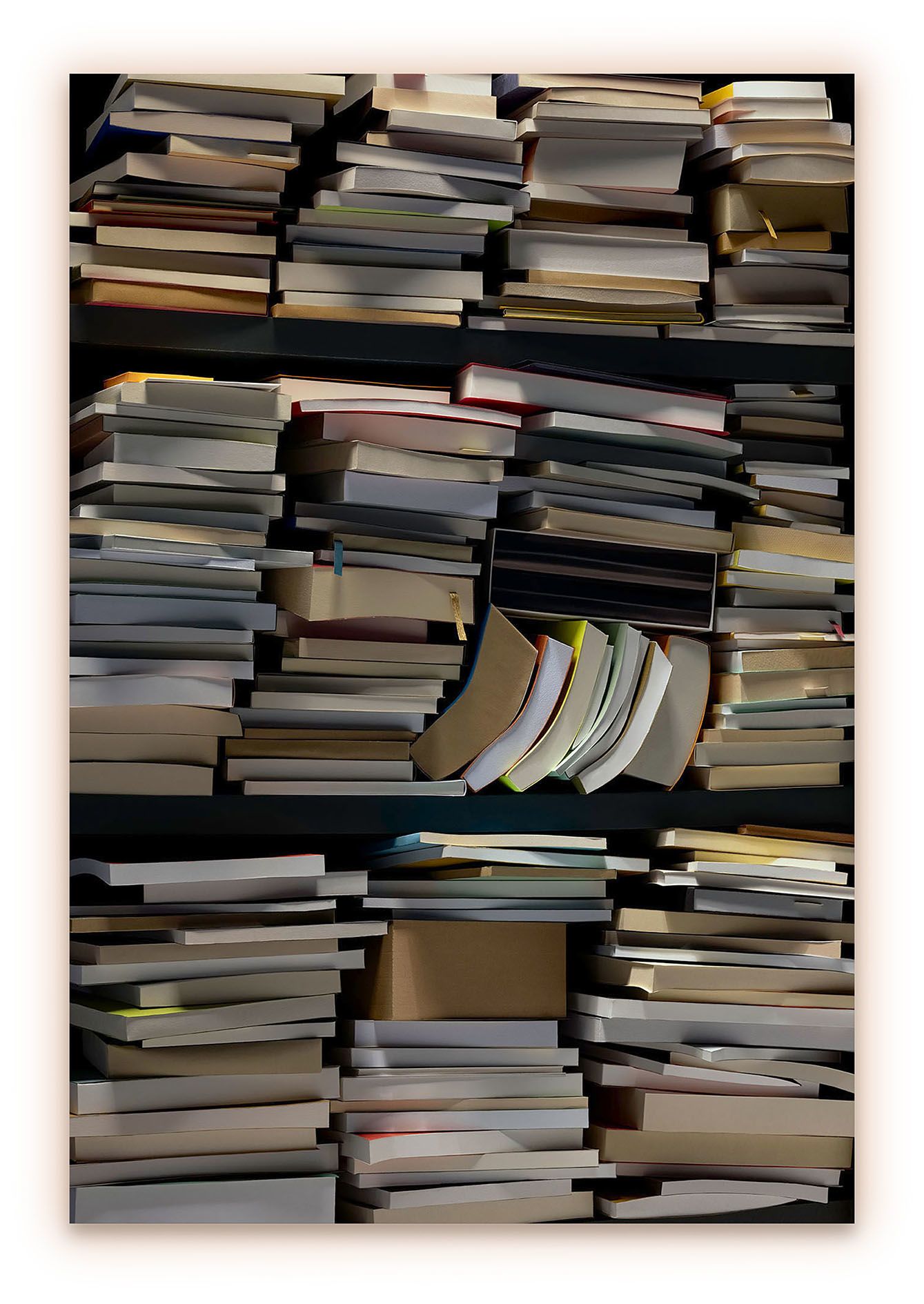
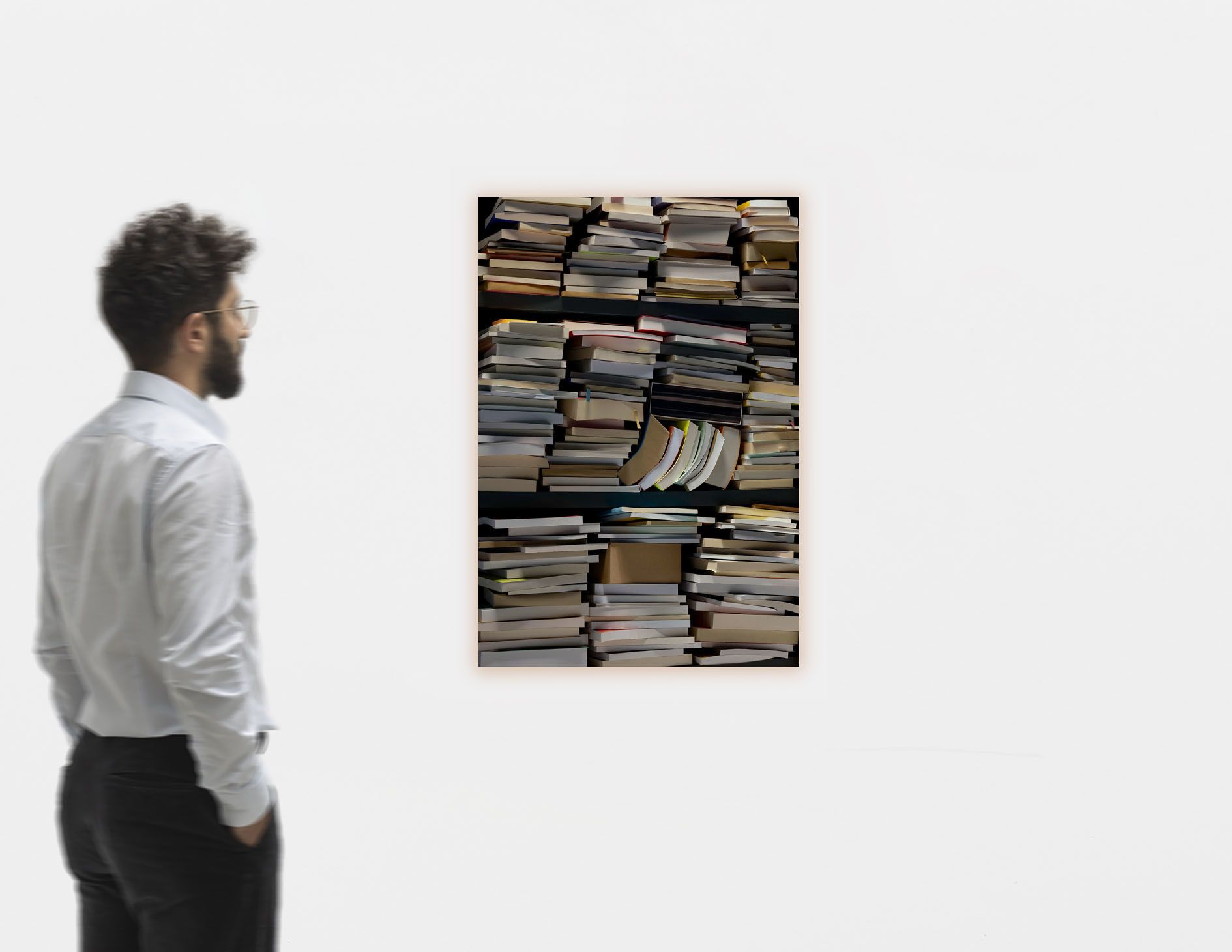
Books, 2025
UV print on copper
85 × 58 cm | 33 1/2 × 22 7/8 inches
Edition of 6 + 1 AP
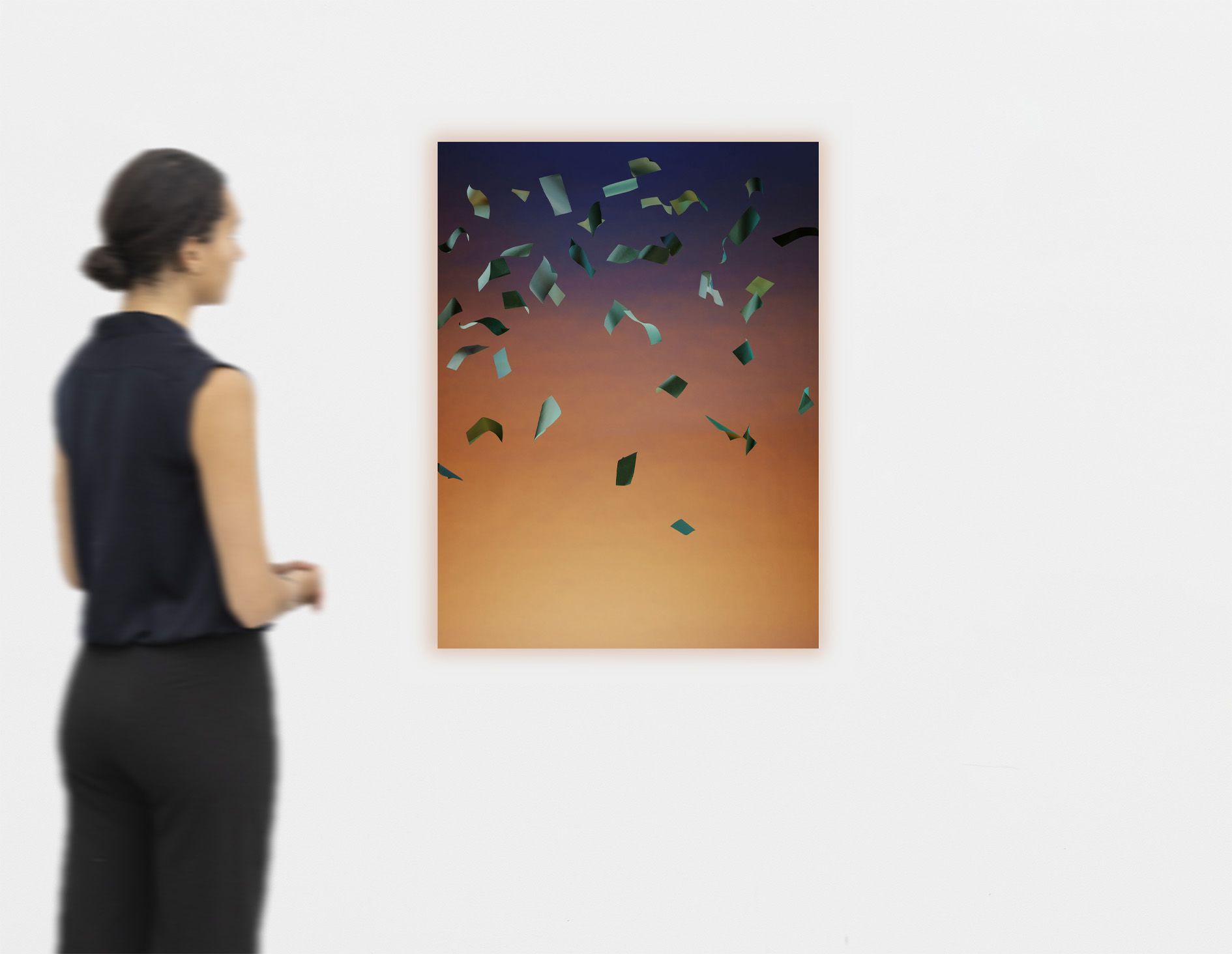
Thomas Demand is best known for his photographs of unique paper models that reconstruct scenes charged with historical, political and cultural significance, as well as everyday moments.
On the occasion of Gallery Weekend Berlin, Monika Sprüth and Philomene Magers are pleased to present a solo exhibition of new works by Demand.
In 2025, he began working with a new technique, creating smaller-scale images printed on copper. The material has deep roots in art history: In the fifteenth century, goldsmiths’ techniques of engraving precious metals were adapted to copper plates for the purpose of making reproducible prints, with etching on copper following in the sixteenth century.
Thomas Demand
Books, 2025
UV print on copper
85 × 58 cm | 33 1/2 × 22 7/8 inches
Edition of 6 + 1 AP
Thomas Demand
Books, 2025 (detail)
Thomas Demand
Books, 2025
Thomas Demand
Books, 2025
UV print on copper
85 × 58 cm | 33 1/2 × 22 7/8 inches
Edition of 6 + 1 AP
Thomas Demand
Books, 2025
UV print on copper
85 × 58 cm | 33 1/2 × 22 7/8 inches
Edition of 6 + 1 AP
Thomas Demand
Books, 2025 (detail)
Thomas Demand
Books, 2025 (detail)
Thomas Demand
Books, 2025
Thomas Demand
Books, 2025
Thomas Demand
Window, 2025
UV print on copper
80 × 60 cm | 31 1/2 × 23 5/8 inches
Edition of 6 + 1 AP
Thomas Demand
Window, 2025 (detail)
Thomas Demand
Window, 2025
Thomas Demand
Window, 2025
UV print on copper
80 × 60 cm | 31 1/2 × 23 5/8 inches
Edition of 6 + 1 AP
Thomas Demand
Window, 2025
UV print on copper
80 × 60 cm | 31 1/2 × 23 5/8 inches
Edition of 6 + 1 AP
Thomas Demand
Window, 2025 (detail)
Thomas Demand
Window, 2025 (detail)
Thomas Demand
Window, 2025
Thomas Demand
Window, 2025
Across the sixteenth and seventeenth centuries, it was also favoured as a painting support by artists including Jan Brueghel the Elder, Adam Elsheimer, David Teniers the Younger, and Nicolas Poussin. Its smooth surface made it suited to fine detail, and its durability helped it resist some of the deterioration associated with canvas or wood. In the nineteenth century, copper served as the support for the daguerreotype, the earliest commercially successful photographic process, in which light acted on a silver-coated plate to produce an image. It is, then, a material that engages with the histories of both painting and photography.
Thomas Demand
Klee, 2025 (detail)
Thomas Demand
Klee, 2025 (detail)
Across the sixteenth and seventeenth centuries, it was also favoured as a painting support by artists including Jan Brueghel the Elder, Adam Elsheimer, David Teniers the Younger, and Nicolas Poussin. Its smooth surface made it suited to fine detail, and its durability helped it resist some of the deterioration associated with canvas or wood. In the nineteenth century, copper served as the support for the daguerreotype, the earliest commercially successful photographic process, in which light acted on a silver-coated plate to produce an image. It is, then, a material that engages with the histories of both painting and photography.
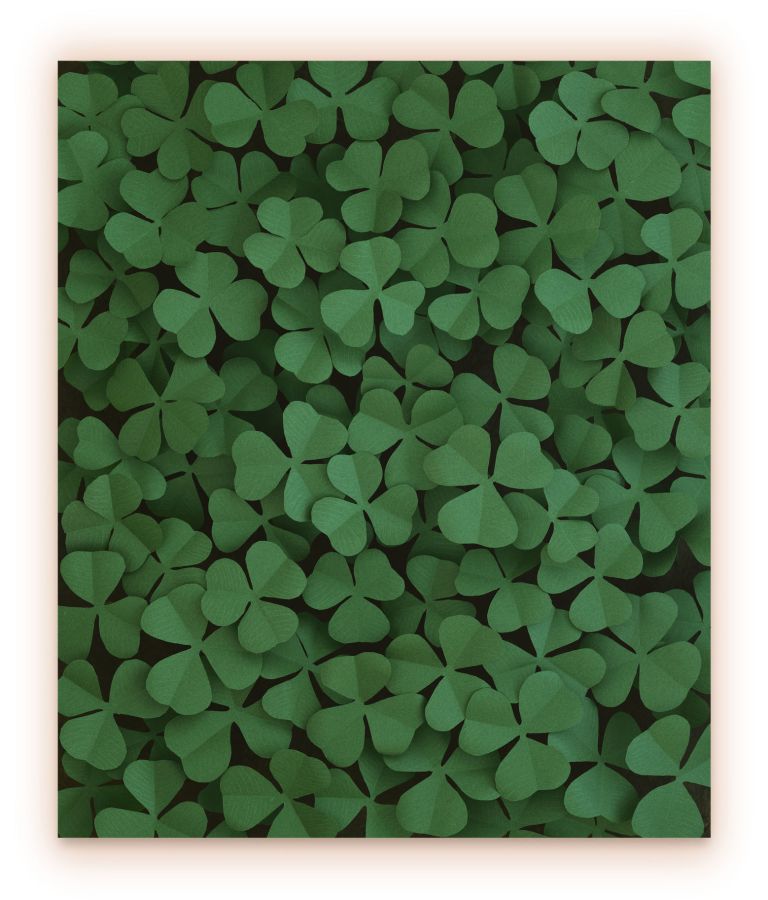
Thomas Demand
Klee, 2025
UV print on copper
52.4 × 44 cm | 20 5/8 × 17 1/4 inches
Edition of 6 + 1 AP
Thomas Demand
Klee, 2025
Thomas Demand
Schilf, 2025
UV print on copper
85 × 64 cm | 33 1/2 × 25 1/8 inches
Edition of 6 + 1 AP
Thomas Demand
Schilf, 2025 (detail)
Thomas Demand
Schilf, 2025
Thomas Demand
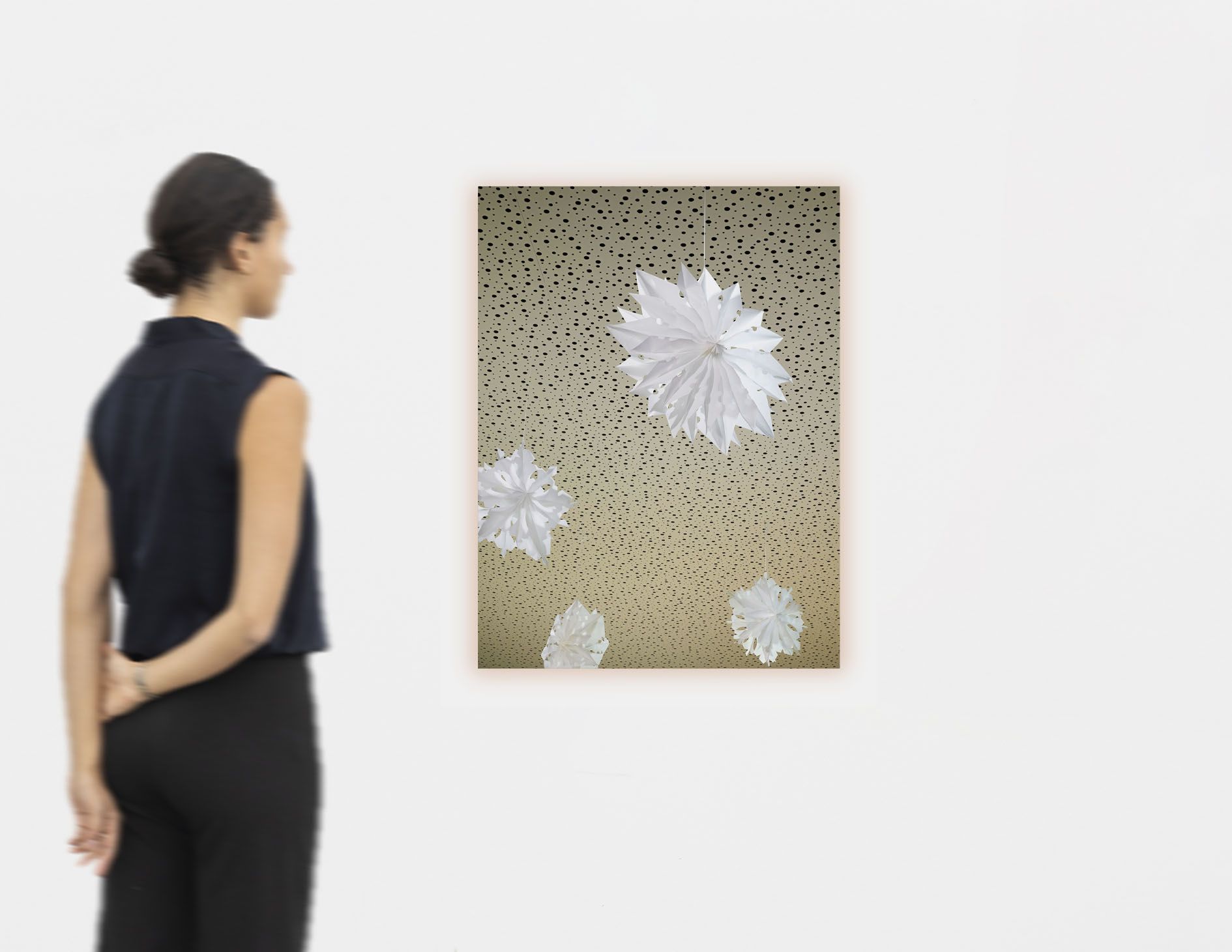
Paperstars, 2025
UV print on copper
80 × 60 cm | 31 1/2 × 23 5/8 inches
Edition of 6 + 1 AP
Thomas Demand
Paperstars, 2025 (detail)
Thomas Demand
Paperstars, 2025
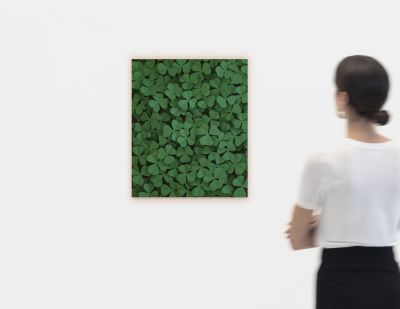
The first of these new images, Klee (2025), shows a close-up of a patch of clover—or shamrock, the three-leafed plant famously associated with Saint Patrick as an emblem of the Holy Trinity. Among the cutout forms, the occasional four-leafed variant can also be found, a rare deviation long regarded as a symbol of good luck.
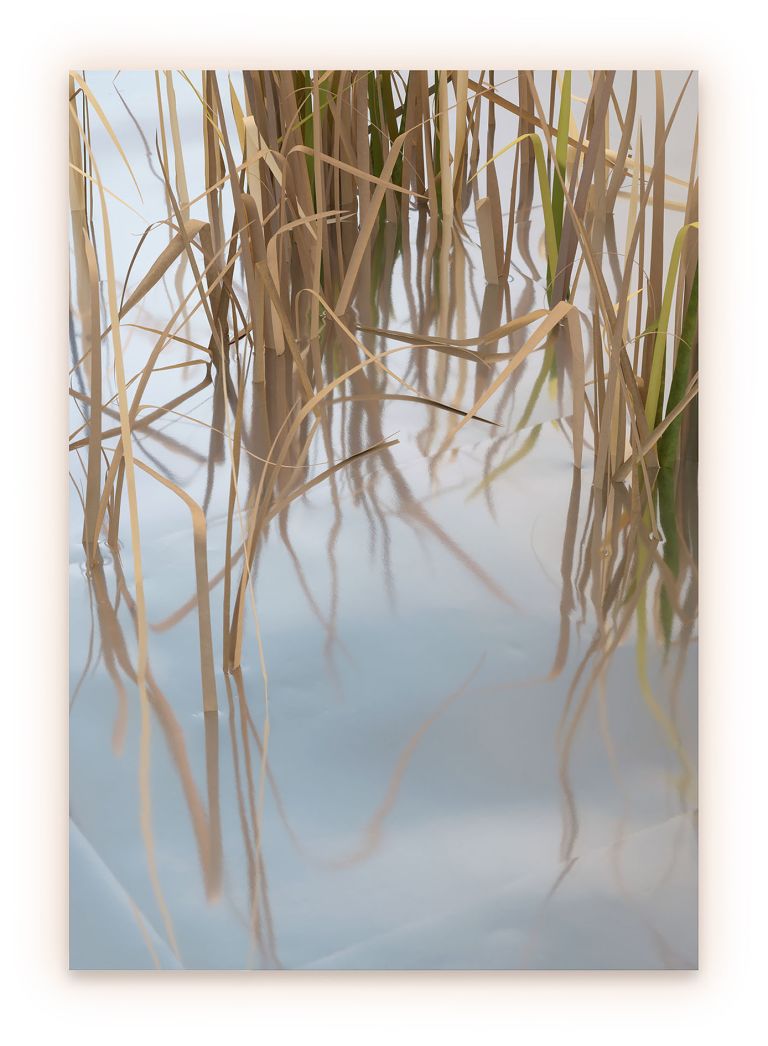
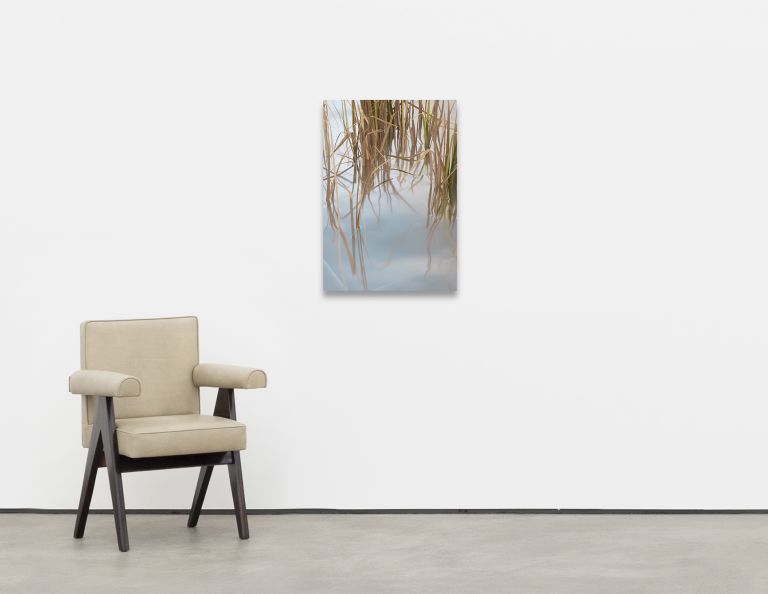
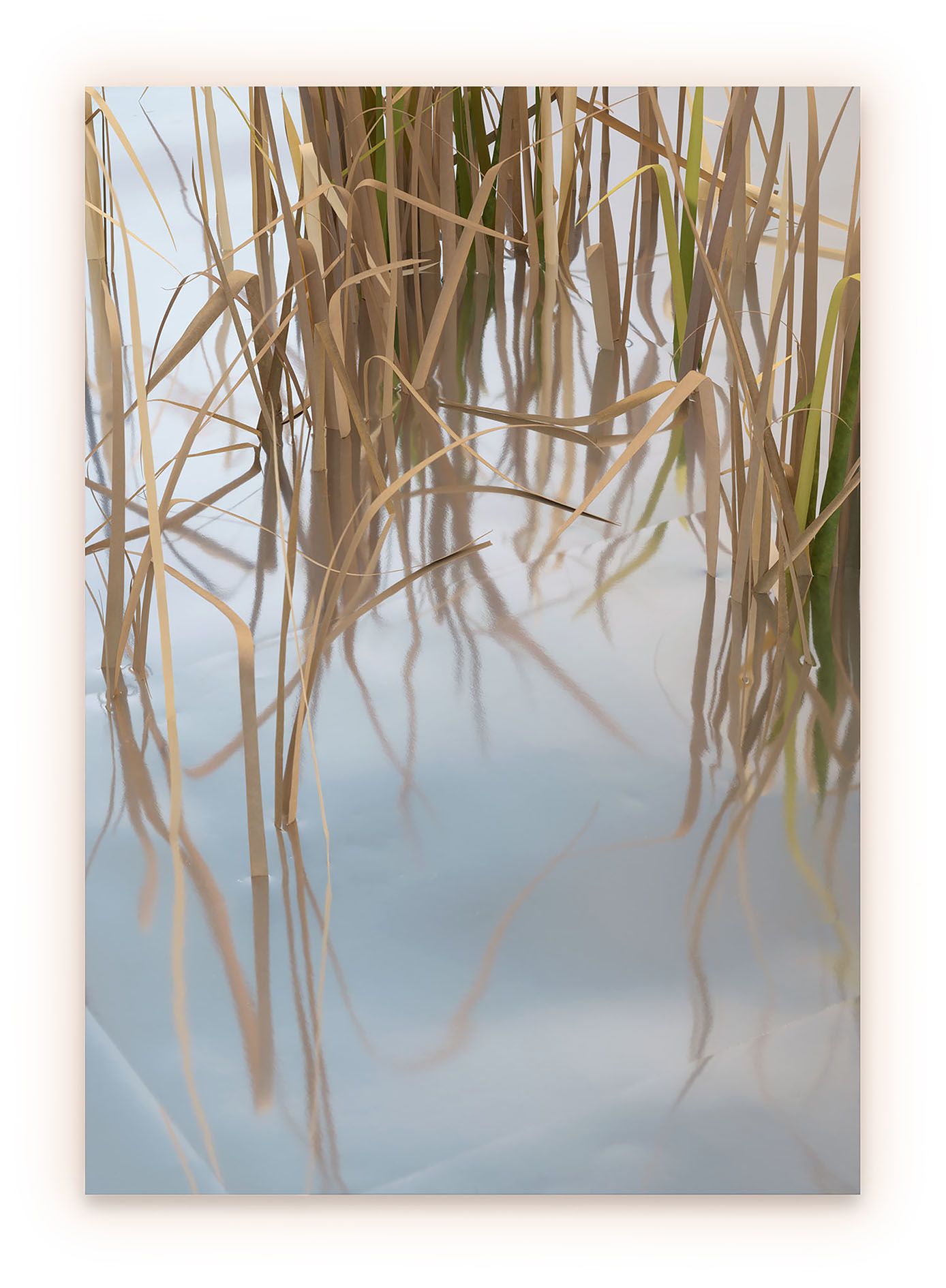
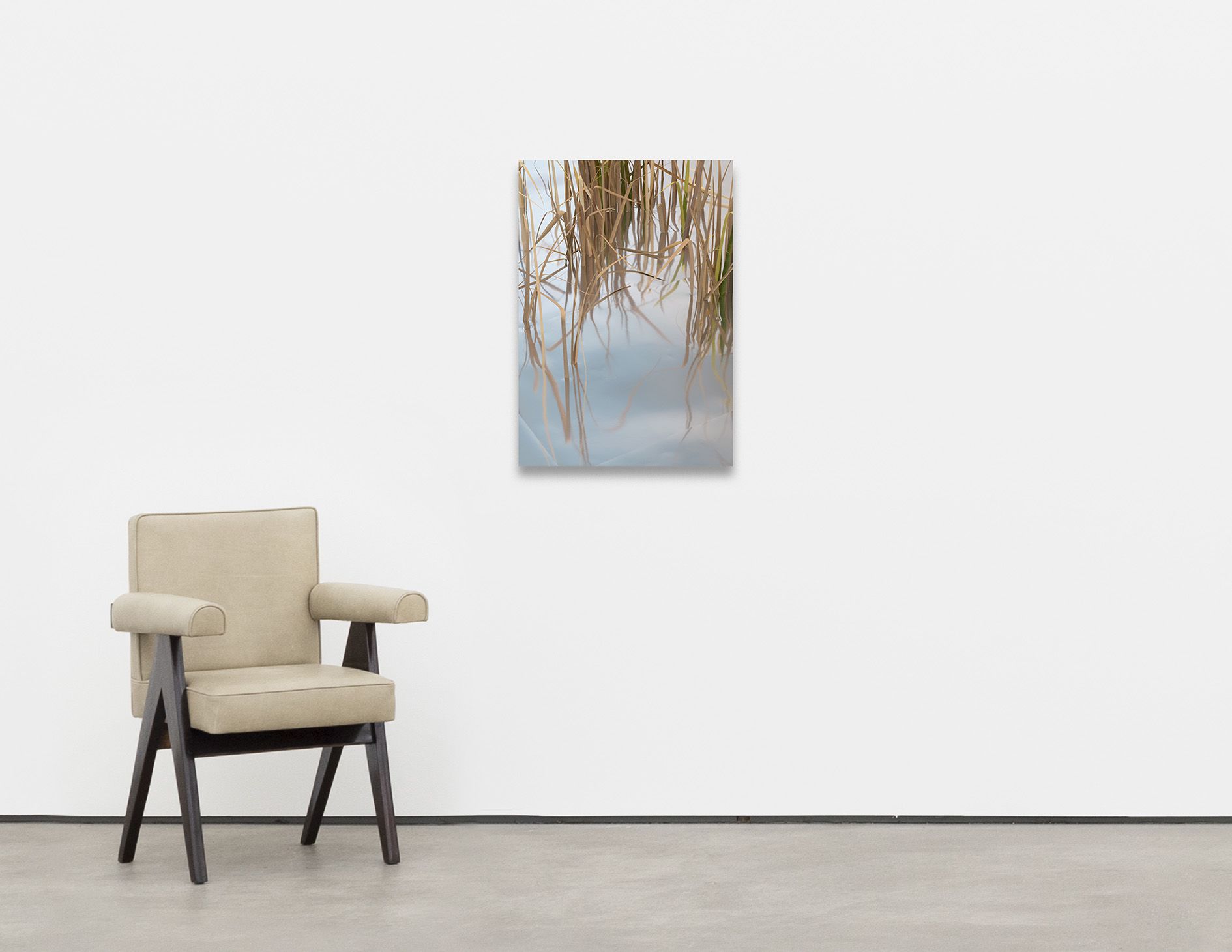
In Schilf (2025), Demand has carefully reproduced a wetland scene, including the layered depth, tonal variation and organic forms of reeds. The seemingly reflective surface below, which suggests the soft distortion of frozen water, is made entirely of paper, heightening the work’s visual ambiguity.
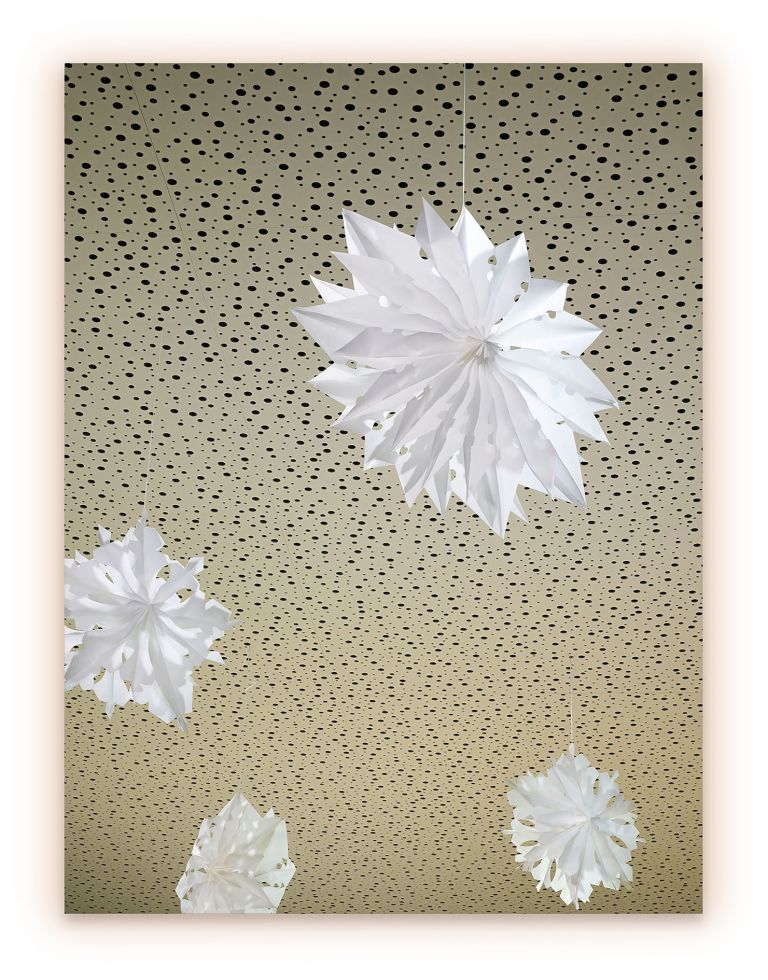
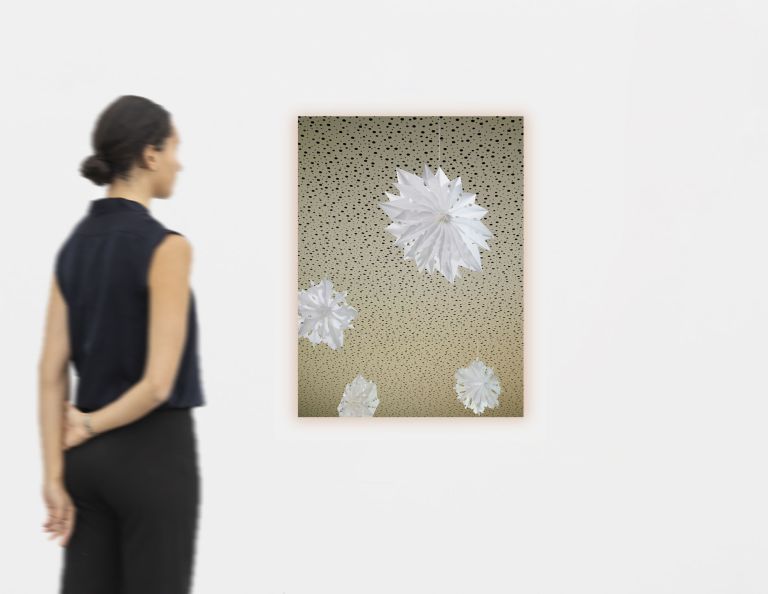
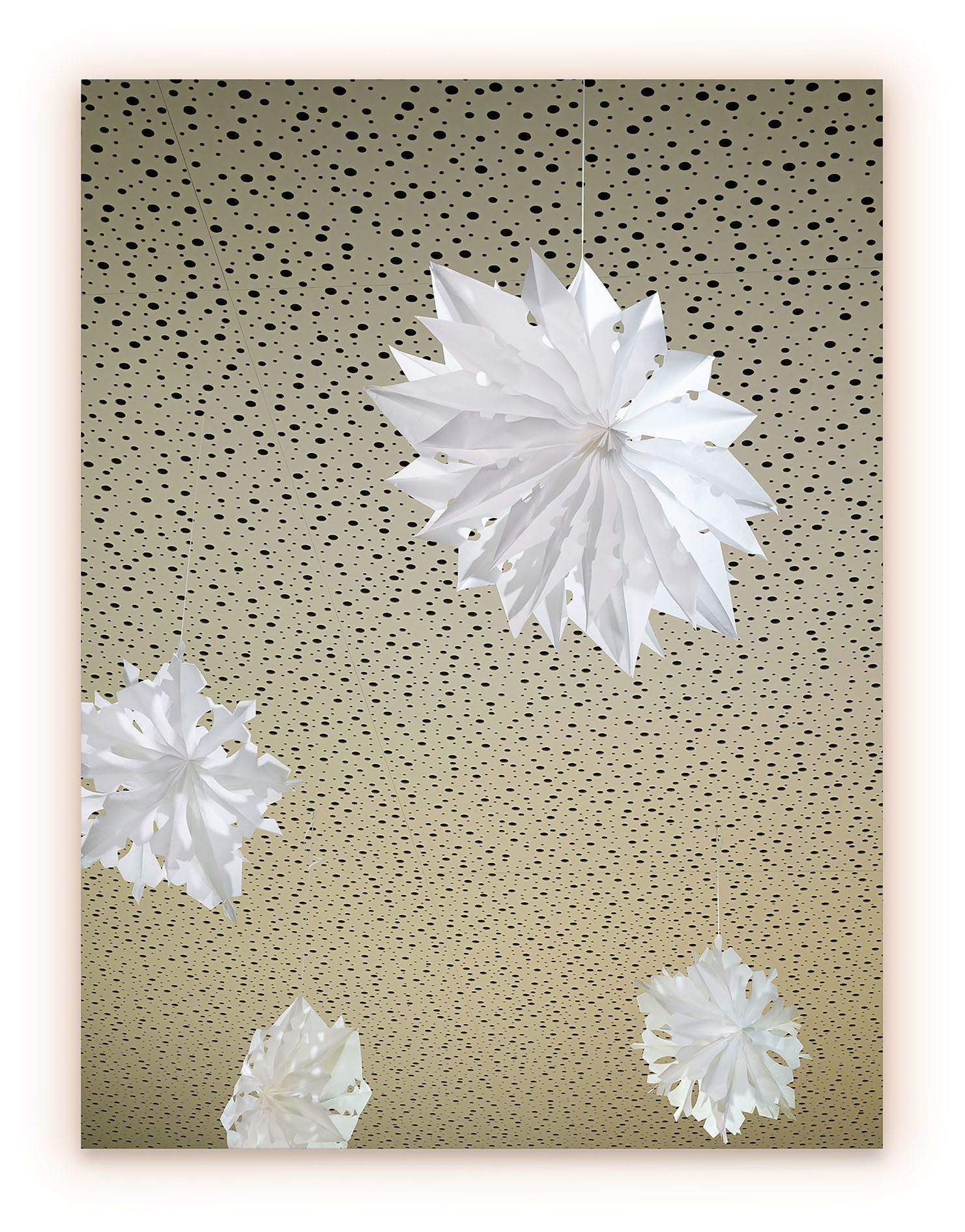
Paperstars (2025) depicts white stars decorating a perforated acoustic ceiling of the kind found in public buildings, signalling a celebration. All three draw on a visual vocabulary so ubiquitous that viewers inevitably bring their own associations and memories to them.
Thomas Demand
Klee, 2025
UV print on copper
52.4 × 44 cm | 20 5/8 × 17 1/4 inches
Edition of 6 + 1 AP
Thomas Demand
Klee, 2025
UV print on copper
52.4 × 44 cm | 20 5/8 × 17 1/4 inches
Edition of 6 + 1 AP
Thomas Demand
Klee, 2025
Thomas Demand
Klee, 2025
Thomas Demand
Schilf, 2025
UV print on copper
85 × 64 cm | 33 1/2 × 25 1/8 inches
Edition of 6 + 1 AP
Thomas Demand
Schilf, 2025
UV print on copper
85 × 64 cm | 33 1/2 × 25 1/8 inches
Edition of 6 + 1 AP
Thomas Demand
Schilf, 2025 (detail)
Thomas Demand
Schilf, 2025 (detail)
Thomas Demand
Schilf, 2025
Thomas Demand
Schilf, 2025
Thomas Demand
Paperstars, 2025
UV print on copper
80 × 60 cm | 31 1/2 × 23 5/8 inches
Edition of 6 + 1 AP
Thomas Demand
Paperstars, 2025
UV print on copper
80 × 60 cm | 31 1/2 × 23 5/8 inches
Edition of 6 + 1 AP
Thomas Demand
Paperstars, 2025 (detail)
Thomas Demand
Paperstars, 2025 (detail)
Thomas Demand
Paperstars, 2025
Thomas Demand
Paperstars, 2025
The first of these new images, Klee (2025), shows a close-up of a patch of clover—or shamrock, the three-leafed plant famously associated with Saint Patrick as an emblem of the Holy Trinity. Among the cutout forms, the occasional four-leafed variant can also be found, a rare deviation long regarded as a symbol of good luck.
In Schilf (2025), Demand has carefully reproduced a wetland scene, including the layered depth, tonal variation and organic forms of reeds. The seemingly reflective surface below, which suggests the soft distortion of frozen water, is made entirely of paper, heightening the work’s visual ambiguity.
Paperstars (2025) depicts white stars decorating a perforated acoustic ceiling of the kind found in public buildings, signalling a celebration. All three draw on a visual vocabulary so ubiquitous that viewers inevitably bring their own associations and memories to them.
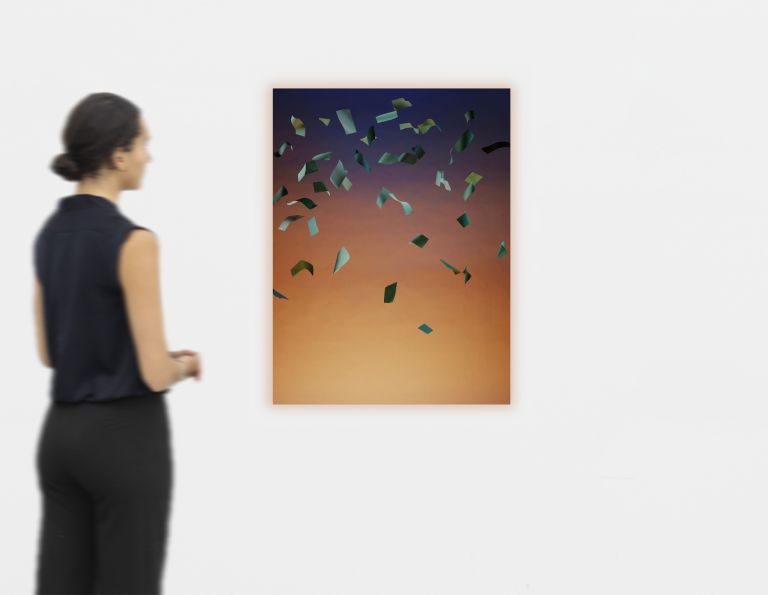
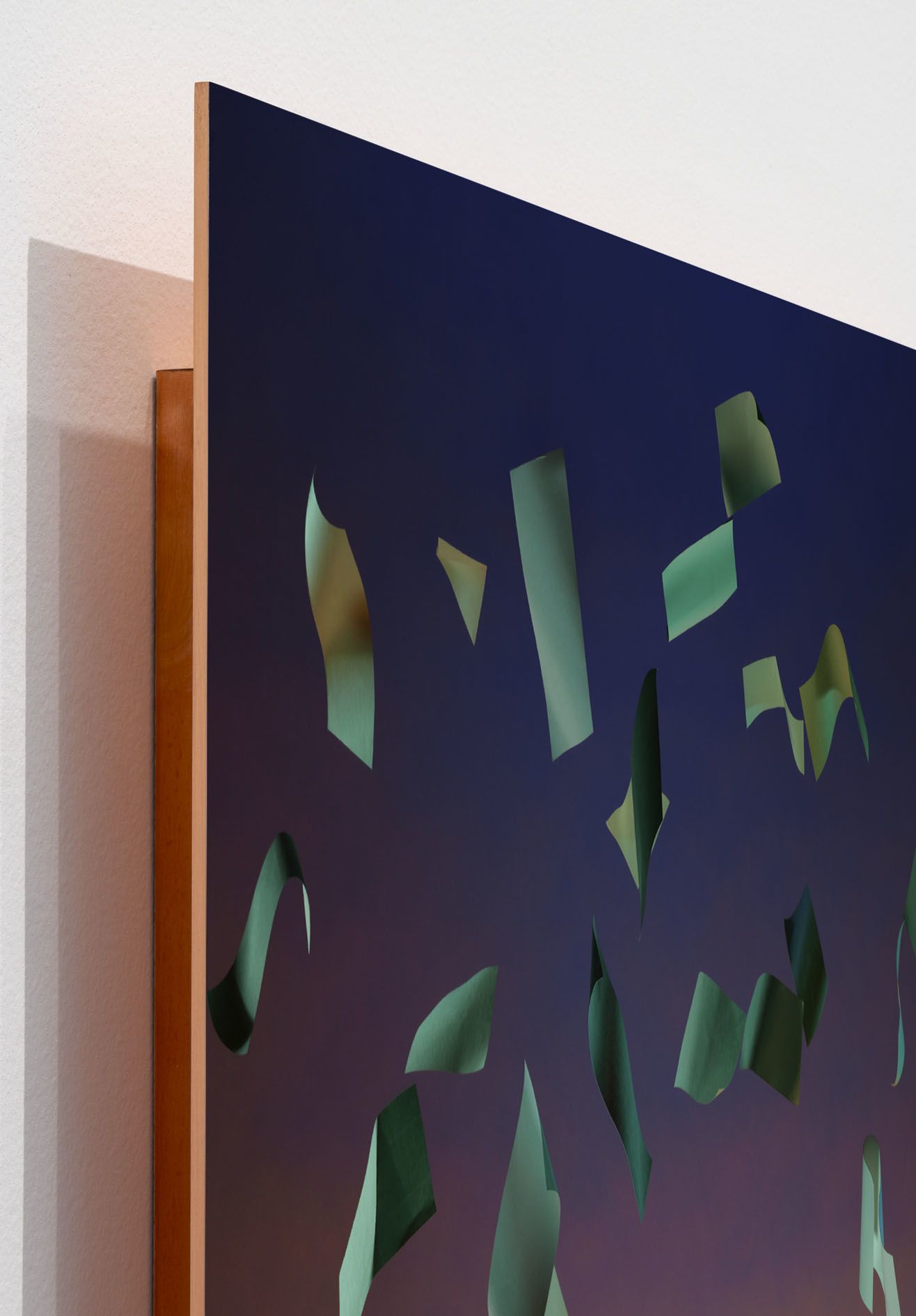
Money (2025) is based on a still from the bizarre AI-generated video Donald Trump posted in early 2025, representing his “Gaza Riviera” plan. In it, a character resembling billionaire Elon Musk flings banknotes into the air against a sunset-lit sky, an image Demand distils and rebuilds by hand, collapsing digital artifice back into physical material.
Thomas Demand
Money, 2025
UV print on copper
85 × 64 cm | 33 1/2 × 25 1/8 inches
Edition of 6 + 1 AP
Thomas Demand
Money, 2025 (detail)
Thomas Demand
Money, 2025
Thomas Demand
Money, 2025
UV print on copper
85 × 64 cm | 33 1/2 × 25 1/8 inches
Edition of 6 + 1 AP
Thomas Demand
Money, 2025
UV print on copper
85 × 64 cm | 33 1/2 × 25 1/8 inches
Edition of 6 + 1 AP
Thomas Demand
Money, 2025 (detail)
Thomas Demand
Money, 2025 (detail)
Thomas Demand
Money, 2025
Thomas Demand
Money, 2025
Money (2025) is based on a still from the bizarre AI-generated video Donald Trump posted in early 2025, representing his “Gaza Riviera” plan. In it, a character resembling billionaire Elon Musk flings banknotes into the air against a sunset-lit sky, an image Demand distils and rebuilds by hand, collapsing digital artifice back into physical material.
Thomas Demand
Autumn, 2026
UV print on copper
80 × 116 cm | 31 1/2 × 45 3/4 inches
Edition of 6 + 1 AP
Thomas Demand
Autumn, 2026 (detail)
Thomas Demand
Autumn, 2026
Thomas Demand
Autumn, 2026
UV print on copper
80 × 116 cm | 31 1/2 × 45 3/4 inches
Edition of 6 + 1 AP
Thomas Demand
Autumn, 2026
UV print on copper
80 × 116 cm | 31 1/2 × 45 3/4 inches
Edition of 6 + 1 AP
Thomas Demand
Autumn, 2026 (detail)
Thomas Demand
Autumn, 2026 (detail)
Thomas Demand
Autumn, 2026
Thomas Demand
Autumn, 2026
“As a photographer, one often works with technical devices, but I’ve always liked to think with my hands, preparing my own materials and attending to every detail.” –Thomas Demand
Thomas Demand
Cavity, 2025
UV print on copper
64 × 68 cm | 25 1/8 × 26 3/4 inches
Edition of 6 + 1 AP
Thomas Demand
Cavity, 2025 (detail)
Thomas Demand
Cavity, 2025
Thomas Demand
Cavity, 2025
UV print on copper
64 × 68 cm | 25 1/8 × 26 3/4 inches
Edition of 6 + 1 AP
Thomas Demand
Cavity, 2025
UV print on copper
64 × 68 cm | 25 1/8 × 26 3/4 inches
Edition of 6 + 1 AP
Thomas Demand
Cavity, 2025 (detail)
Thomas Demand
Cavity, 2025 (detail)
Thomas Demand
Cavity, 2025
Thomas Demand
Cavity, 2025
Thomas Demand
Napkin, 2025
UV print on copper
46 × 46 cm | 18 × 18 inches
Edition of 6 + 1 AP
Thomas Demand
Napkin, 2025 (detail)
Thomas Demand
Napkin, 2025
Thomas Demand
Napkin, 2025
UV print on copper
46 × 46 cm | 18 × 18 inches
Edition of 6 + 1 AP
Thomas Demand
Napkin, 2025
UV print on copper
46 × 46 cm | 18 × 18 inches
Edition of 6 + 1 AP
Thomas Demand
Napkin, 2025 (detail)
Thomas Demand
Napkin, 2025 (detail)
Thomas Demand
Napkin, 2025
Thomas Demand
Napkin, 2025
Two large-scale UV prints on Perspex are also on view in the exhibition. Melonen (2025) derives from a press image documenting confiscated contraband—fake melons containing methamphetamine—seized at the US-Mexico border. In an entirely different context, the watermelon was simultaneously circulating as a symbol of solidarity with Palestine. The photo also reminded Demand of Henri Matisse’s The Moroccans (1915–16), and as these layered associations suggest, the meaning of images can evolve, and multiply, over time.
Thomas Demand
Melonen, 2025
UV Print on Perspex in artist frame
236.8 × 173.8 cm | 93 1/4 × 68 3/8 inches
245.8 × 182.6 cm | 96 3/4 × 72 inches (framed)
Edition of 6 + 1 AP
Thomas Demand
Melonen, 2025
Thomas Demand
Melonen, 2025
UV Print on Perspex in artist frame
236.8 × 173.8 cm | 93 1/4 × 68 3/8 inches
245.8 × 182.6 cm | 96 3/4 × 72 inches (framed)
Edition of 6 + 1 AP
Thomas Demand
Melonen, 2025
UV Print on Perspex in artist frame
236.8 × 173.8 cm | 93 1/4 × 68 3/8 inches
245.8 × 182.6 cm | 96 3/4 × 72 inches (framed)
Edition of 6 + 1 AP
Thomas Demand
Melonen, 2025
Thomas Demand
Melonen, 2025
Two large-scale UV prints on Perspex are also on view in the exhibition. Melonen (2025) derives from a press image documenting confiscated contraband—fake melons containing methamphetamine—seized at the US-Mexico border. In an entirely different context, the watermelon was simultaneously circulating as a symbol of solidarity with Palestine. The photo also reminded Demand of Henri Matisse’s The Moroccans (1915–16), and as these layered associations suggest, the meaning of images can evolve, and multiply, over time.
Eis (2025) demonstrates this equally well. The photograph depicts the terrain of an iceberg in Greenland with intensely patterned crevasses, imagery that today evokes climate change and glacial melting. The Arctic, once portrayed through photography as a harsh and hostile environment, has been reframed as a romantic symbol of a vanishing landscape under threat.
Through such constructed worlds, the artist interrogates the paradoxes of perception, probing how we read our surroundings, how we remember them, and the ways we are influenced and manipulated by what we think we see.
Thomas Demand
Eis, 2025
UV Print on Perspex in artist frame
193.6 × 255.5 cm | 76 1/8 × 100 5/8 inches
202.6 × 264.3 cm | 79 3/4 × 104 inches (framed)
Edition of 6 + 1 AP
Thomas Demand
Eis, 2025
Thomas Demand
Eis, 2025
UV Print on Perspex in artist frame
193.6 × 255.5 cm | 76 1/8 × 100 5/8 inches
202.6 × 264.3 cm | 79 3/4 × 104 inches (framed)
Edition of 6 + 1 AP
Thomas Demand
Eis, 2025
UV Print on Perspex in artist frame
193.6 × 255.5 cm | 76 1/8 × 100 5/8 inches
202.6 × 264.3 cm | 79 3/4 × 104 inches (framed)
Edition of 6 + 1 AP
Thomas Demand
Eis, 2025
Thomas Demand
Eis, 2025
Whether capturing nature’s chance arrangements or AI’s dystopian visions, Demand’s work deftly navigates the space between sculpture and photography, illusion and image, and reality and interpretation.
All installation views: Timo Ohler
Thomas Demand
May 2–August 1, 2026
Public Reception: Friday, May 1, 6–9pm
Berlin
Discover the artist’s practice, selected works, and exhibitions
Be the first to know!
Subscribe to receive newsletters on our artists, exhibitions, fairs, events, and more.
I am interested in:
You can withdraw your consent at any time by clicking the unsubscribe link in the newsletter. The newsletter is sent in accordance with our Privacy Policy, which outlines how we process your data.
This site uses cookies to improve user experience. By clicking “Accept” you consent to our use of cookies. Further information can be found in our Cookie Policy.
To provide the best experiences, we use technologies like cookies to store and/or access device information. Consenting to these technologies will allow us to process data such as browsing behavior or unique IDs on this site. Not consenting or withdrawing consent, may adversely affect certain features and functions.