
John Baldessari was a pioneer of American Conceptualism, persistently challenging and redefining the expectations that influence our understanding of art. In National City (W,1,2,3,4,5,6,B) (1996), he turns his lens and his brush on the landscape of his own hometown, a modest community south of San Diego. The work comprises eight color photographs of routes he regularly traveled in National City. Across each image, Baldessari applied a hand-painted acrylic circle directly onto the photographic surface to conceal what he considered visual flaws. The circles progress from the palest white through a graduated tonal scale to the deepest black, imposing a systematic order onto the incidental and the everyday. These painted dots obscure as much as they reveal: rather than suppressing what lies beneath, they make us acutely aware of it. In doing so, Baldessari reminds us that all representation is ultimately a form of selection and exclusion.

















John Baldessari (1931–2020) lived and worked in Venice, California. Selected solo exhibitions include Bozar Centre for Fine Arts, Brussels (2025–26), Fondazione Querini Stampalia, Venice, Italy (2025), Museo de Arte Latinoamericano de Buenos Aires (2024), Moderna Museet, Stockholm (2020), Laguna Art Museum, Laguna Beach (2019), Museo Jumex, Mexico City (2017), Städel Museum, Frankfurt (2015), Garage Center for Contemporary Culture, Moscow (2013), Fondazione Prada, Milan (2010), Stedelijk Museum, Amsterdam (2011), Tate Modern, London (2009), Museum of Contemporary Art, Barcelona (2010), Los Angeles County Museum of Art (2010), and Metropolitan Museum of Art, New York (2010–11). Selected group exhibitions include the 53rd La Biennale di Venezia (2009), at which he was honored with the Golden Lion for Lifetime Achievement, Whitney Biennial (2009, 1983), Documenta V and VII (1972, 1982), and the Carnegie International (1985–86).


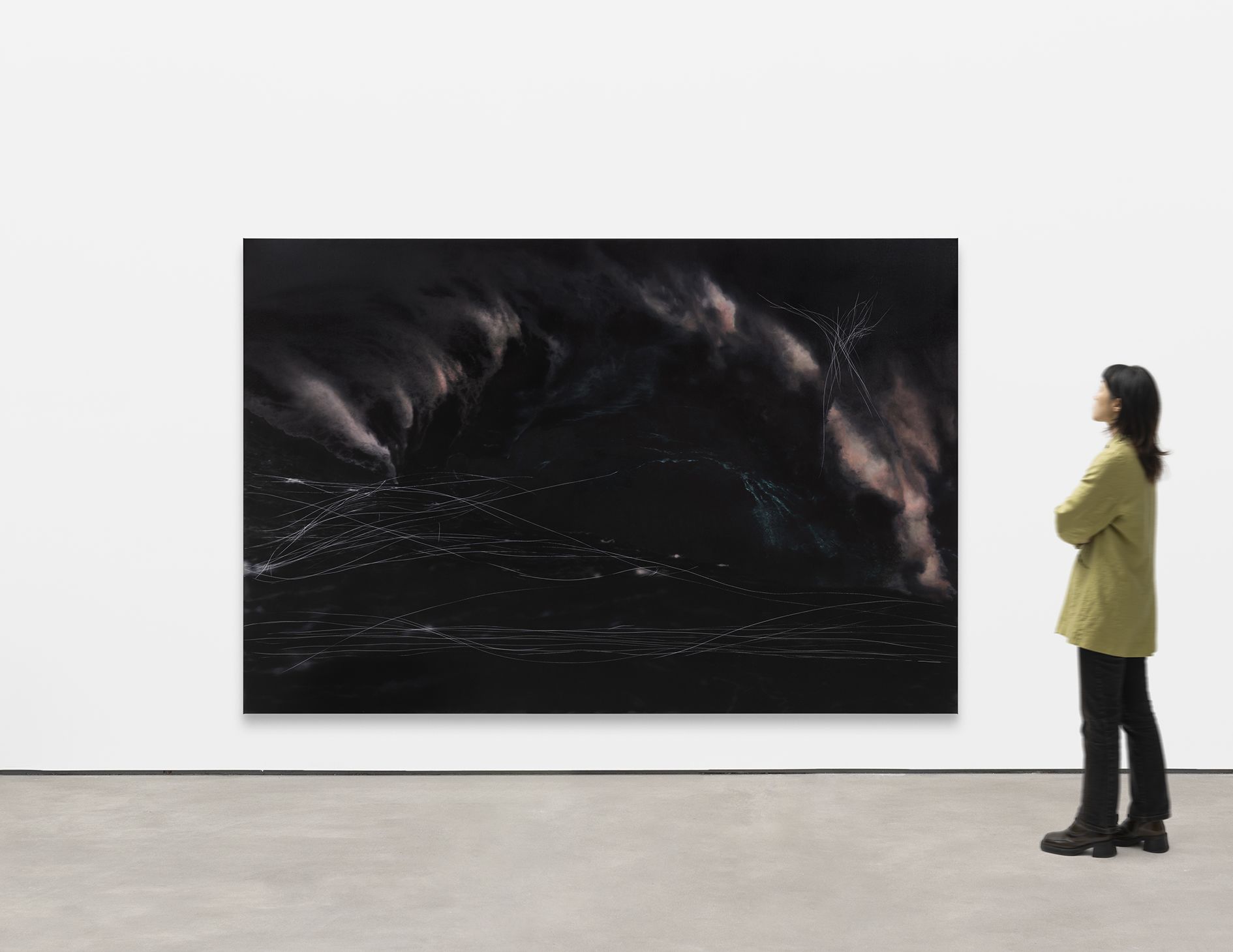


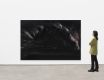
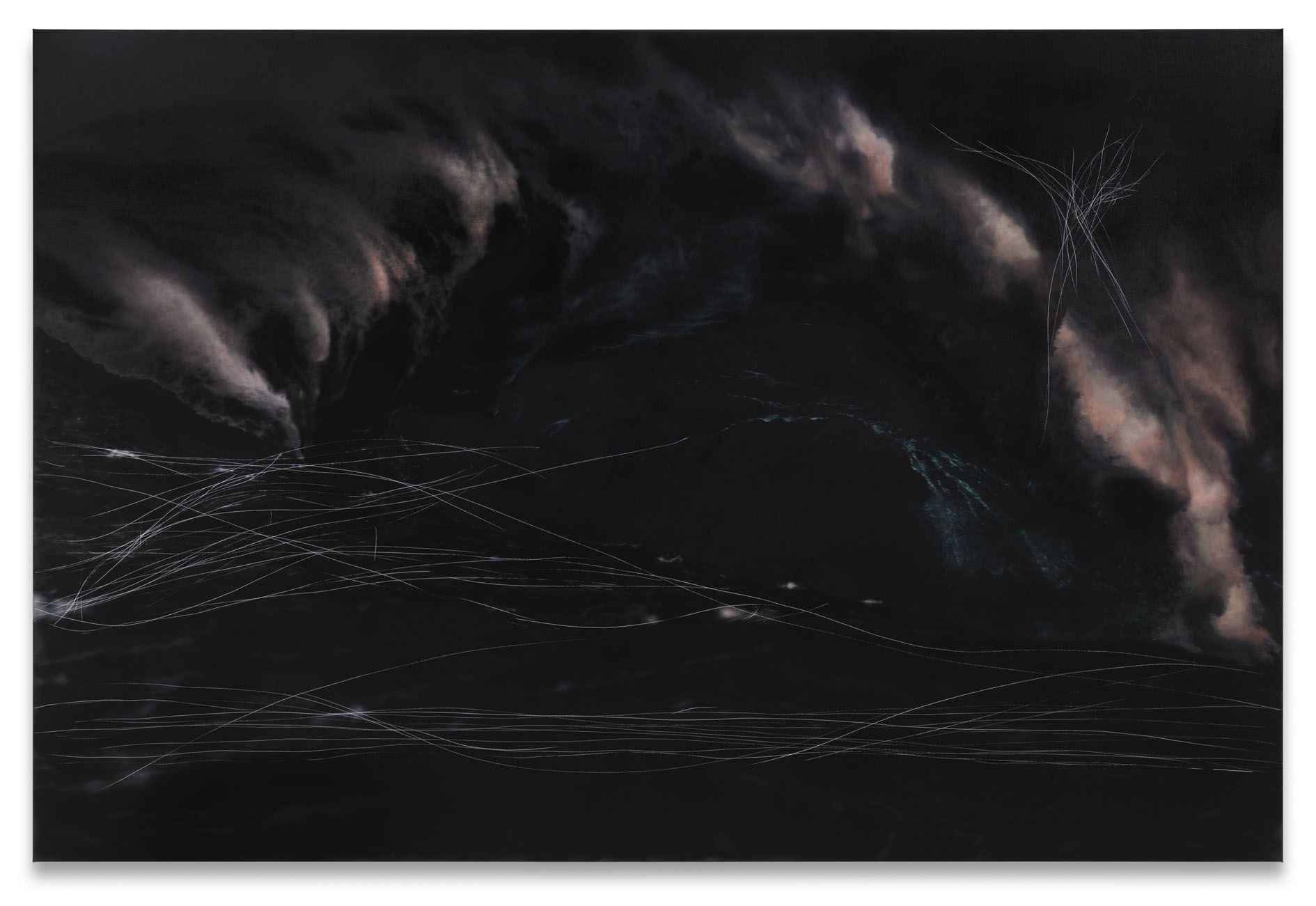
Anne Imhof’s practice spans performance, sculpture, painting, and film, yet returns always to the same insistent subject: the body – how it moves through space, how it is observed, what it can and cannot occupy, and how fleeting experience might be translated into enduring form. Untitled (2026) is a large-scale painting depicting a hyper-realistic wave rendered in dramatic midnight blue, recalling the depths of the sea, its breaking crest dissolving into froth and tinged pink in places. The motif is in fact constructed: the image originates digitally before being realized, laboriously, in oil paint, layer upon layer applied across the canvas. Imhof then scratches directly into the painted surface, releasing gestural white lines that undulate, preserving the energy of a body in motion and the ephemeral movement of the dark water. While scratching has long been integral to her aluminum works, its application to canvas marks a new development. Frozen mid-break, the wave holds an uncanny stillness that nonetheless emanates an unmistakable sense of force.
House of Swans, Imhof’s first solo exhibition in Asia, opens at Tai Kwun in Hong Kong on September 25, 2026.
Anne Imhof (*1978, Gießen, Germany) lives and works in Berlin and New York. Selected solo exhibitions include Serralves Museum, Porto (2026), Park Avenue Armory, New York (2025), Kunsthaus Bregenz (2024), Stedelijk Museum, Amsterdam (2022), Palais de Tokyo, Paris (2021), Tate Modern, London (2019), Hamburger Bahnhof, Berlin (2016), Kunsthalle Basel (2016), MoMA PS1, New York (2015), Carré d’Art – Musée d’Art Contemporain de Nîmes (2014), and Portikus, Frankfurt (2013). Her work has also been featured in numerous group exhibitions, including at Aichi Triennale, Aichi Prefecture (2022), Kunstmuseum Winterthur (2022), Tai Kwun, Hong Kong (2019), La Biennale di Venezia (2017), where she was awarded the Golden Lion, La Biennale de Montréal (2016), Palais de Tokyo, Paris (2015), Centre Pompidou, Paris (2015), and Museum MMK für Moderne Kunst, Frankfurt (2014).
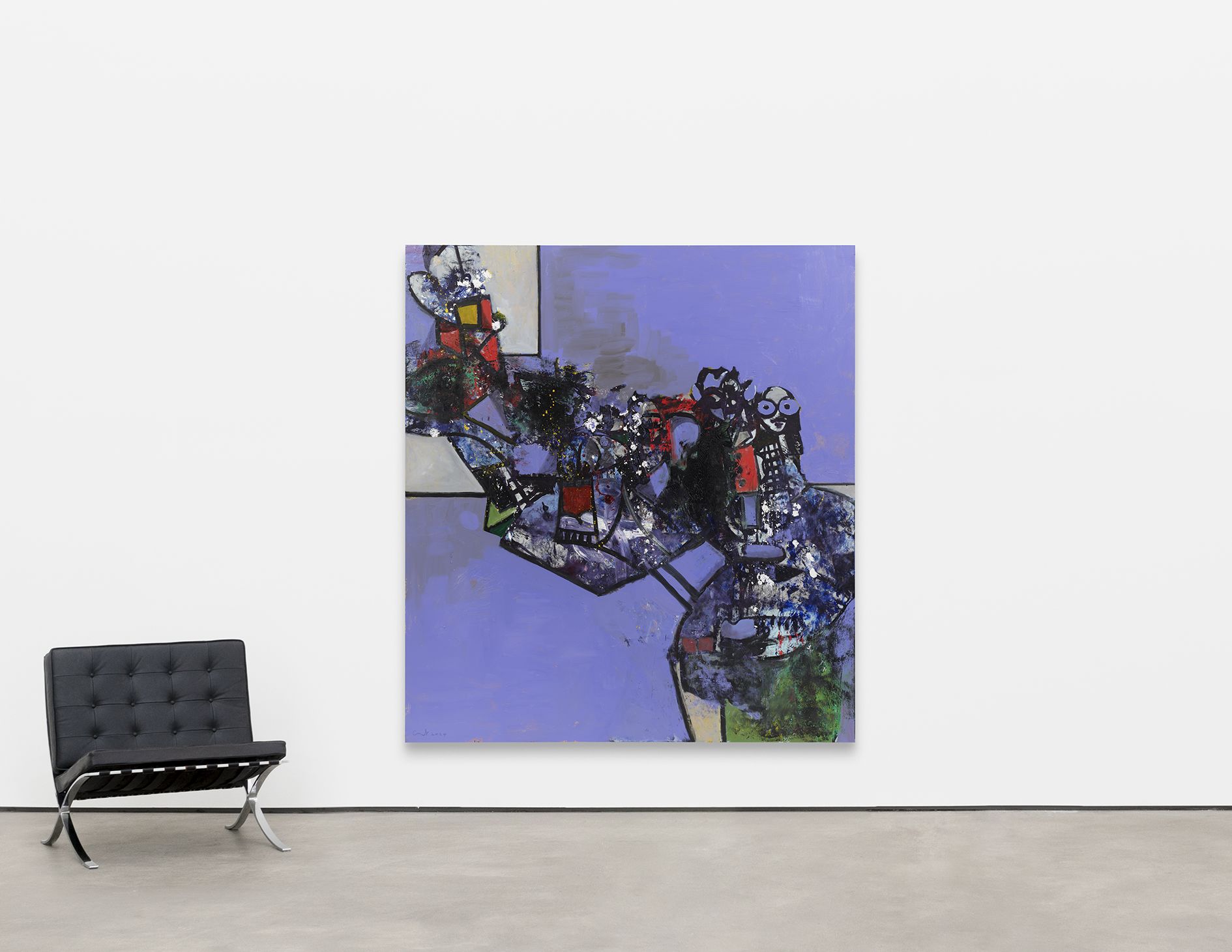
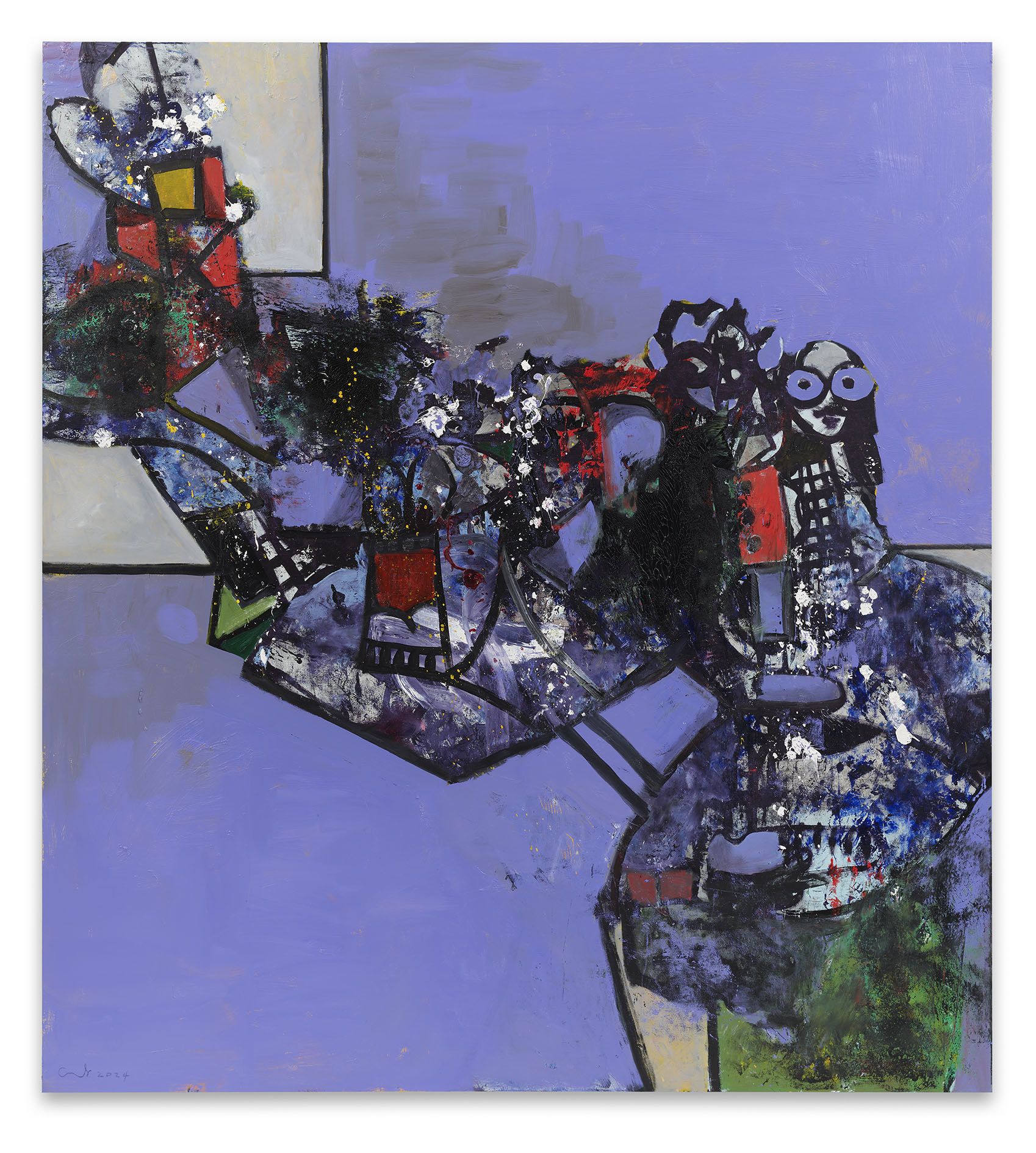
George Condo is an icon of contemporary American painting. His unique pictorial language reimagines the imagery and practices of Western art history, most especially modernism and abstraction, with vitality and dynamism. Out the Window (2024) perfectly demonstrates Condo’s command of color and form. Starting from a gray rectangle in the upper left—a clever nod to the window in the title—the composition sweeps down to the lower right. Against a deep purple backdrop, thick black lines carve out fragments of entwined figures, their overlaid faces and tangled limbs merging into a distorted corporeal entity. The central composition shows influence from Picasso as well as cartoons, whilst the background, rendered in purple with loose grey brushwork, is deeply reminiscent of Abstract Expressionism. Otherworldly and grotesque, the psychological depth of Condo’s mysterious creatures is enhanced by an intense, all-over engagement with the canvas that brings a restless physical energy to the work.
George Condo (*1957, Concord, NH) lives in New York. Selected solo exhibitions include Musée d’Art Moderne de Paris (2025), DESTE Foundation for Contemporary Art, Hydra (2024), Nouveau Musée National de Monaco – Villa Paloma (2023), The Morgan Library & Museum, New York (2023), Long Museum, Shanghai (2021), Cycladic Art Museum, Athens and Maritime Museum, Hong Kong (both 2018), Phillips Collection, Washington, DC (2017, traveled to Louisiana Museum of Modern Art, Humlebæk), Staatliche Museen zu Berlin – Museum Berggruen, Berlin (2016), New Museum, New York (2010), traveled to Hayward Gallery, London (2011), Boijmans Van Beuningen, Rotterdam (2011), Schirn Kunsthalle, Frankfurt (2012) and Kunstmuseum Luzern (2008). Selected group exhibitions include the 58th and 55th La Biennale di Venezia (2019, 2013), 13th Biennale de Lyon (2015), 10th Gwangju Biennale (2014), Whitney Biennial (2010, 1987) and the 48th Corcoran Biennial, Washington DC (2005).
![<p><b>Reinhard Mucha<br />
Schuld</b>, [2019] 2015<br />
Aluminum profiles, alkyd enamel painted on reverse of float glass, <i>model railway board with oval track in HO scale</i> different paints and materials, hardboard, profiled wood <i>(split found object)</i>, plywood, blockboard<br />
97.7 × 252.6 × 20.9 cm | 38 1/2 × 99 1/2 × 8 1/4 inches</p>](https://res.cloudinary.com/smimagebank/image/upload/w_2500,c_limit,f_auto,fl_progressive/v1785939582/sprueth_magers_Reinhard_Mucha_Schuld_%5B2019%5D_2015_13698.jpg)
![<p><b>Reinhard Mucha<br />
Schuld</b>, [2019] 2015<br />
Aluminum profiles, alkyd enamel painted on reverse of float glass, <i>model railway board with oval track in HO scale</i> different paints and materials, hardboard, profiled wood <i>(split found object)</i>, plywood, blockboard<br />
97.7 × 252.6 × 20.9 cm | 38 1/2 × 99 1/2 × 8 1/4 inches</p>](https://res.cloudinary.com/smimagebank/image/upload/w_2500,c_limit,f_auto,fl_progressive/v1785939584/sprueth_magers_Reinhard_Mucha_Schuld_%5B2019%5D_2015_13707.jpg)
![<p><b>Reinhard Mucha<br />
Schuld</b>, [2019] 2015<br />
Aluminum profiles, alkyd enamel painted on reverse of float glass, <i>model railway board with oval track in HO scale</i> different paints and materials, hardboard, profiled wood <i>(split found object)</i>, plywood, blockboard<br />
97.7 × 252.6 × 20.9 cm | 38 1/2 × 99 1/2 × 8 1/4 inches</p>](https://res.cloudinary.com/smimagebank/image/upload/h_80,c_limit,f_auto,fl_progressive/v1785939582/sprueth_magers_Reinhard_Mucha_Schuld_%5B2019%5D_2015_13698.jpg)
![<p><b>Reinhard Mucha<br />
Schuld</b>, [2019] 2015<br />
Aluminum profiles, alkyd enamel painted on reverse of float glass, <i>model railway board with oval track in HO scale</i> different paints and materials, hardboard, profiled wood <i>(split found object)</i>, plywood, blockboard<br />
97.7 × 252.6 × 20.9 cm | 38 1/2 × 99 1/2 × 8 1/4 inches</p>](https://res.cloudinary.com/smimagebank/image/upload/h_80,c_limit,f_auto,fl_progressive/v1785939584/sprueth_magers_Reinhard_Mucha_Schuld_%5B2019%5D_2015_13707.jpg)
Reinhard Mucha is a leading German sculptor and conceptual artist known for combining formal rigor and conceptual clarity with painterly and sculptural detail, often infused with subtle irony. Schuld, [2019] 2015 takes as its central element a model train set, cut apart and offset, its two halves mounted side by side on a wooden board, with horizontal aluminum struts spaced across the width of the work. Worn and stained, the board bears the marks of years of use: tape, handwritten notations, the traces of removed fixtures, and a streak of browned glue with an almost painterly quality. Laid over the surface, a sheet of glass is painted with fine, dense lines that evoke the geometry of a railway network—a theme that runs through Mucha’s œuvre—simultaneously defining and obscuring what lies beneath. The work’s composition and the reduction of the train set to formal essentials recall the economy of Minimalism, yet the stained wood, the texture and the pencil markings insist on remaining what they are—traces of a specific object whose prior existence resists such geometric absorption.
Installation view: Reinhard Mucha, Der Mucha – An Initial Suspicion, Kunstsammlung Nordrhein-Westfalen, K20 / K21, Düsseldorf, 2022
Reinhard Mucha (*1950, Düsseldorf) lives in Düsseldorf. The comprehensive survey exhibition Der Mucha – An Initial Suspicion was on view at Kunstsammlung Nordrhein- Westfalen’s two locations K20 and K21 in Düsseldorf (2022–23). Other solo exhibitions include Kunstmuseum Basel (2016), ifa – Galerie Friedrichstraße, Berlin (1996), Museum Haus Esters, Krefeld (1990), Kunsthalle Basel (1987), Kunsthalle Bern (1987), Centre Georges Pompidou, Paris (1986), Württembergischer Kunstverein, Stuttgart (1985), and Kabinett für aktuelle Kunst, Bremerhaven (1983). He participated in Documenta X (1997), and Documenta IX (1992) and represented Germany at the 44th Venice Biennale (1990).


Cyprien Gaillard’s multifaceted practice examines the cyclical interactions between nature, human industry, conservation and decay, made visible and palpable through materials gleaned from meaningful sites across the globe. Gaillard’s new series of large-scale fabric-wrapped acoustic panels—salvaged from the gutted auditorium of Trieste’s Museo Revoltella—explores the patterns by which forms, environments and histories interweave across time. Life in the cracks (Part 2) (2025) bears the beautiful ghostly pattern of repeated touch: past visitors brushed against the velvet, inadvertently leaving marks that turn the surfaces into abstract canvases or modern cave paintings. Each panel features a single, hand-embroidered motif along one edge, where the material once concealed by frames transitions into exposed sections. Stitched onto this demarcation, a skeleton inspired by the Danse Macabre serves as a reminder of death’s inevitability and alludes to the echoes of past eras, spaces and sounds.
A major solo exhibition of Gaillard’s latest works is currently on view at Kunsthaus Bregenz through October 4, 2026.
Cyprien Gaillard (*1980, Paris) lives and works in Berlin and Paris. Recent solo exhibitions include Haus der Kunst, Munich (2025), OGR, Turin (2024), Palais de Tokyo and Lafayette Anticipations, Paris (2022), Fondation LUMA, Arles (2022), Mori Art Museum, Tokyo (2021), TANK Shanghai (2019). His work has been included in group shows at Fondation Beyeler, Basel (2024), Carnegie Museum of Art, Pittsburgh (2024), Villa Medici, Rome (2023), Judd Foundation, New York (2023), Paintings Gallery of the Academy of Fine Arts, Vienna (2023), Atonal, Berlin (2023, 2021), Max Ernst Museum, Brühl (2023), Museum of Contemporary Art Kiasma, Helsinki (2022).
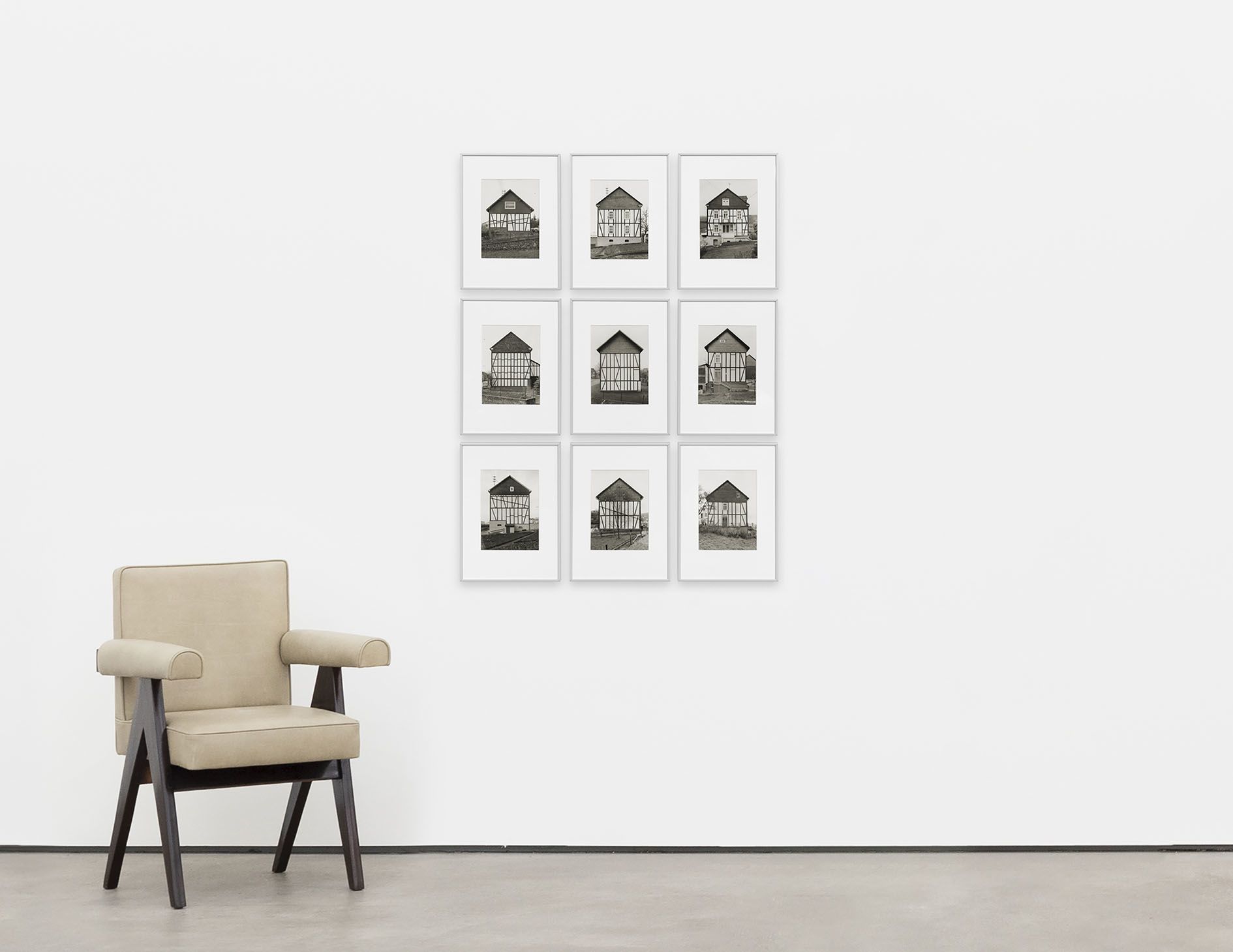
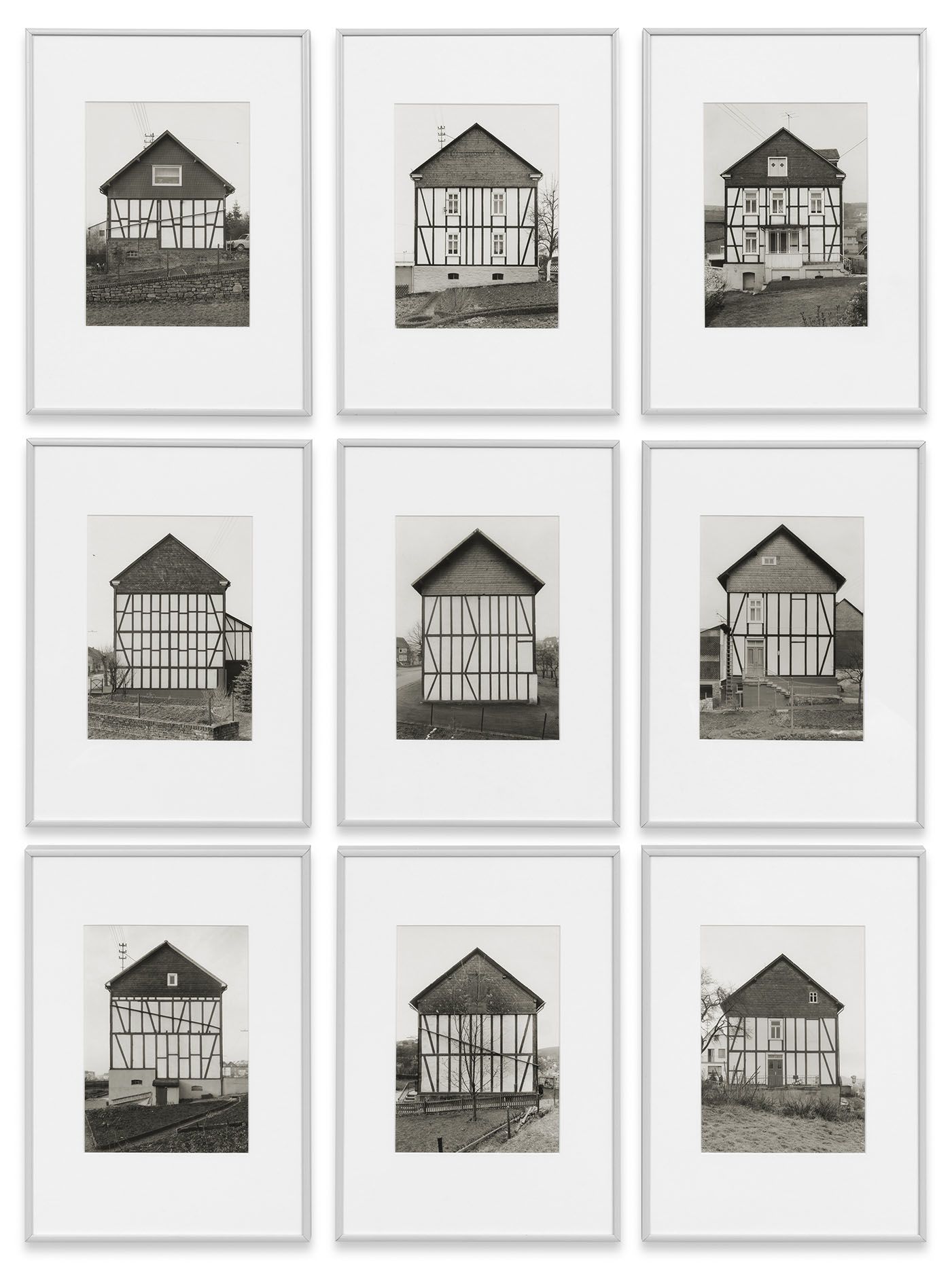
Icons of postwar German photography, Bernd and Hilla Becher meticulously documented industrial architecture across Europe and North America—utilizing large-format cameras and precise focal lengths to capture their signature black-and-white studies of framework houses, water towers, and other industrial forms. Their photography simultaneously distils each construction into a taxonomy of visually and functionally homogeneous structures, whilst emphasizing the particular and eccentric character of each. Framework Houses (1960–73) record the distinctive architecture of Germany’s industrial Siegen region, where Bernd grew up. Arranged in a grid of nine photographs, this “typology“ juxtaposes networks of gables and beams to highlight subtle symmetries, similarities, and differences. In doing so, the Bechers elevated industrial structures into a clear, unprecedented aesthetic realm.
Bernd (1931–2007) and Hilla Becher (1934–2015) lived in Düsseldorf and worked together since 1959. A major solo show of their work is on view at Fondazione MAST, Bologna (through September 27, 2026), which traveled from Die Photographische Sammlung/SK Stiftung Kultur, Cologne (2025). Other selected solo exhibitions include The Metropolitan Museum of Art, New York (2022), which traveled to San Francisco Museum of Modern Art (2022), National Museum Cardiff, Wales (2019), Josef Albers Museum Quadrat Bottrop (2018), Die Photographische Sammlung/SK Stiftung Kultur, Cologne (2016, 2013, 2010, 2006), Hamburger Bahnhof, Berlin (2005), Centre Pompidou, Paris (2004), K21 Kunstsammlung Nordrhein-Westfalen, Düsseldorf (2003) and 44th Venice Biennale (1990). Group exhibitions include Barbican Art Gallery, London (2014), Pinakothek der Moderne, Munich (2014, 2004), MoMA, New York (2013), Solomon R. Guggenheim Museum, New York (2010), Hamburger Bahnhof, Berlin (2008), The National Museum of Modern Art, Tokyo (2005), Hammer Museum, Los Angeles (2004), Tate Modern, London (2004, 2003) and Documenta XI, VII, VI and V, Kassel (2002, 1982, 1977, 1972).


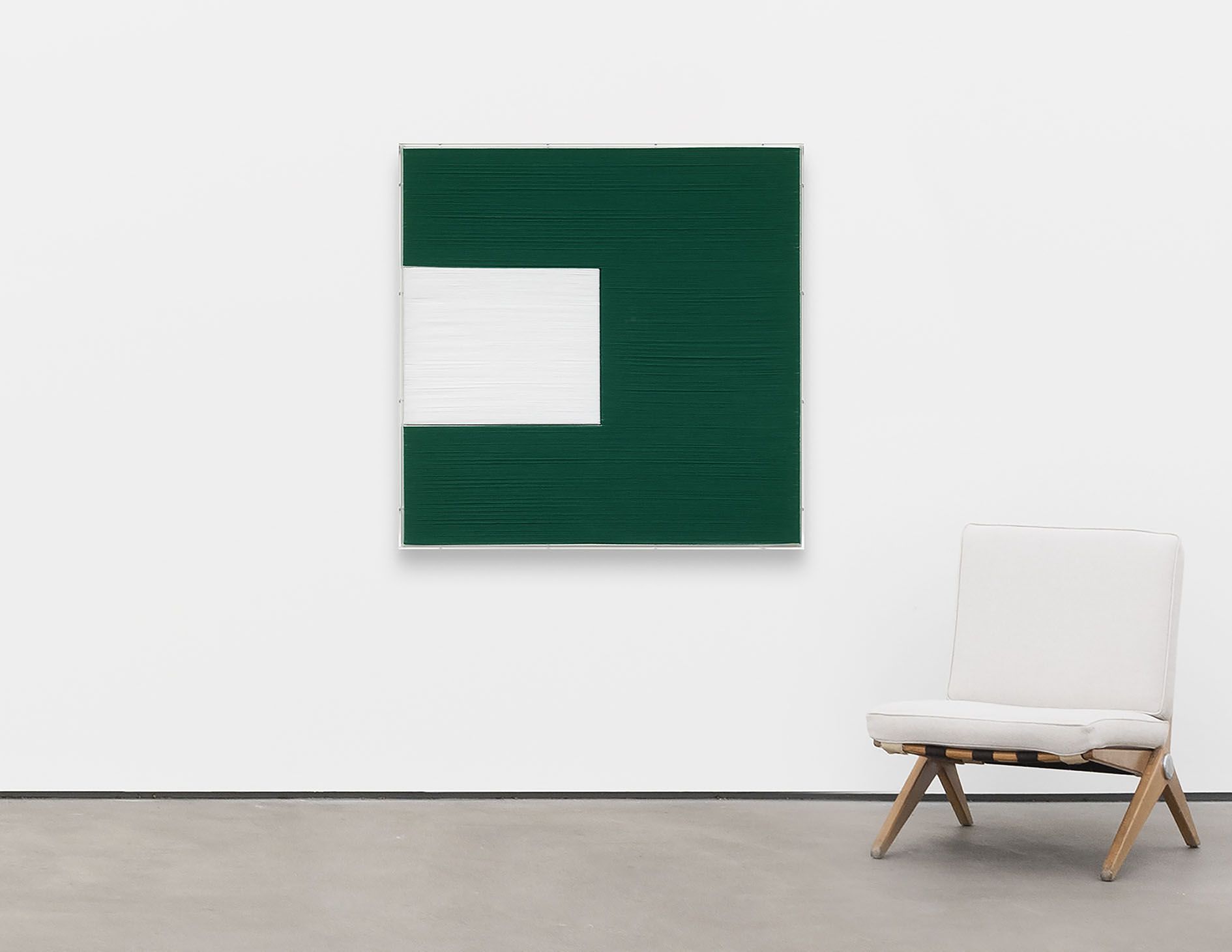


Rosemarie Trockel’s work critically explores the conceptual dimensions of craft, challenging entrenched social norms surrounding the notion of the male artistic genius, gender roles and cultural philosophies. She first garnered acclaim in the 1980s for her “knitting paintings,” machine-produced wool works that evoke traditional feminine handicrafts. These pieces subverted conventional associations of women’s work by integrating them into the fine art context. Climate Box (2023) is part of this ongoing body of works, updated for a new millennium: instead of using a machine to produce them, Trockel wraps loose strands of yarn around the canvas to form geometric compositions. The pared-down composition and horizontal grain directly reference the male-dominated world of twentieth-century abstraction and Minimalism, offering a female-driven alternative aligning with forebears such as Agnes Martin. The title references conservation boxes, sealed containers built to maintain humidity and temperature levels for the preservation of delicate objects. Here, the analogy is made literal: the plexiglass frame encases the yarn beneath it, admitting the material to the same institutional logic that long excluded it.
Rosemarie Trockel (*1952, Schwerte, Germany) lives and works in Berlin. Solo exhibitions include Sungkok Art Museum, Seoul (2024), Museum MMK für Moderne Kunst, Frankfurt (2022–23), Moderna Museet Malmö (2018–19), Pinacoteca Agnelli, Turin (2016), Kunsthaus Bregenz (2015), traveling exhibition at Museo Nacional Centro de Arte Reina Sofía, Madrid, New Museum, New York and Serpentine Gallery, London (2012–13) and WIELS, Brussels, Culturegest, Lisbon and Museion Bozen, Bolzano (2012–13). In 2005, a major retrospective of her work opened at Museum Ludwig, Cologne and traveled to MAXXI, Rome. In 1999, Trockel became the first woman artist to represent Germany at La Biennale di Venezia. Her work was also included in Documenta 10 (1997) and Documenta 13, Kassel (2012), as well as La Biennale di Venezia (2022).
![<p><b>Joseph Kosuth<br />
</b><i>‘Self-Described Twice’ [Pink]</i>, 1966<br />
Pink neon mounted directly on the wall<br />
28.2 × 237.8 cm | 11 × 93 5/8 inches</p>](https://res.cloudinary.com/smimagebank/image/upload/w_2500,c_limit,f_auto,fl_progressive/v1785939613/sprueth_magers_Joseph_Kosuth_SelfDescribed_Twice_13716.jpg)
![<p><b>Joseph Kosuth<br />
</b><i>‘Self-Described Twice’ [Pink]</i>, 1966<br />
Pink neon mounted directly on the wall<br />
28.2 × 237.8 cm | 11 × 93 5/8 inches</p>](https://res.cloudinary.com/smimagebank/image/upload/w_2500,c_limit,f_auto,fl_progressive/v1785939615/sprueth_magers_Joseph_Kosuth_SelfDescribed_Twice_13717.jpg)
![<p><b>Joseph Kosuth<br />
</b><i>‘Self-Described Twice’ [Pink]</i>, 1966<br />
Pink neon mounted directly on the wall<br />
28.2 × 237.8 cm | 11 × 93 5/8 inches</p>](https://res.cloudinary.com/smimagebank/image/upload/h_80,c_limit,f_auto,fl_progressive/v1785939613/sprueth_magers_Joseph_Kosuth_SelfDescribed_Twice_13716.jpg)
![<p><b>Joseph Kosuth<br />
</b><i>‘Self-Described Twice’ [Pink]</i>, 1966<br />
Pink neon mounted directly on the wall<br />
28.2 × 237.8 cm | 11 × 93 5/8 inches</p>](https://res.cloudinary.com/smimagebank/image/upload/h_80,c_limit,f_auto,fl_progressive/v1785939615/sprueth_magers_Joseph_Kosuth_SelfDescribed_Twice_13717.jpg)
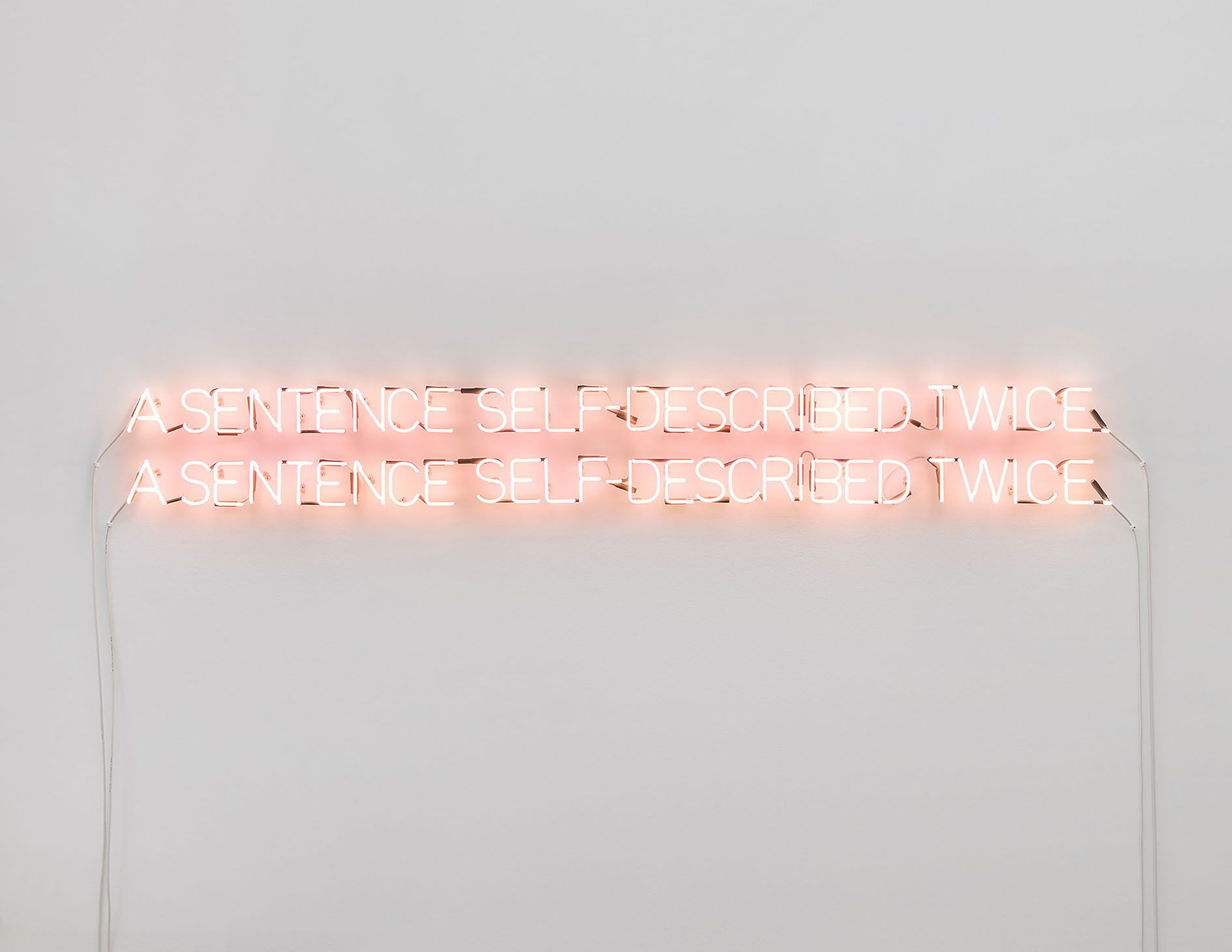
Considered one of the pioneers of conceptual and installation art since the 1960s, Joseph Kosuth has undertaken sustained investigations into the philosophy of language and the primacy of meaning through objects, installations, texts, publications and projects in public spaces. ‘Self-Described Twice’ [Pink] (1966) exemplifies Kosuth’s use of neon. Rather than using the medium for commercial advertising, he uses it as a “readymade” form of public signage. In this early work, Kosuth was deeply influenced by the philosopher Ludwig Wittgenstein, creating pieces that were tautologies – statements that are literally self-defined and true by their own nature. True to its title, the work plays on the literal meaning of words defining themselves. The text glowing in pink neon describes nothing other than its own physical existence and linguistic structure, whilst inciting humor through repetition.
Joseph Kosuth (*1945, Toledo, OH) lives and works in New York and Venice. Selected solo exhibitions include Casa dei Tre Oci – Berggruen Institute Europe, Venice (2026), Kunstmuseum Stuttgart (2025), MAMM, Moscow (2015), Kunstmuseum Thurgau, Kartause Ittingen (2014), The Jewish Museum, New York (2012), Haus Konstruktiv, Zurich (2011), the ACCA – Australian Centre for Contemporary Art, Melbourne (2010), the Louvre, Paris (2009), the Schirn Kunsthalle, Frankfurt (2006), the Isabella Stewart Gardner Museum, Boston (2000), the Tokushima Modern Art Museum (1999), the Palais des Beaux Arts, Brussels (1990), the Sigmund Freud Museum, Vienna (1989) and the MoMA PS1, New York (1980). He has participated in Documenta V, VI, VII and IX (1972, 1977, 1982, 1992) and the Venice Biennale (2007, 1999, 1993, 1976). Awards include the Decoration of Honor in Gold for Services to the Republic of Austria (2003), the Chevalier de l’ordre des Arts et des Lettres from the French government (1993), the Menzione d’Onore at the Venice Biennale (1993) and the Brandeis Award (1990). In February 2001 he was awarded the Laurea Honoris Causa, a doctorate in Philosophy and Letters from the University of Bologna.
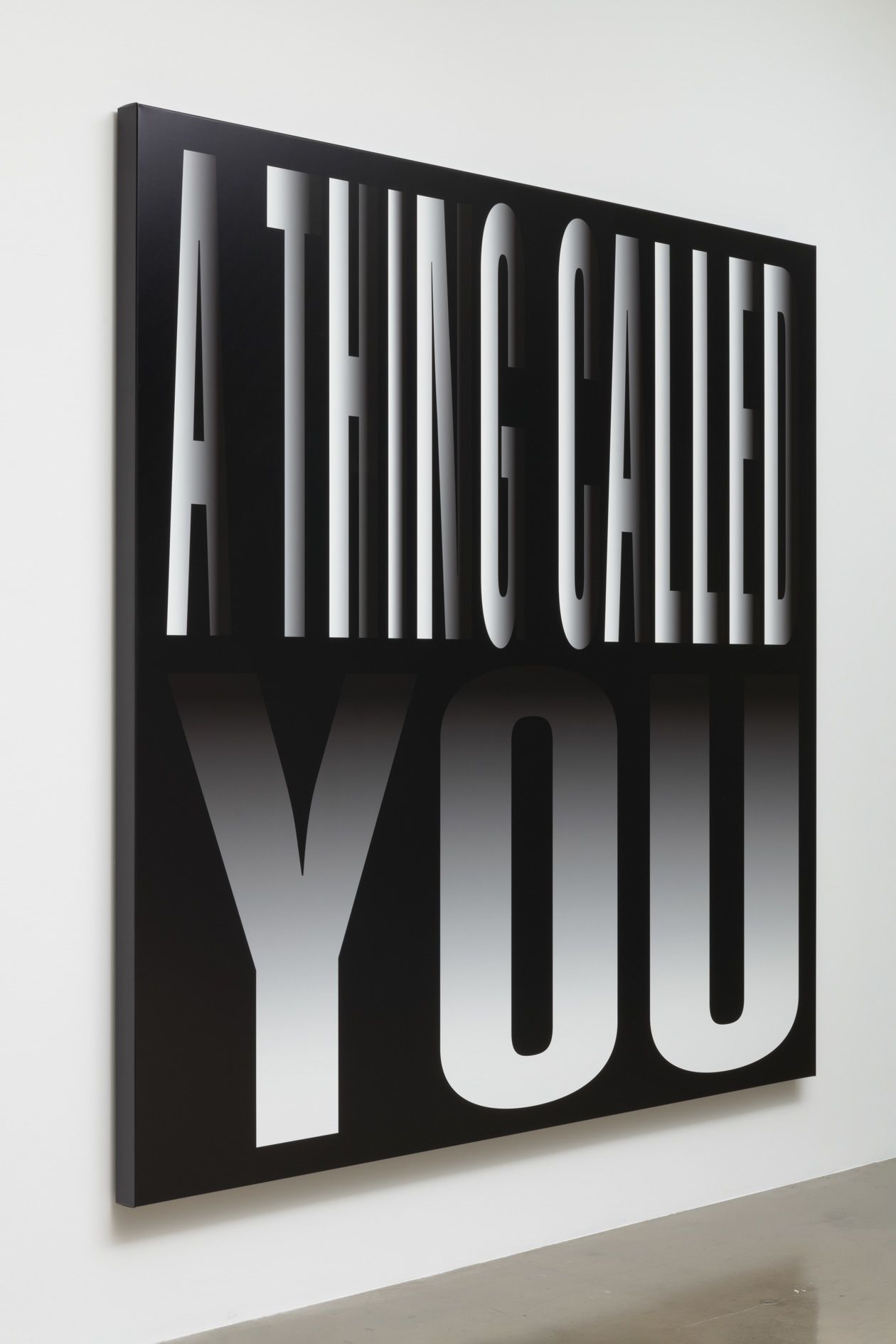
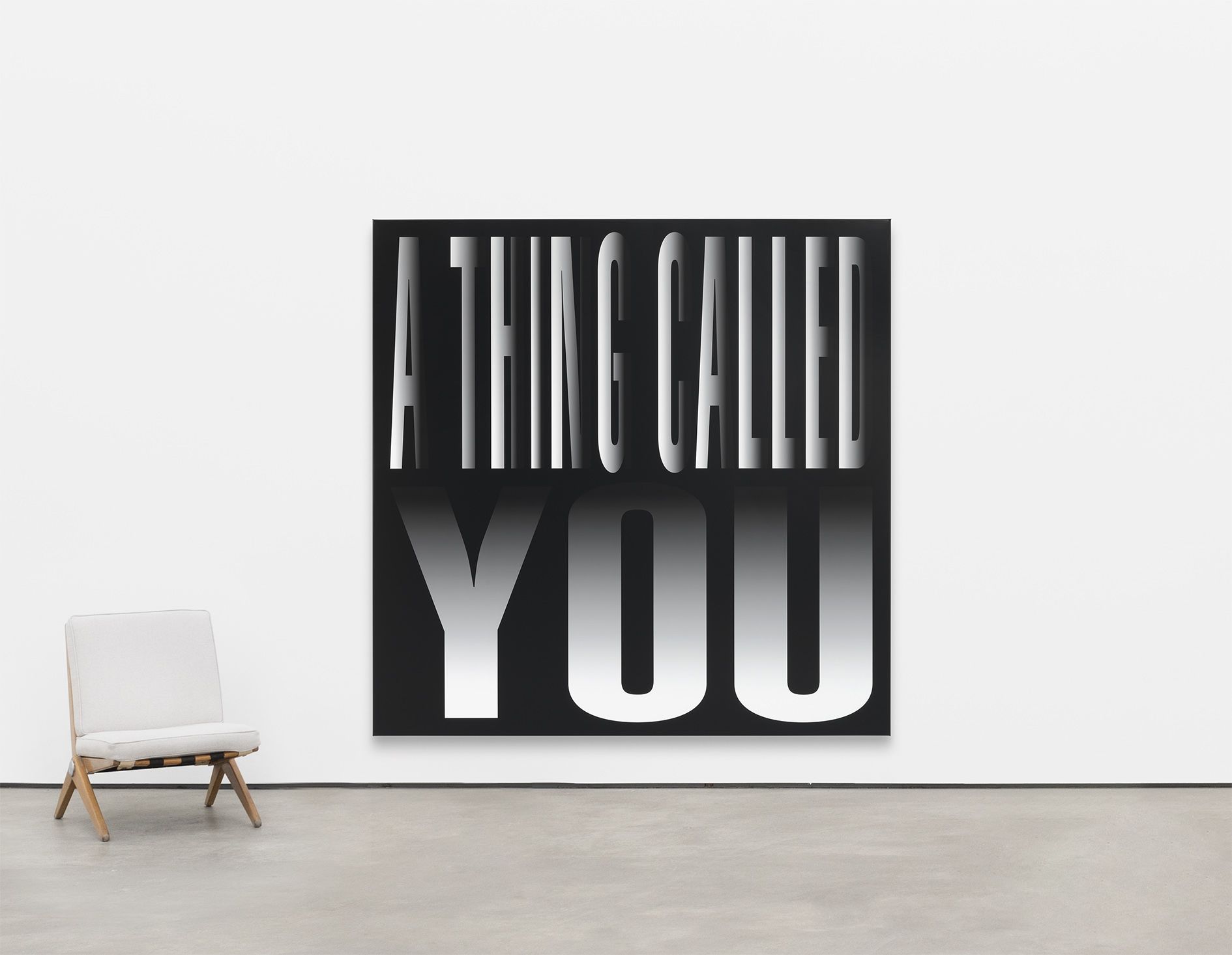

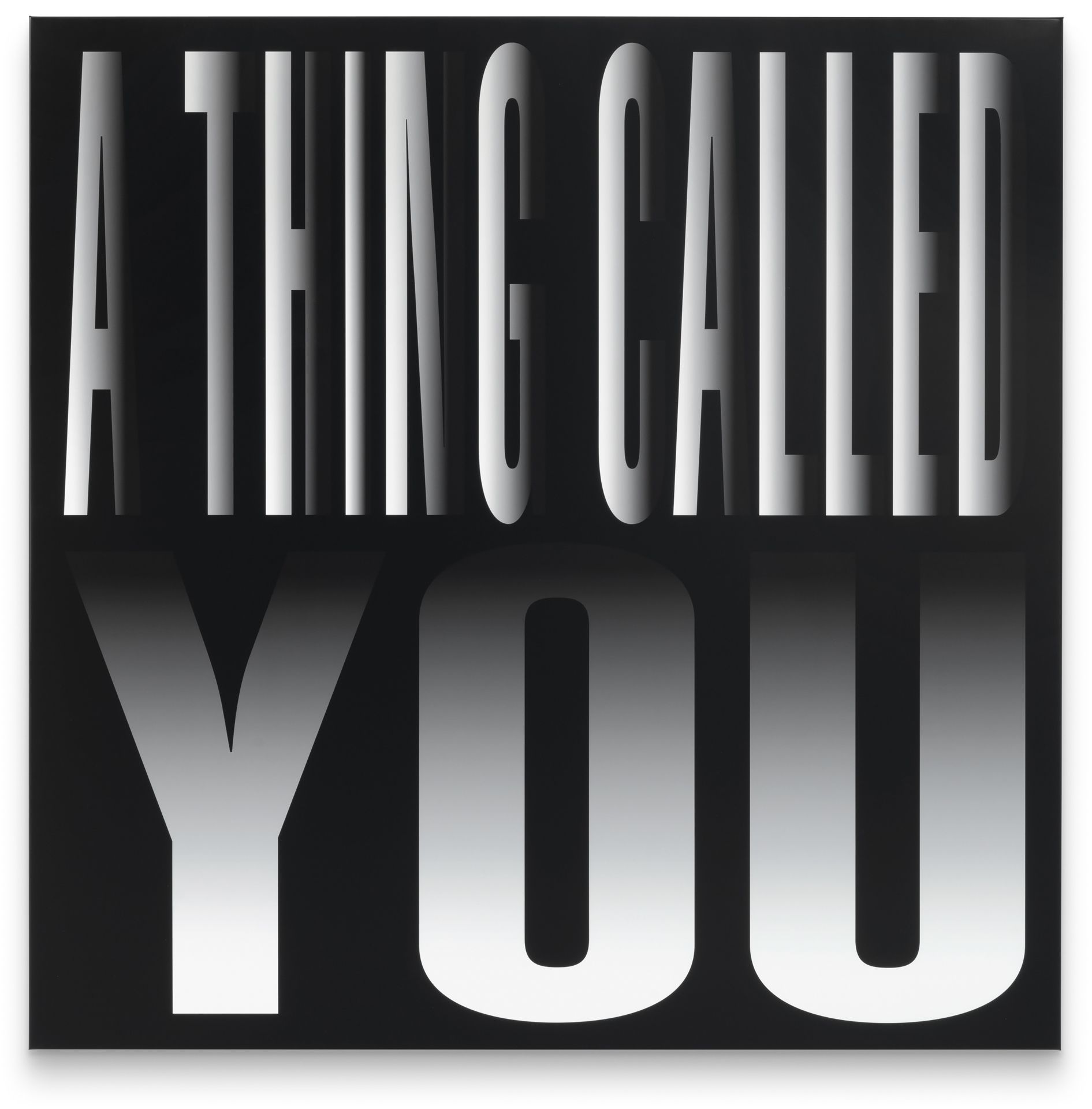
Barbara Kruger’s razor-sharp, unmistakable work wields image and word as instruments of power, probing control, class, corruption and consumerism. For over four decades, her voice and aesthetic have transcended the insularity of the art world and influenced everyday visual culture. Untitled (A thing called you) (2024) is part of Kruger’s body of textual wall works that grapple with our current dystopian reality. In a large-scale digital print on vinyl, Kruger renders the phrase “A THING CALLED YOU” in her signature bold font, stacked across the composition in fading shades of gray that shift from stark white to deep shadow. Activating the space and playing with the seductive visual effects of three-dimensionality, the piece exemplifies Kruger’s ability to consistently question how we reveal ourselves to one another, reducing the self to language and interrogating what it means to be addressed, defined or reduced to “a thing” by another’s words.
Barbara Kruger (*1945, Newark, NJ) lives and works in Los Angeles and New York. Recent solo shows include Museo Guggenheim Bilbao (2025), ARoS Art Museum, Aarhus, Serpentine Galleries, London (both 2024), Museum of Modern Art, New York, Los Angeles County Museum of Art, Neue Nationalgalerie, Berlin (all 2022), Art Institute of Chicago (2021), Amorepacific Museum of Art, Seoul (2019) and National Gallery of Art, Washington, DC (2016). Recent group exhibitions include Langen Foundation, Neuss, Germany (2025), The Broad, Los Angeles (2023), La Biennale di Venezia (2022), Isabella Stewart Gardner Museum, Boston (2021), Museum of Modern Art, Warsaw (2021), The Metropolitan Museum of Art, New York (2020), Walker Art Center, Minneapolis (2020), Nationalmuseum, Stockholm (2019) and Hamburger Bahnhof, Berlin (2018).


Sylvie Fleury’s multimedia practice playfully yet provocatively interrogates the politics of consumerism, fetishism, and desire, radically challenging established artistic paradigms. This discourse is embodied in her series of mannequin sculptures, which feature the lower half of a fiberglass model coated in sleek car paint, legs crossed and draped in clothing—part shop-window display, part art object, collapsing the line between fashion and fine art. In Mercury /Virgo (2025), a pair of blue legs emerges from the wall over which a quilted, silver reflective coat hangs. Suspended mid-air, they disrupt normative bodily relations in a manner reminiscent of Robert Gober’s eerie, disembodied wax sculptures. Yet, unlike Gober’s unsettling works, Fleury’s legs remain seductively inviting, leaning into the sleek aesthetics of materialism.
Sylvie Fleury (*1961, Geneva) lives and works in Geneva. Recent solo exhibitions include Mrac Occitanie, Sérignan, France (2025), Kunsthal Rotterdam (2024), Kunstmuseum Winterthur (2023), Pinacoteca Agnelli, Turin, Aranya Art Center, Beidaihe, China, and Bechtler Stiftung, Uster, Switzerland (all 2022), Kunstraum Dornbirn and Instituto Svizzero, Rome (both 2019). Selected group exhibitions include National Museum of Modern Art, Kyoto (2024), Monnaie de Paris and Kunstmuseum Wolfsburg (both 2023), Migros Museum für Gegenwartskunst, Zurich (2022, 2013), Jeu de Paume, Paris (2020), Grand Palais, Paris (2019), Kunsthaus Zurich (2018), Museum Haus Konstruktiv, Zurich (2016), Belvedere, Vienna (2012), Städtische Galerie im Lenbachhaus, Munich (2010), Chelsea Art Museum, New York(2007), PS1, New York (2006), Collection Lambert, Avignon (2003) and Museum Ludwig, Cologne (2000).


The research-based practice of Gala Porras-Kim considers the relationship between cultural artifacts and the institutional conventions around registration, conservation and display. In her series A terminal escape from the place that binds us (2021–ongoing), Porras-Kim considers the afterlife of two-thousand-year-old human remains held by the Gwangju National Museum in South Korea. In a letter to the museum’s director, she calls into question at what point the agency over our own bodies ceases. Alongside the letter is a large-scale map made using paper marbling techniques, which create a landscape of vivid pigment swirls suggesting an alternative, self-determined final resting place. A refreshing approach to institutional critique, the work questions the colonial ideology behind the encyclopedic museum and proposes nuanced ways of representing the ancient past.
Gala Porras-Kim presents a featured installation at the Pavilion of Applied Arts, located in the Arsenale at the 61st La Biennale di Venezia (2026), developed with the late curator Koyo Kouoh, in collaboration with the Victoria and Albert Museum, London.
Gala Porras-Kim (*1984, Bogotá) lives and works in Los Angeles and London. The Colombian-Korean-American artist received her Master of Fine Arts from CalArts, Valencia, CA (2009). She was a Fellow at the Radcliffe Institute for Advanced Study at Harvard University, Cambridge (2019), an Artist in Residence at the Getty Research Institute, Los Angeles (2020–22) and a Fellow at the Museo delle Civiltà, Rome in collaboration with MAO – Museo d’Arte Orientale, Turin (2023–25). Her work has been exhibited at the Carnegie Museum of Art, Pittsburgh (2025), Museum of Contemporary Art Denver (2024), MoMA, New York (2023), Leeum Museum of Art, Seoul (2023), MMCA, Seoul (2023), MUAC, Mexico City (2023), Liverpool Biennial (2023), Gwangju Biennial (2021), São Paulo Art Biennial (2021), and Whitney Museum of American Art, New York (2019, 2017).


Hyun-Sook Song understands painting to be an act of concentrated meditation that visually records the artist’s state of mind. Her decades-long practice has been defined by a distinctive style: simple compositions of deliberate linework, which are reminiscent of East Asian calligraphy, rendered in egg tempera. 5 Brushstrokes (2024) depicts the artist’s white gestural sweep anchored by an orange stroke, against a gradual dark green background. The positioning is reminiscent of a white flag fluttering in the wind. The painting is emblematic of the artist’s economy of gesture, naming the number of brushstrokes needed to complete the work. In doing so, Song prompts viewers to identify and trace each measured line, to understand its enigmatic balance of abstraction and figuration by tracking her meticulous movements in its creation.
Hyun-Sook Song (*1952, Damyang, Jeollanam-do, South Korea) lives and works in Hamburg. Her work is prominently featured in the current group exhibition Isa Mona Lisa at Hamburger Kunsthalle, on view through October 18, 2026. Selected solo and group exhibitions include Hamburger Kunsthalle, National Museum of Contemporary Art, Seoul, Gwangju Museum of Art, Poznan Biennale, Leeum Samsung Museum of Art, Seoul, Mori Art Museum, Tokyo, Asian Art Museum, San Francisco, Berkeley Art Museum, San Francisco, and Deichtorhallen, Hamburg. Hyun-Sook Song’s work is included in the collections of institutions, such as Kunstmuseum Bern, Kunstmuseum Bonn, Hamburger Kunsthalle, Kunstmuseum Düsseldorf, Leeum Samsung Museum of Modern Art, Seoul, Mori Art Museum, Tokyo, Fukuoka Asian Art Museum, Seoul Museum of Art, Gwangju Art Museum, and Gyeonggido Museum of Art.
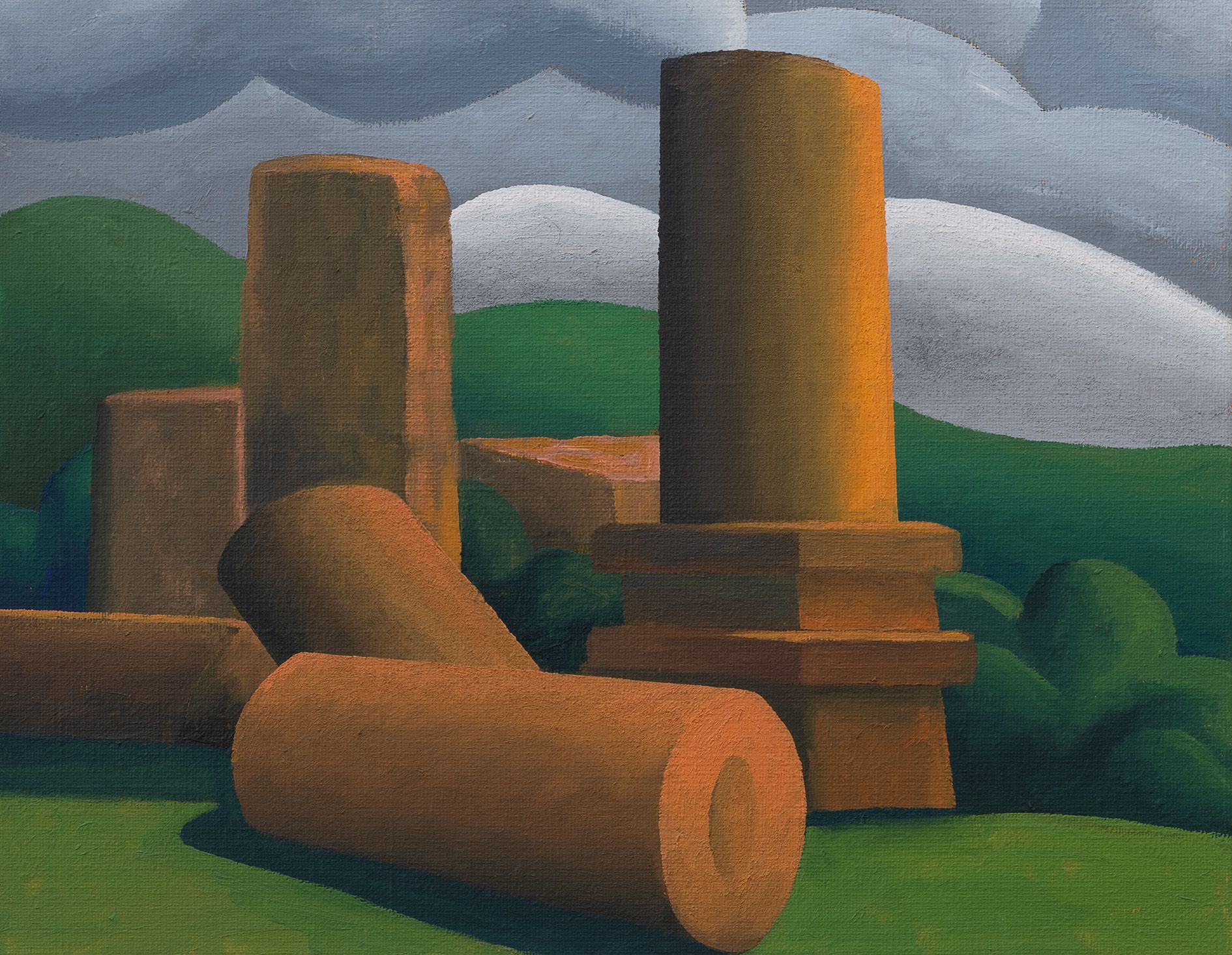
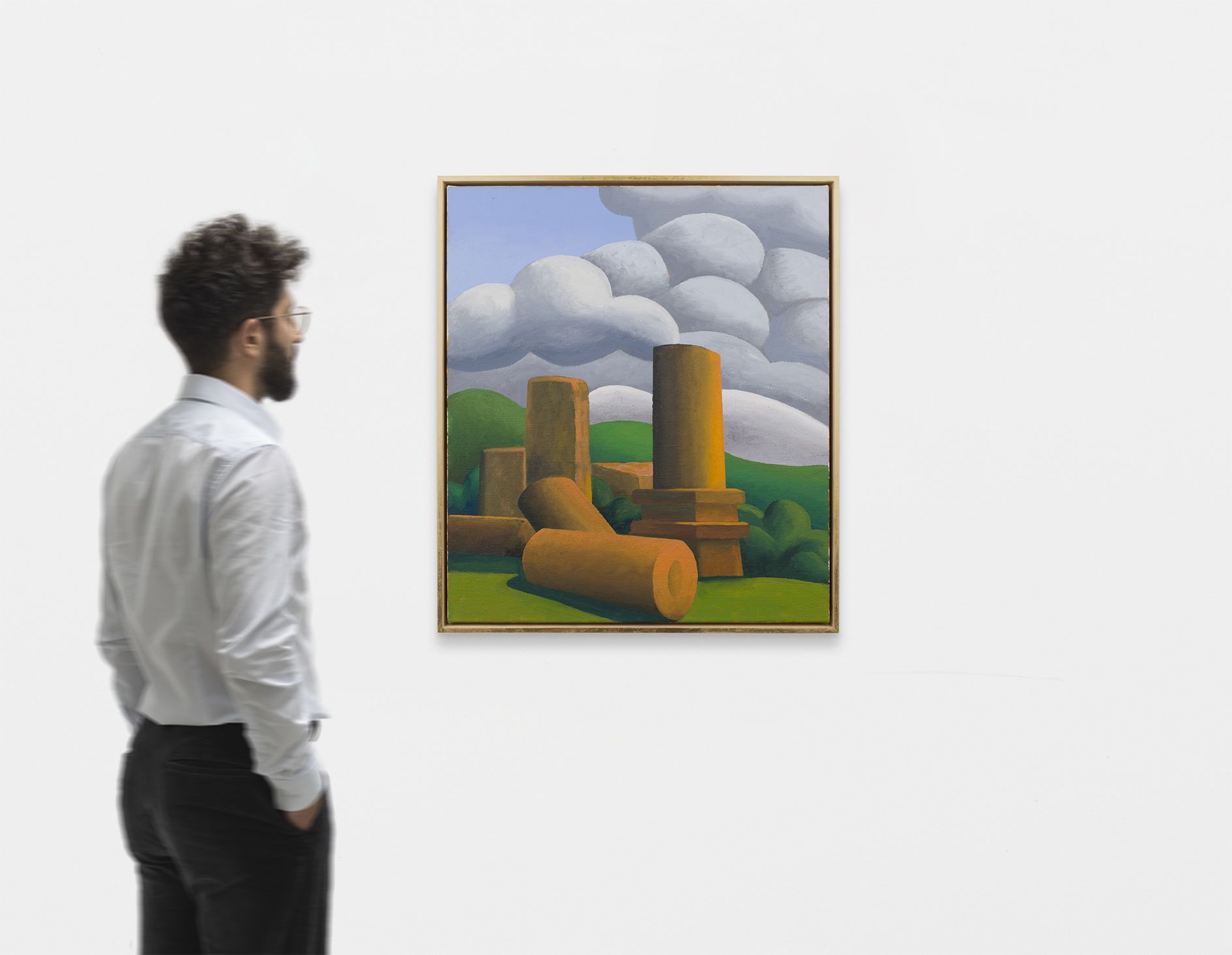
Salvo was an Italian Conceptualist in dialogue with the burgeoning Arte Povera movement before his practice dramatically shifted in 1973, when the artist turned decisively to figurative painting. His oil paintings embrace the aesthetics of traditional art histories, from Giotto and Botticelli to Italian Futurism and Surrealism, employing flat geometric forms and rich colors that draw attention to the painting’s artifice. Fascinated by capricci—mythological compositions that merge architecture, archaeological ruins, and landscapes—Salvo brought the past into conversation with the present. Foregrounding his study of classical antiquity, these simplified landscapes, columns, and Greek and Roman ruins distill remembered spaces into a quiet meditation on the passage of time. Apamea (2001) depicts a remnant of Tuscan columns rendered in rich, rusty orange—some standing tall, others lying fallen across a vibrant green pasture against a backdrop of stormy, cloud-filled skies. The painting is characteristic of Salvo’s celebrated use of luminous light effects, which imbue the scene with a serene, dreamlike tranquility.
Salvo (1947–2015) lived and worked in Turin. Solo exhibitions include Pinacoteca Agnelli, Turin (2025), Museum of Contemporary Art, Rome (2022), Museo d’Arte della Svizzera Italiana, Lugano (2017, with Alighiero Boetti), Museo d’Arte Contemporanea, Lissone (2015), Galleria d’Arte Moderna e Contemporanea, Turin (2007), Galleria d’Arte Moderna e Contemporanea, Bergamo (2002), Musée d’Art Contemporain, Nîmes and Museum Boijmans van Beuningen, Rotterdam (both 1988), Kunstmuseum Lucerne (1983), Mannheimer Kunstverein and Museum Folkwang, Essen (both 1977). In addition to participating in Documenta 5 (1972) and the 1976 and 1988 editions of Biennale di Venezia, recent group exhibitions include Kröller-Müller Museum, Otterlo, The Netherlands (2023), Kunsthaus Glarus, Switzerland (2022), Castello di Rivoli, Turin (2021) and Menil Drawing Institute, Houston (2020).
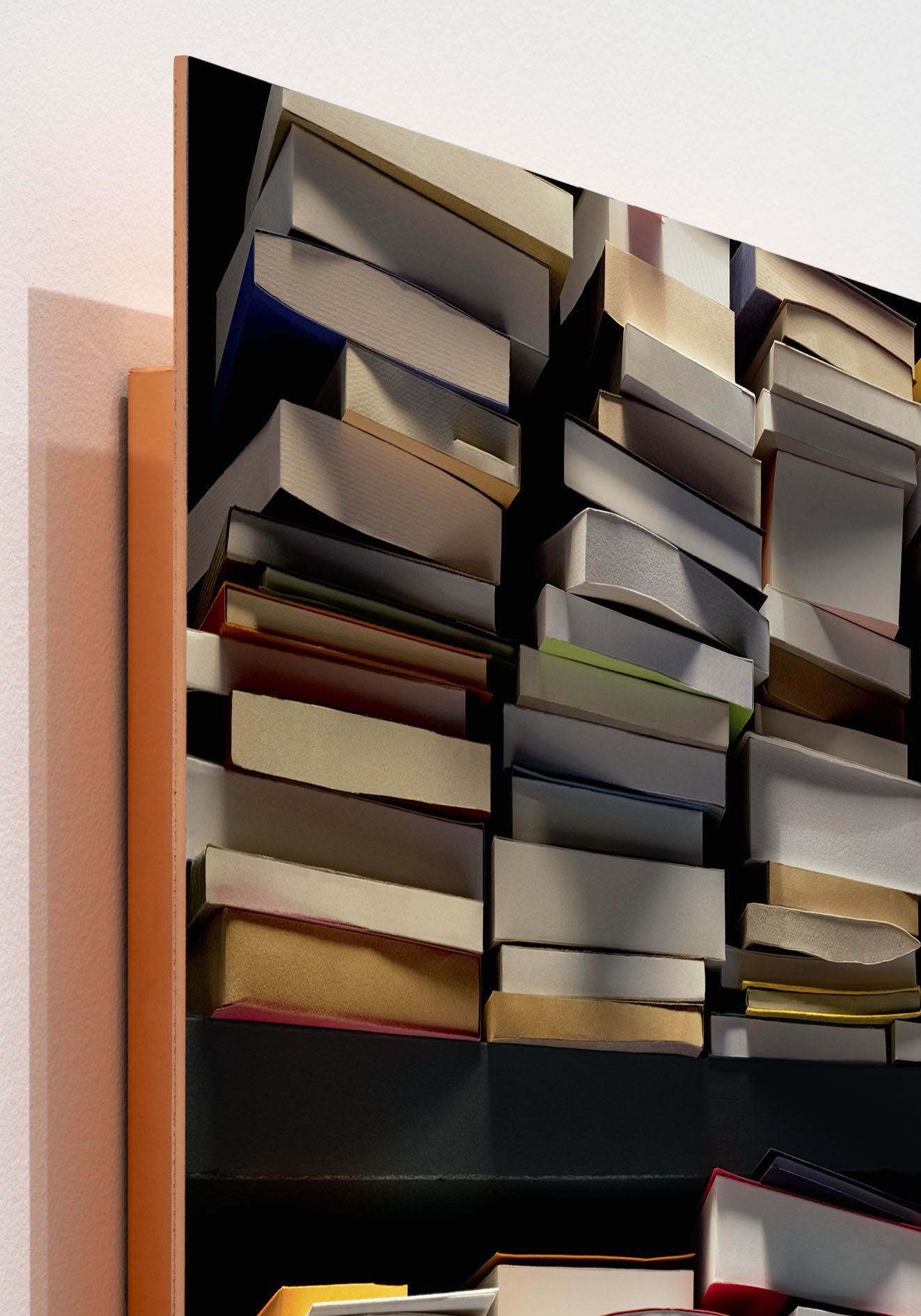
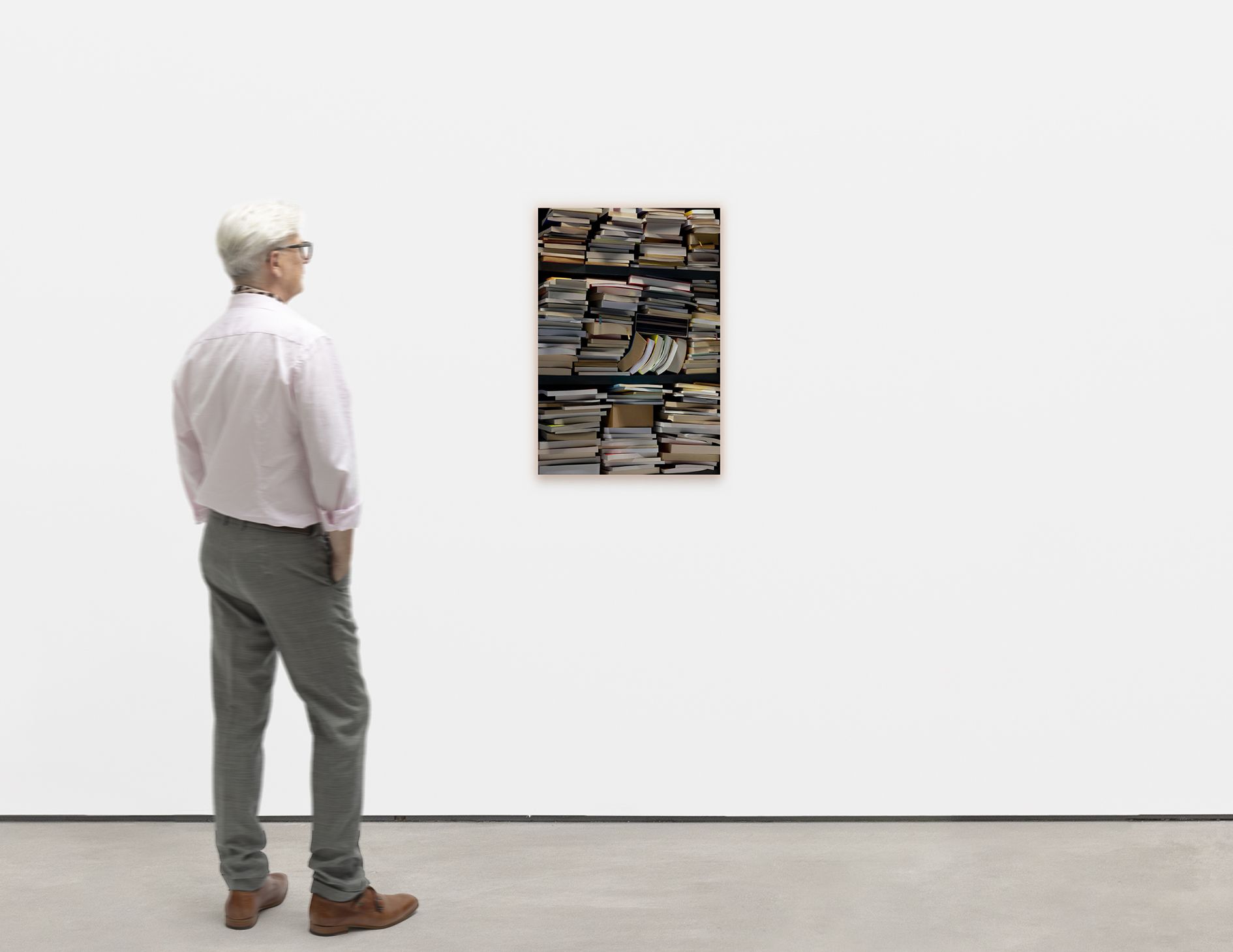

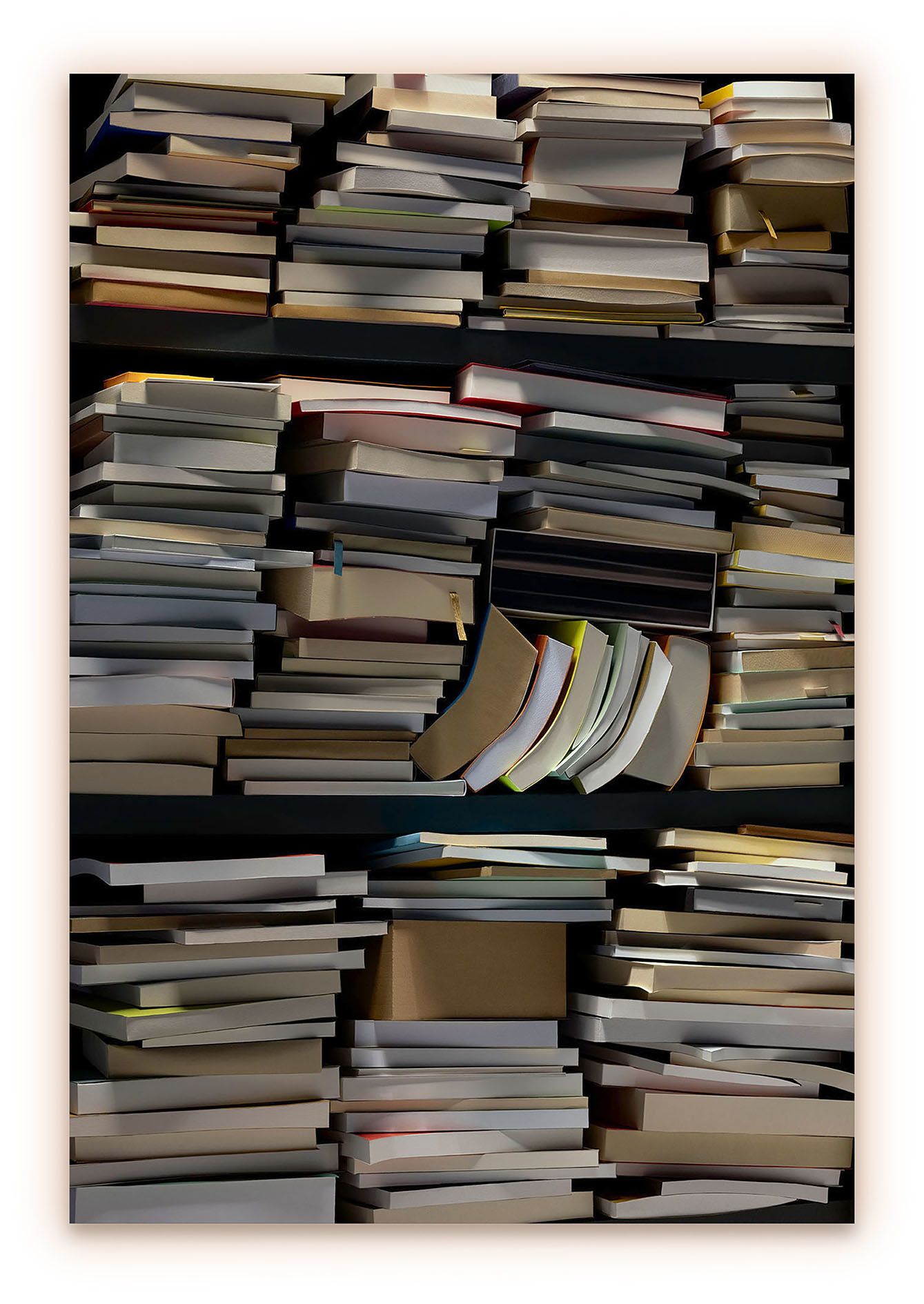
Thomas Demand is best known for his photographs of unique paper models that reconstruct scenes charged with historical, political and cultural significance, as well as everyday moments. In 2025, he began working with a new technique, creating smaller-scale images printed on copper. The material has deep roots in art history: in the fifteenth century, goldsmiths’ engraving techniques were adapted to copper plates for reproducible prints, with etching following in the sixteenth century. It was also favored as a painting support by artists including Jan Brueghel the Elder and Nicolas Poussin; its smooth surface made it suited to fine detail. In the nineteenth century, copper served as the support for the daguerreotype, the early photographic process. In Books (2025), Demand has reproduced stacks of books, including their precarious lean, the slight overhang of pages, bookmarks still slipped between leaves. This accumulation, which suggests the overflow of a well-used library or archive, is made entirely of paper, folding the medium back into what it depicts.
Thomas Demand (*1964, Munich) lives and works in Berlin. A solo exhibition of new Model Studies by Demand is currently on view at MAK, Vienna, through January 24, 2027. He is the subject of a major touring retrospective, which opens at Fundación PROA, Buenos Aires, on August 21, 2026, having previously been exhibited at Taipei Fine Arts Museum (2025), Museum of Fine Arts, Houston (2024), Jeu de Paume, Paris (2023), Israel Museum, Jerusalem (2023–24), and UCCA Edge, Shanghai (2022). Other selected solo exhibitions include Museum of Contemporary Art, Toronto (2022), Centro Botín, Santander, Garage Museum of Contemporary Art, Moscow (both 2021), Fondazione Prada, Venice (2017, 2007), Modern Art Museum of Fort Worth (2016), Los Angeles County Museum of Art (2015), Museum of Contemporary Art, Tokyo (2012), Neue Nationalgalerie, Berlin (2009), Hamburger Kunsthalle, Hamburg (2008), Serpentine Gallery, London (2006), Museum of Modern Art, New York (2005), Kunsthaus Bregenz (2004), Louisiana Museum of Modern Art, Humlebæk (2003), and Castello di Rivoli, Turin (2002). He represented Germany at the 26th São Paulo Biennale in Brazil in 2004.


Thea Djordjadze’s distinctive paintings exemplify an embodied practice that investigates the poetics and particularities of space, alongside the inherent characteristics of her chosen materials. Her ongoing series of plaster-filled wooden frames with pigment both embedded within and layered upon their porous surfaces occupies a hybrid territory between painting and relief, fusing painterly gestures with sculptural presence. The tactile surfaces vividly reveal the artist’s process: upon closer inspection, rich hues of red and brown accentuated by green and yellow emerge through a process of build-up and removal, evidenced by subtle plaster remnants and deliberate surface scratches. These textured layers invest Untitled (2025) with a compelling sense of immediacy and gestural energy—positioning painting as an active site of physical negotiation between artist, medium, and space.
Thea Djordjadze (*1971, Tbilisi) lives and works in Berlin. Solo shows include Hamburger Kunsthalle (2025), WIELS, Centre d’Art Contemporain, Brussels (2023), Musée d’Art Moderne et Contemporain (MAMC), Saint-Étienne (2022), Martin-Gropius-Bau, Berlin (2021), Kunst Museum Winterthur (2019), Portikus, Frankfurt (2018), Pinakothek der Moderne, Staatliche Graphische Sammlung, Munich (2017), Secession, Vienna (2016), MoMA PS1, New York (2016), South London Gallery (2015), MIT List Visual Arts Center, Cambridge, MA (2014), Aspen Art Museum, CO (2013), Malmö Konsthall (2012), and Kunsthalle Basel (2009). Recent group exhibitions include Kölnischer Kunstverein (2025), Fondation Beyeler, Riehen/Basel (2023), Hamburger Bahnhof, Berlin (2022), Tai Kwun – Centre for Heritage and Arts, Hong Kong (2020), and Deichtorhallen Hamburg (2019).
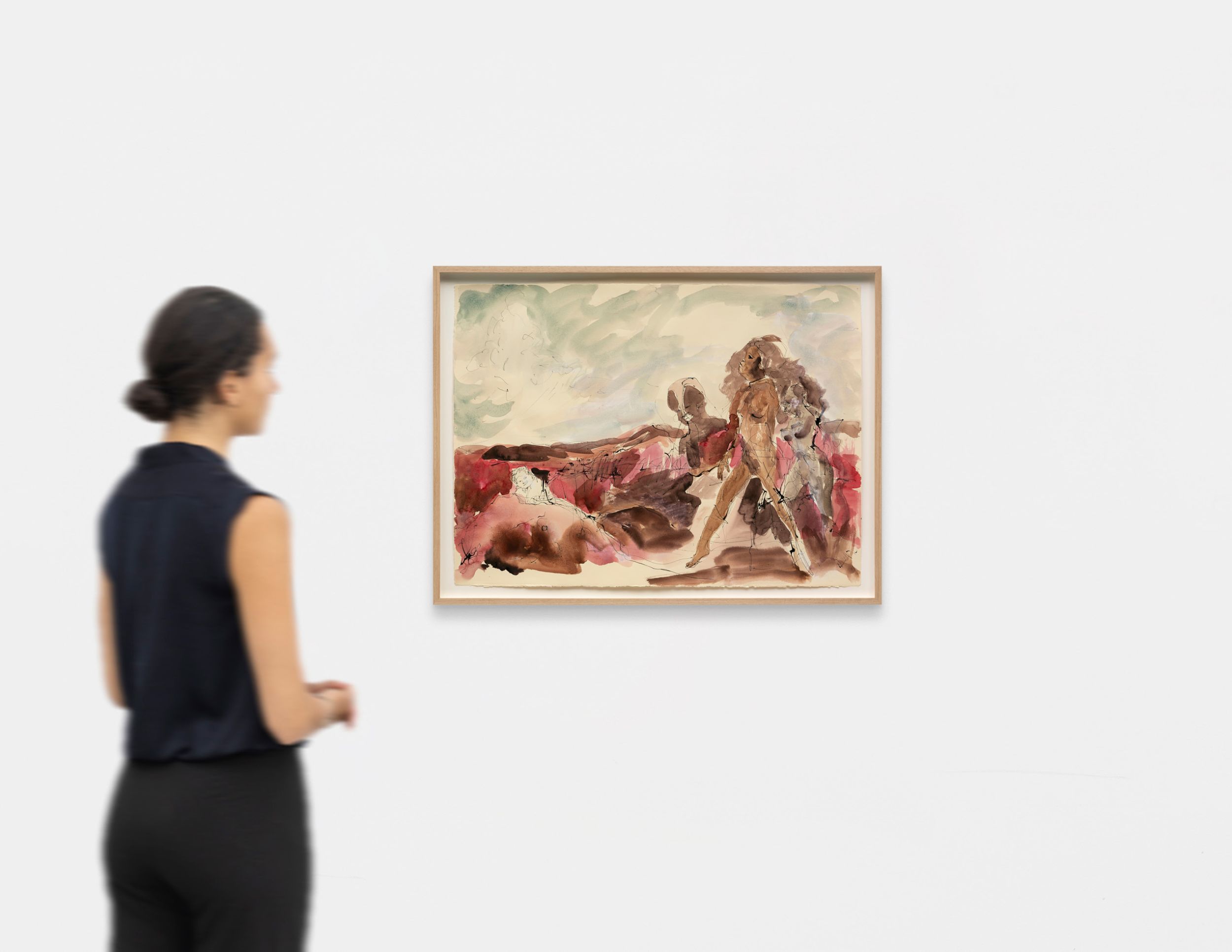
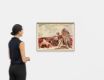
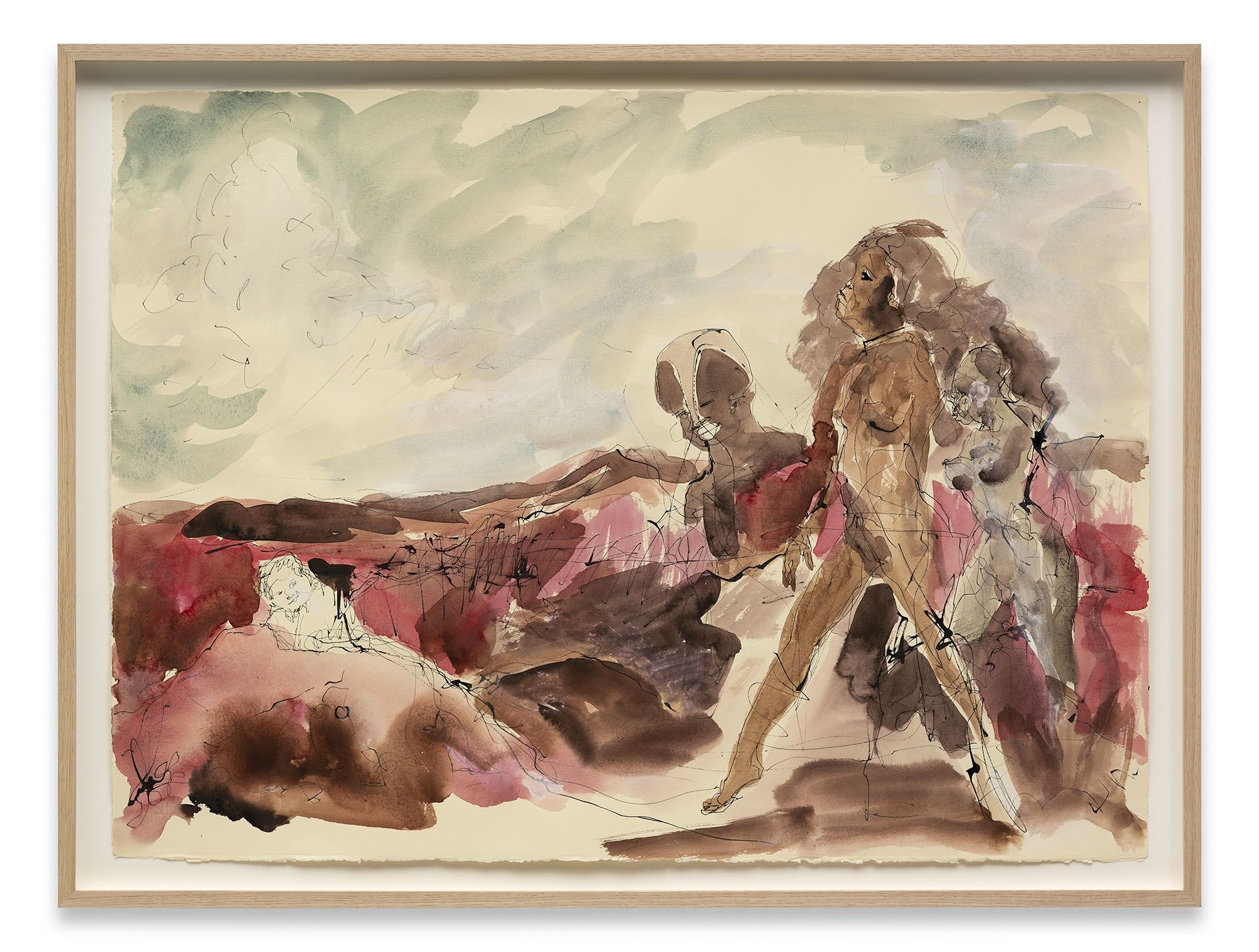
Kara Walker has produced one of the most complex œuvres in contemporary American art, spanning painting, works on paper, installation, film, and her celebrated cut-paper silhouettes. Her unflinching examination of history challenges the viewer to confront the positioning of power, race and desire in America’s collective unconscious. Marching Into His Trap (2025) is a watercolor and ink on paper drawing, part of a series conceived as an explicit meditation on the present moment – though, as with all of her work, past and present are fused to suggest new narratives. Walker floods the paper with cascading washes of rose, burgundy and umber, cut through with loose, expressive ink lines that characterize her technique. Whether the title’s march is one of compulsion or defiance, or both simultaneously, the work refuses to resolve tension, holding its figures in a state of suspension between myth, memory and recent history.
Kara Walker (*1969, Stockton, CA) lives and works in New York. Walker recently presented a major site-specific commission at the San Francisco Museum of Modern Art. Selected solo exhibitions include Fundación PROA, Buenos Aires (2025), National Gallery of Australia, Canberra (2023), De Pont Museum, Tilburg, The Netherlands (2022), Schirn Kunsthalle, Frankfurt, Kunstmuseum Basel (both 2021), Turbine Hall, Tate Modern, London (2019), Domino Sugar Refinery, New York (2014), Camden Arts Centre, London, Art Institute of Chicago (both 2013), Center for Contemporary Art Ujazdowski Castle, Warsaw (2011), Hammer Museum, Los Angeles and Modern Art Museum Fort Worth (both 2008), Walker Art Center, Minneapolis, Whitney Museum, New York (both 2007) and The Metropolitan Museum of Art, New York (2006).

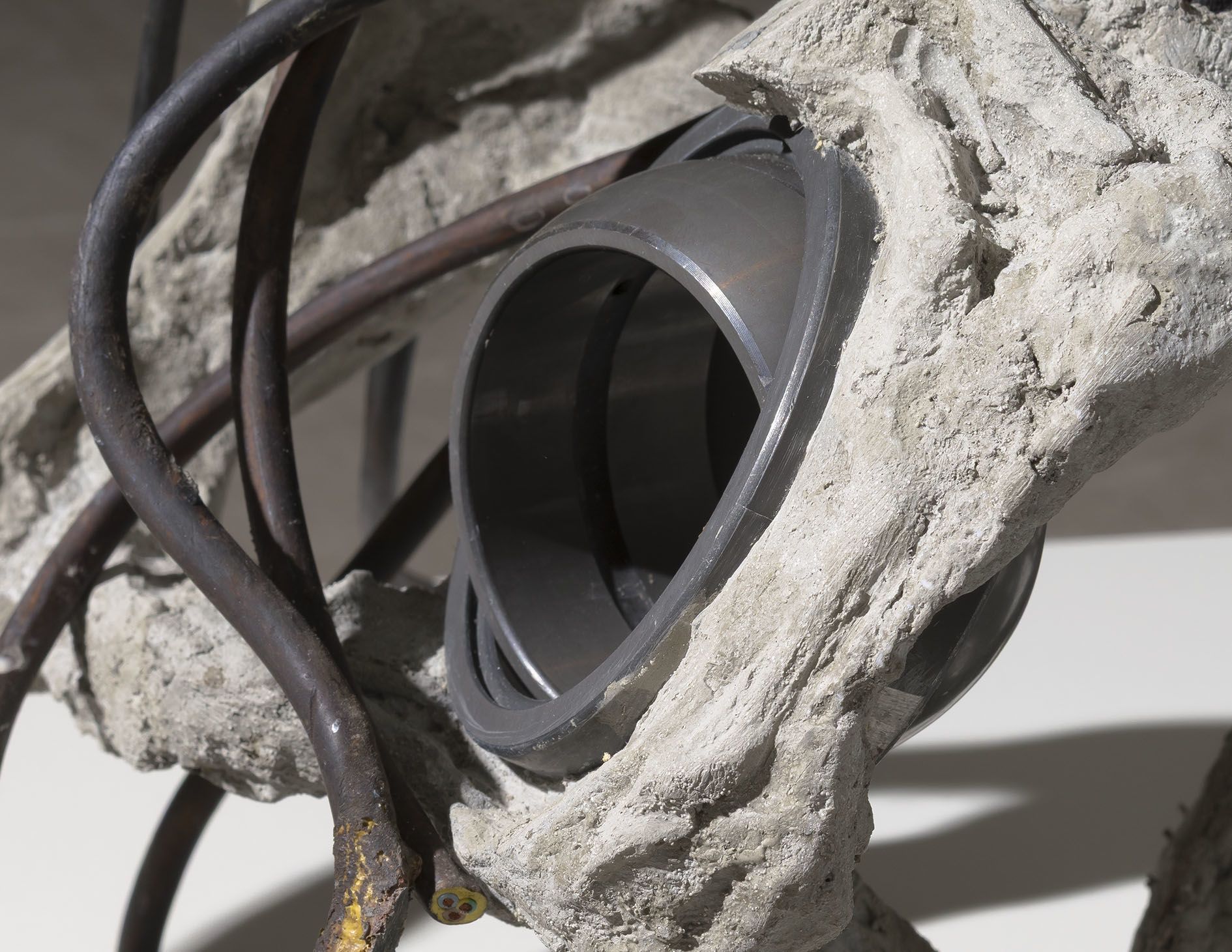

Mire Lee works with industrial materials and volatile substances to conjure forms that are at once beautiful and unsettling, evoking the body, its tensions and psychological trauma. Though resolutely abstract, her sculptures and wall-based works include appendages, membranes and structures that cannot help but feel embodied and lifelike. Lee’s Heads (2025) continue this exploration through the classical motif of the bust. Skull-like in shape, with molded concrete surfaces reminiscent of bone, these forms twist improbably around components such as rotational bearings and computer wires. By combining raw industrial mechanics with bone-like concrete forms, Lee reimagines the classical bust to confront the delicate, unsettling boundary between bodily vulnerability and machine-driven existence.
Mire Lee (*1988, Seoul) lives and works in Seoul and Amsterdam. Her work was included in the 12th SITE Santa Fe International, Okayama Art Summit, Japan, and the group exhibition to ignite our skin at SculptureCenter, New York (all 2025). In 2024, she presented a site-specific work at Tate Modern’s Turbine Hall as a Hyundai Commission artist, which marked the first major presentation of Lee’s work in the UK. Other solo exhibitions include Institut d’art contemporain, Villeurbanne/Rhône-Alpes, France (2026), New Museum, New York (2023), Zollamt – MMK, Museum für Moderne Kunst, Frankfurt (2022) and Art Sonje Center, Seoul (2020). Recent group exhibitions include National Museum of Modern and Contemporary Art – MMCA, Seoul (2024), Kraftwerk Berlin (2023), Busan Biennale, La Biennale di Venezia and 58th Carnegie International (all 2022) and Schinkel Pavillon, Berlin (2021).
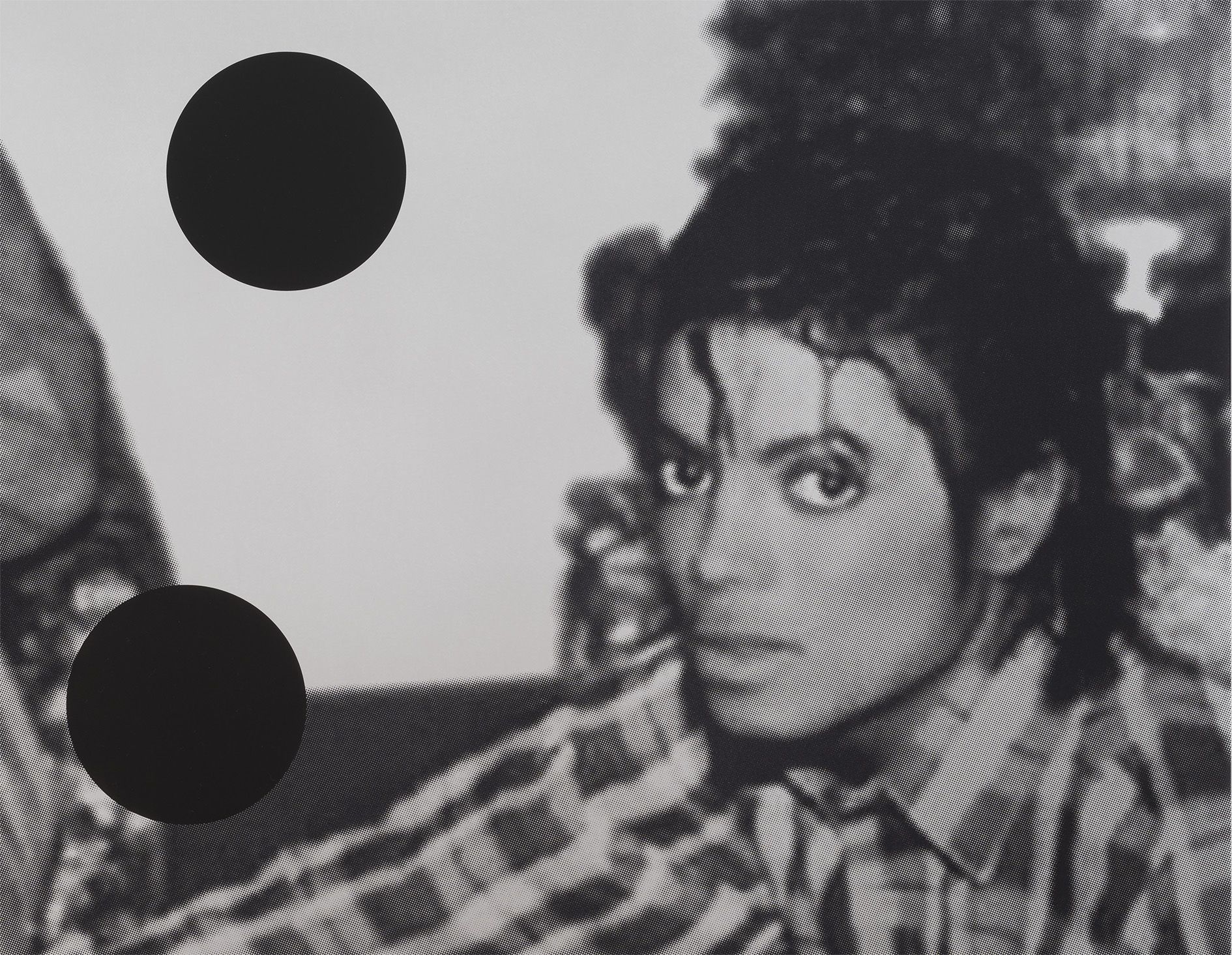
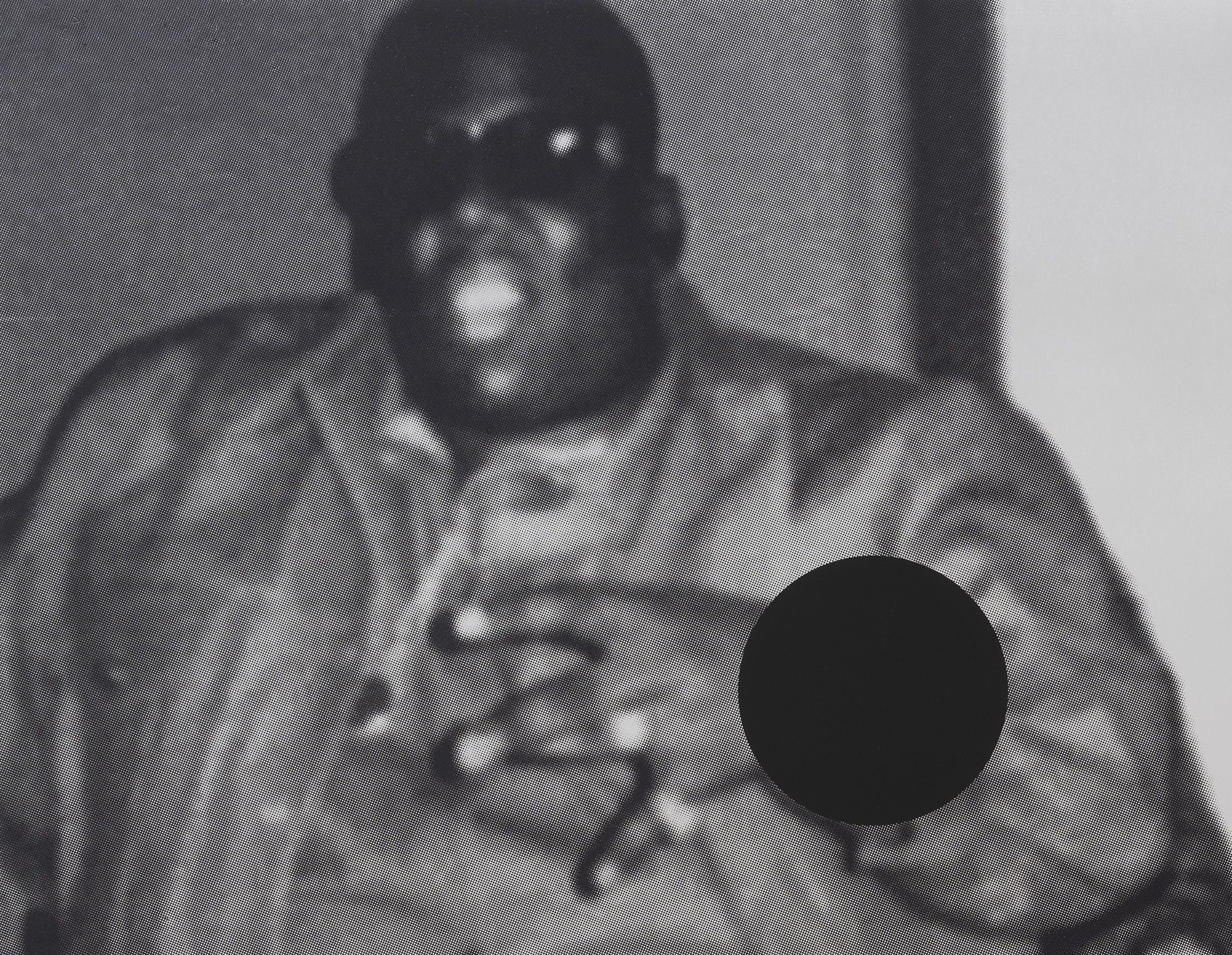
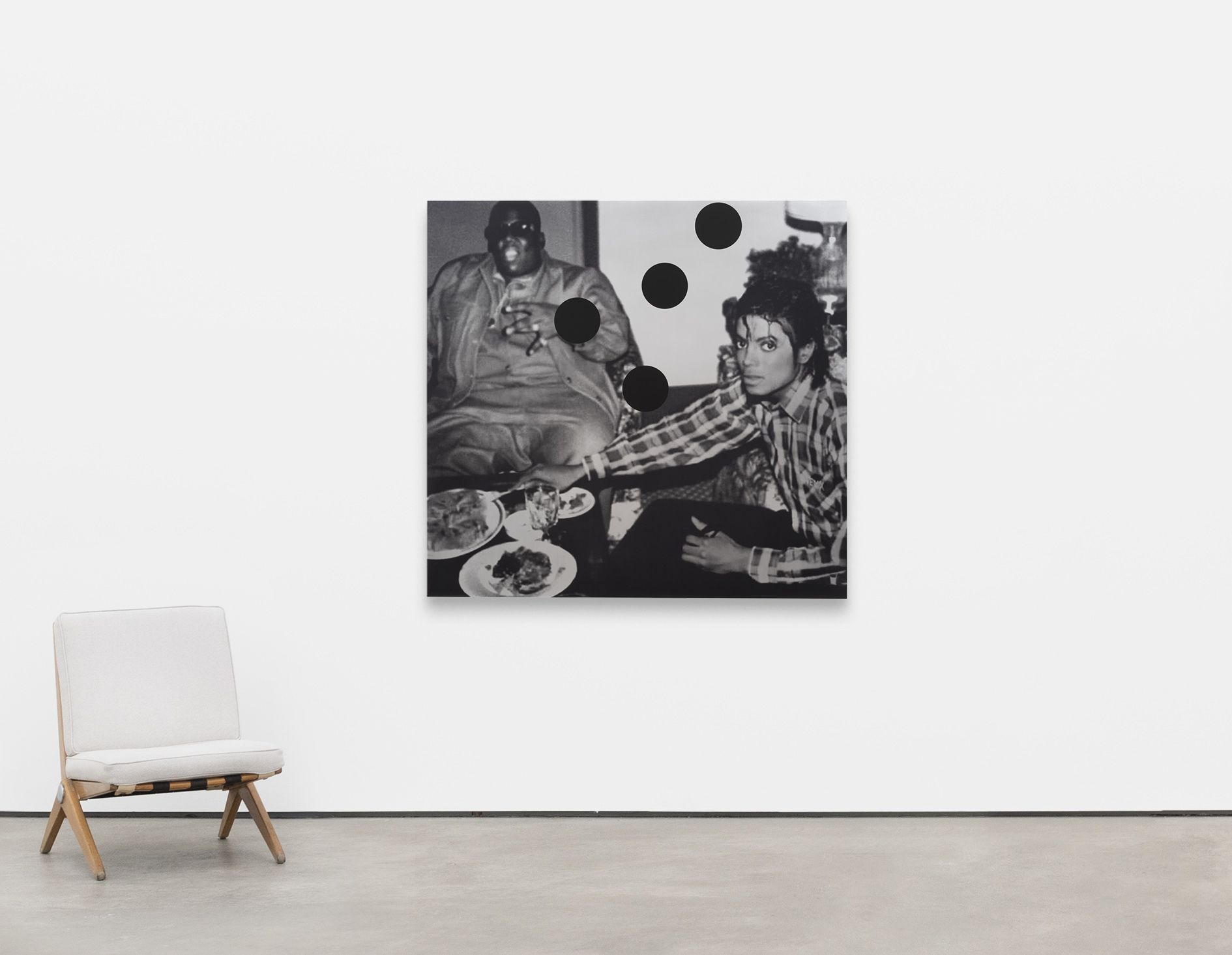

For over three decades, Arthur Jafa has produced imagery that dissects the realities, constructions, and influence of Blackness in contemporary culture. Through strategies of appropriation, his works reveal poignant gaps and connections between different sources through the power of juxtaposition. In Mike and Big (2024), Jafa appropriates a candid image of Michael Jackson and The Notorious B.I.G. (whether document or fabrication, the photograph circulates as fact). Two figures whose extraordinary gifts were shadowed by exploitation and untimely death, are caught here in an unguarded moment. Jafa punctuates the image rhythmically, almost like musical notation, with black circles that interrupt without erasing. The work holds joy and tragedy in a single frame, drawing on a tradition of appropriation art in which the intervening gesture reframes the source material, implicating both image and viewer in questions of authenticity, iconicity and loss.
Arthur Jafa (*1960, Tupelo, Mississippi) lives and works in Los Angeles. His work is currently on view in a two-person exhibition with Richard Prince at Fondazione Prada, Venice. A forthcoming solo survey will be presented at the New Museum, New York. Jafa also recently curated a show at the Museum of Modern Art, New York (2025). Recent solo exhibitions include Museum of Contemporary Art, Chicago (2024), LUMA Foundation, Arles (2023), Louisiana Museum, Humlebæk (2021), Fundação Serralves, Porto and Musée d’art contemporain de Montreal (both 2020), Moderna Museet, Stockholm (2019), Museum of Contemporary Art, Denver (2018), and Serpentine Gallery, London (2017). Recent group exhibitions include Modern Art Museum, Fort Worth and Schirn Kunsthalle, Frankfurt (both 2024), Smithsonian American Art Museum, Pinakothek der Moderne, Munich, and 14th Gwangju Biennale (all 2023), Aspen Art Museum and Bangkok Art Biennale (both 2022). In 2019, he received the Golden Lion at the 58th La Biennale di Venezia.


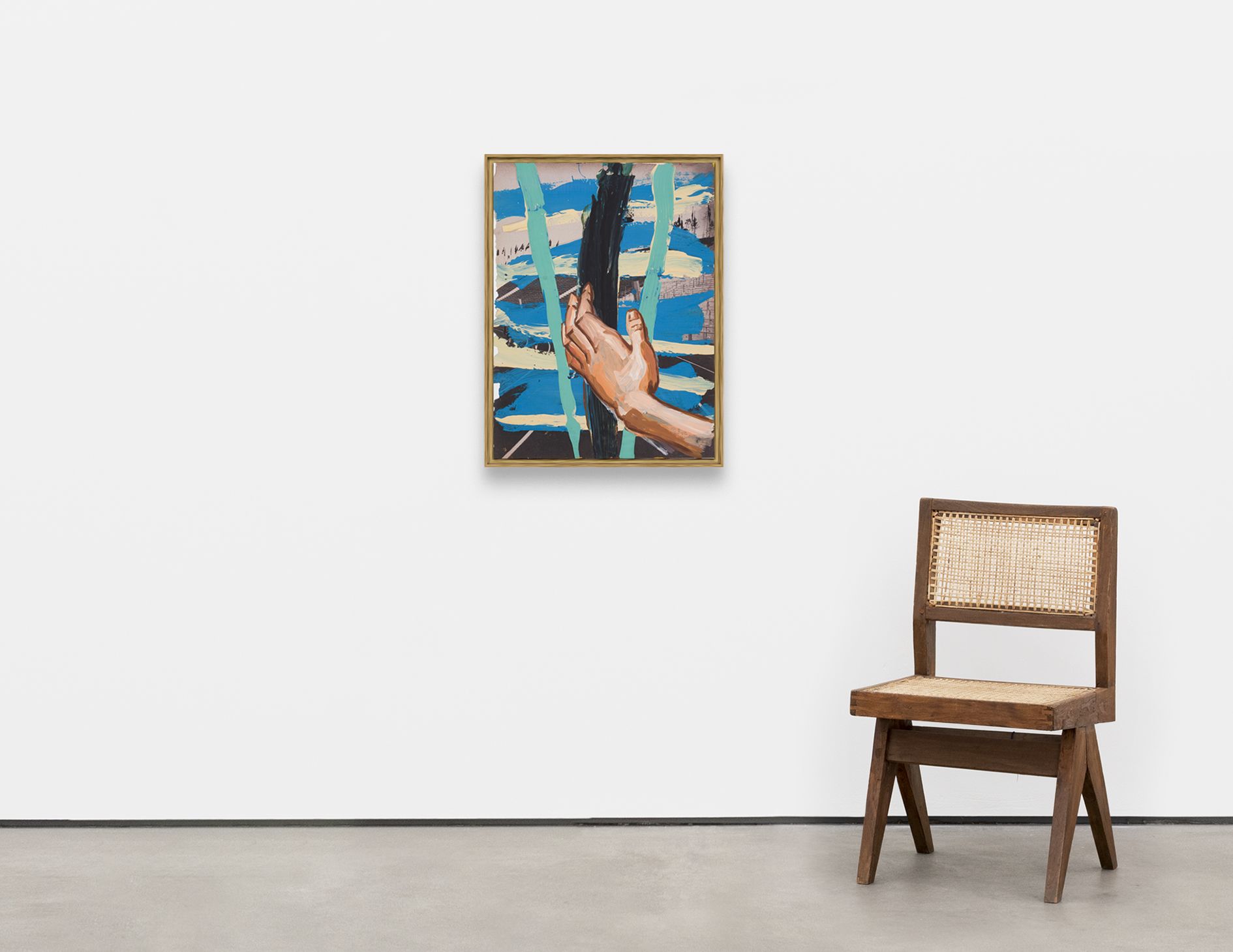


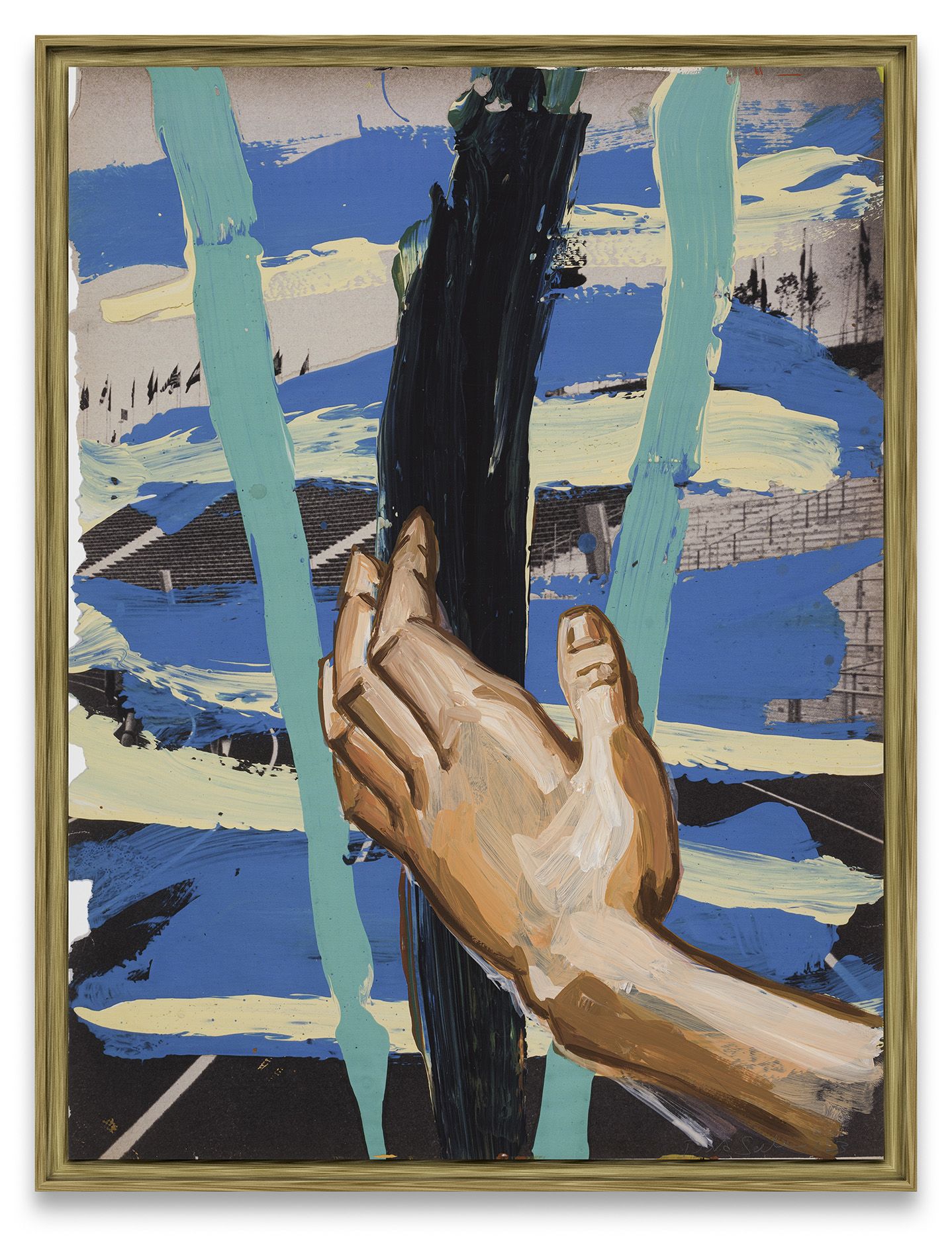
David Salle rose to international prominence in the 1980s as part of a generation of artists whose work critically explored the power of images. Salle’s paintings stage encounters between contrasting elements, disrupting the connections between a picture and any automatic interpretation assigned to it while reveling in the beauty and incongruity of contemporary visual culture. In Untitled (2023), a hand grasps a thick black painted line that runs vertically down the center of the work. Flanked on either side by turquoise lines, this central axis fragments the composition further, evoking the grid of window bars. Beneath this, the paper background depicts the structure of an amphitheater lined with national flags, reminiscent of a sporting arena. This photographic backdrop is overlaid with horizontal sweeps of pale yellow and blue, obstructing the viewer’s gaze and exemplifying Salle’s signature juxtaposition of figurative representation and abstract expressionism.
David Salle (*1952, Norman, Oklahoma) lives and works in New York. Solo exhibitions include Edward Hopper Museum, New York (2024), Centro de Arte Contemporáneo de Málaga (2016), Museo de Arte Contemporáneo de Monterrey, Mexico (2000), Haags Gemeentemuseum, The Hague (1992), Tel Aviv Museum of Art, Bayerische Staatsgemäldesammlungen München, Munich (both 1989), Museum of Contemporary Art, Chicago, Whitney Museum of American Art, New York (both 1987), and a major retrospective at Stedelijk Museum, Amsterdam (1999, traveled to Museum Moderner Kunst Stiftung Ludwig, Vienna; Museo d’Arte Contemporanea Castello di Rivoli, Turin; Guggenheim Museum, Bilbao). Group shows include Hill Art Foundation, New York (2023), Whitney Museum of American Art, New York (2017, 2015), Museum of Contemporary Art, Chicago (2012), Metropolitan Museum of Art, New York (2009), La Biennale di Venezia (1993, 1982), Whitney Biennial (1991, 1985, 1983), Carnegie International, Pittsburgh (1985), and Documenta 7 (1982).


Oliver Bak has become known for his historically inspired, vibrant painterly topographies, which stem from a deep engagement with the materials, procedures and influences of painting. Bak’s textured surfaces evolve by applying thick coats of oil paint mixed with wax and reworking them in a prolonged process of addition and subtraction until his motifs flicker in degrees of opacity. His mottled brushwork and magnetic use of color thus evoke the dreamlike works of Symbolist, Surrealist and Nabi painters. Bak’s work, Swarmers (day) (2025), conjures two pale luminous insects within a vast atmospheric field of layered blues—their wings caught in some moment of suspension between landing and flight. Around and beneath them the surface teems with smaller presences, a restless ground that seems to breathe. Bak’s works often inhabit such liminal spaces: existing somewhere between stillness and restless motion, they unfurl from their backgrounds to evoke deep interiority and the drift of the unconscious mind.
Bak’s works are currently on view as part of the new presentation at Boros Collection, Berlin, and will be on view at Sprüth Magers in New York later this year.
Oliver Bak (*1992, Copenhagen) lives and works in Copenhagen. Recent exhibitions include FOCUS on The Collection, Krupa Art Foundation (2026), Swarmers, Indipendenza, Rome (2025–26), The Flowers of Evil, Sammlung Scharf-Gerstenberg, Nationalgalerie – Staatliche Museen zu Berlin (2024–25), Ghost Driver, or The Crowned Anarchist, Sprüth Magers, Berlin (2024), Caves in the Sky, Cassius & Co, London (2023) and Sick with Bloom, ADZ Gallery, Lisbon (2022).
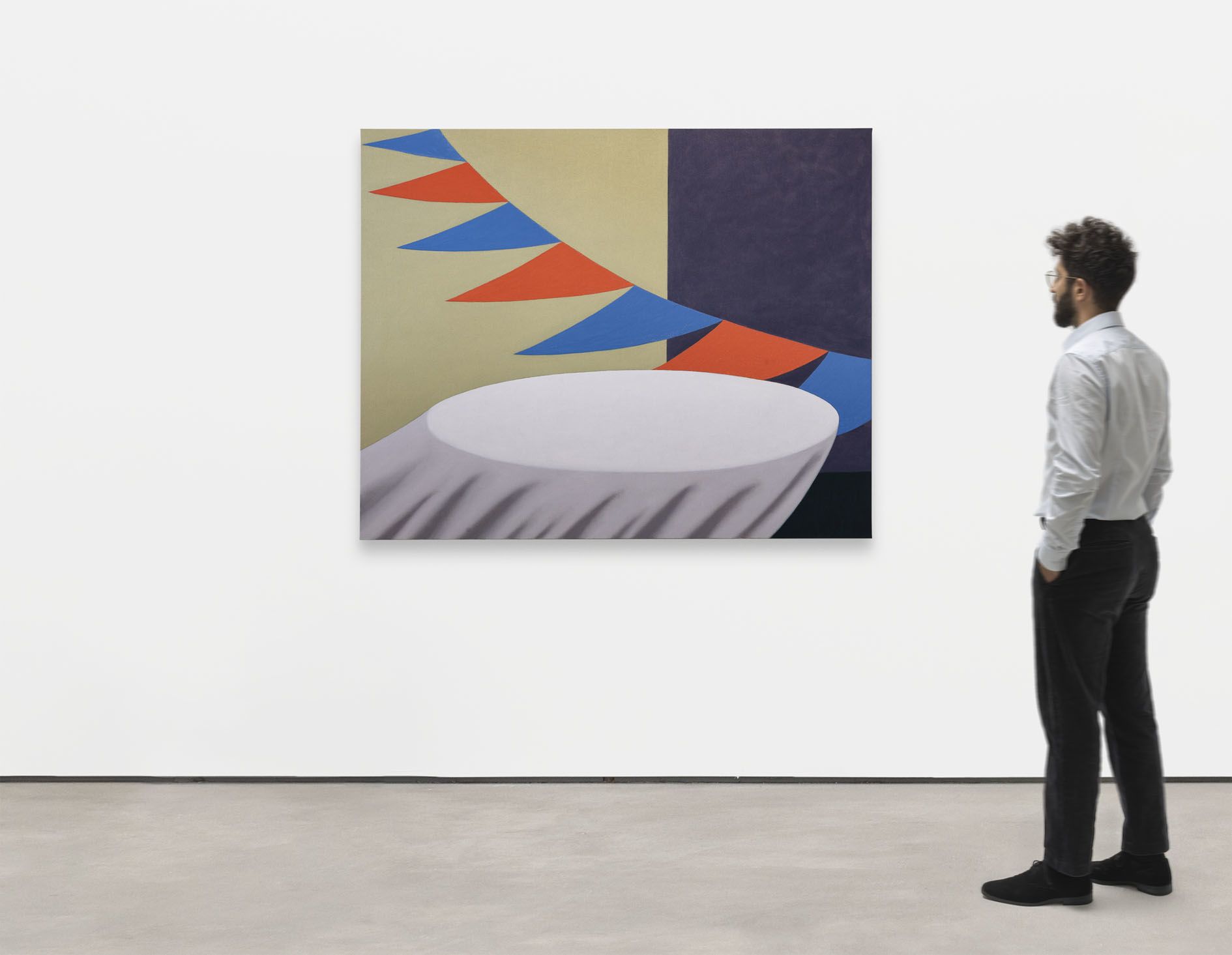
Henni Alftan’s artistic practice imagines everyday scenes of modern life that, at first, appear intimately familiar yet become increasingly elusive upon extended engagement. Windy (2025) depicts an abandoned table setting framed by a garland of orange and blue bunting set against a background that is split into light and dark panels, evoking a window left open at night. The title is reflected in the distorted proportions of the tablecloth and bunting, which appear wind-swept to the left. Alftan’s economy of means and careful cropping create an alluring dichotomy of familiarity and mystery; by including and omitting just enough information, she thwarts the urge to narrativize the composition, sparking perpetual speculation without resolution.
Henni Alftan (*1979, Helsinki) lives and works in Paris. Institutional group exhibitions include those at Centre Pompidou-Metz, France (2025), Longlati Foundation, Shanghai (2024), Amos Rex Art Museum, Helsinki (2024), Kemper Museum of Contemporary Art, Kansas City (2024), EMMA – Espoo Museum of Modern Art, Espoo, Museum of Contemporary Art Kiasma, Finland (both 2023), LACMA, Los Angeles (2022), ENSA Limoges, École Nationale Supérieure d’Art (2020), Musée des Beaux-Arts de Brest (2017). Alftan’s works are included in the collections of the Buffalo AKG Art Museum, New York, Dallas Museum of Art, Hammer Museum, Los Angeles, Helsinki Art Museum, High Museum of Art, Atlanta, Institute of Contemporary Art, Miami, Kuntsi Museum of Modern Art, Vaasa, Finland, Los Angeles County Museum of Art and the UBS Art Collection.
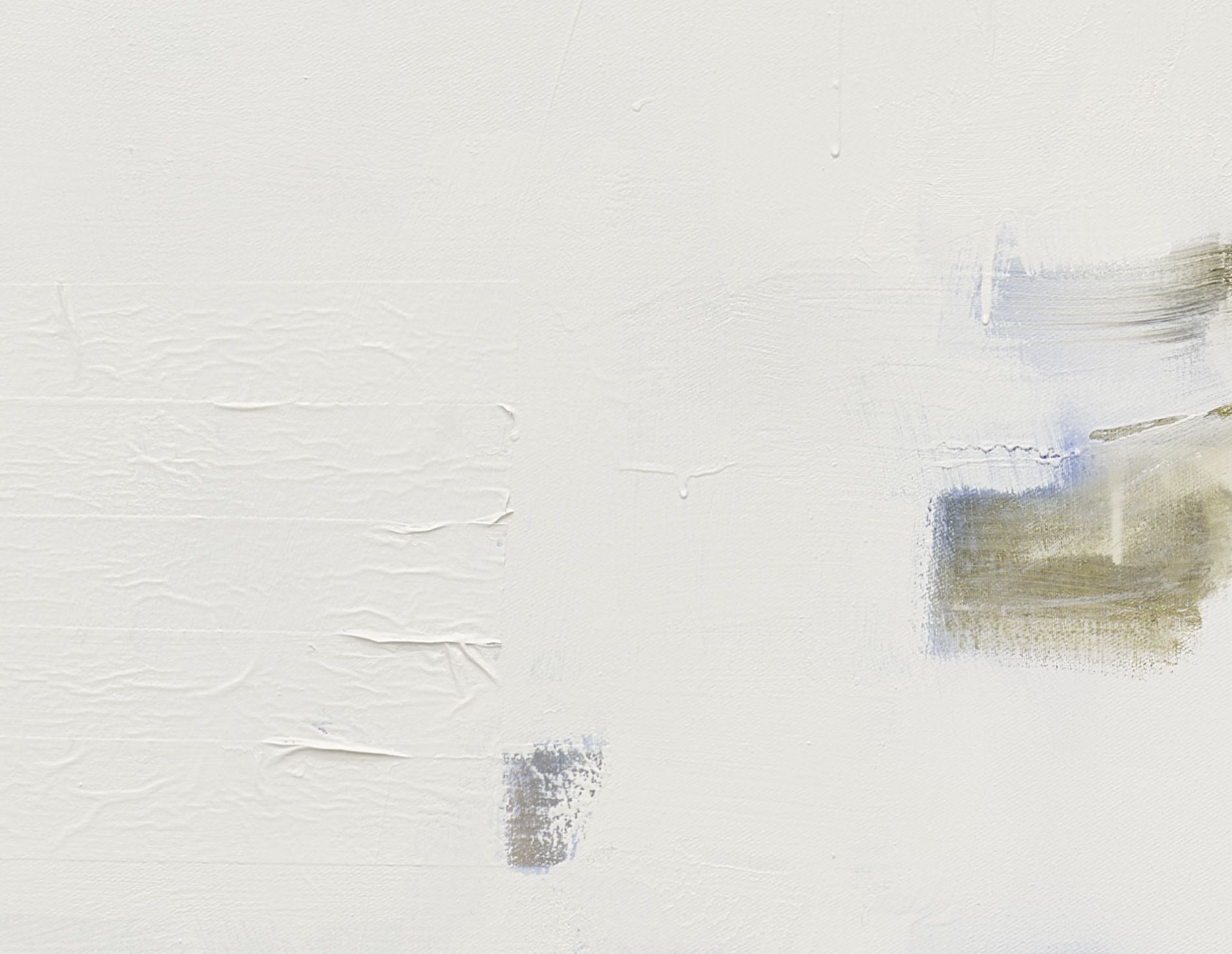
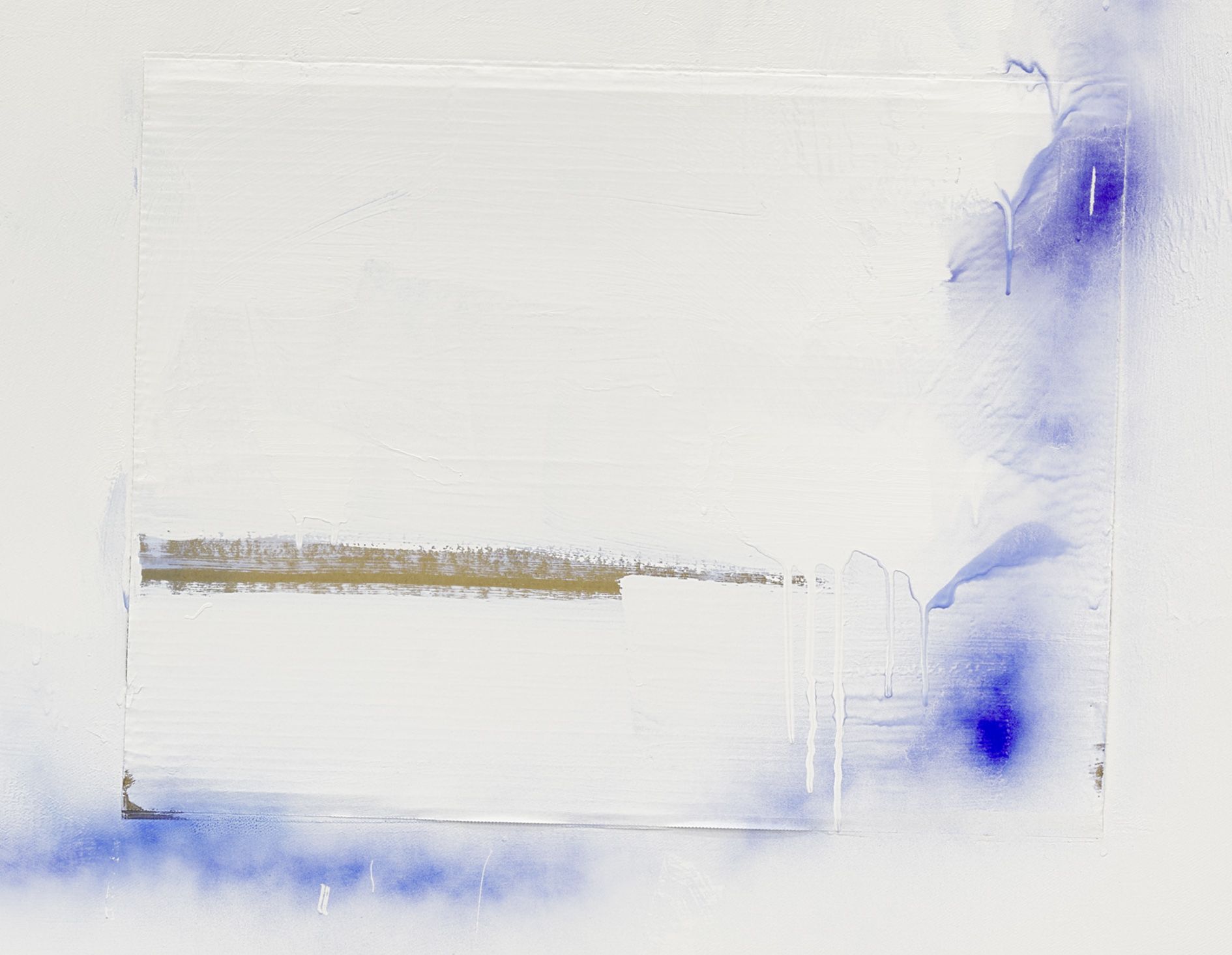
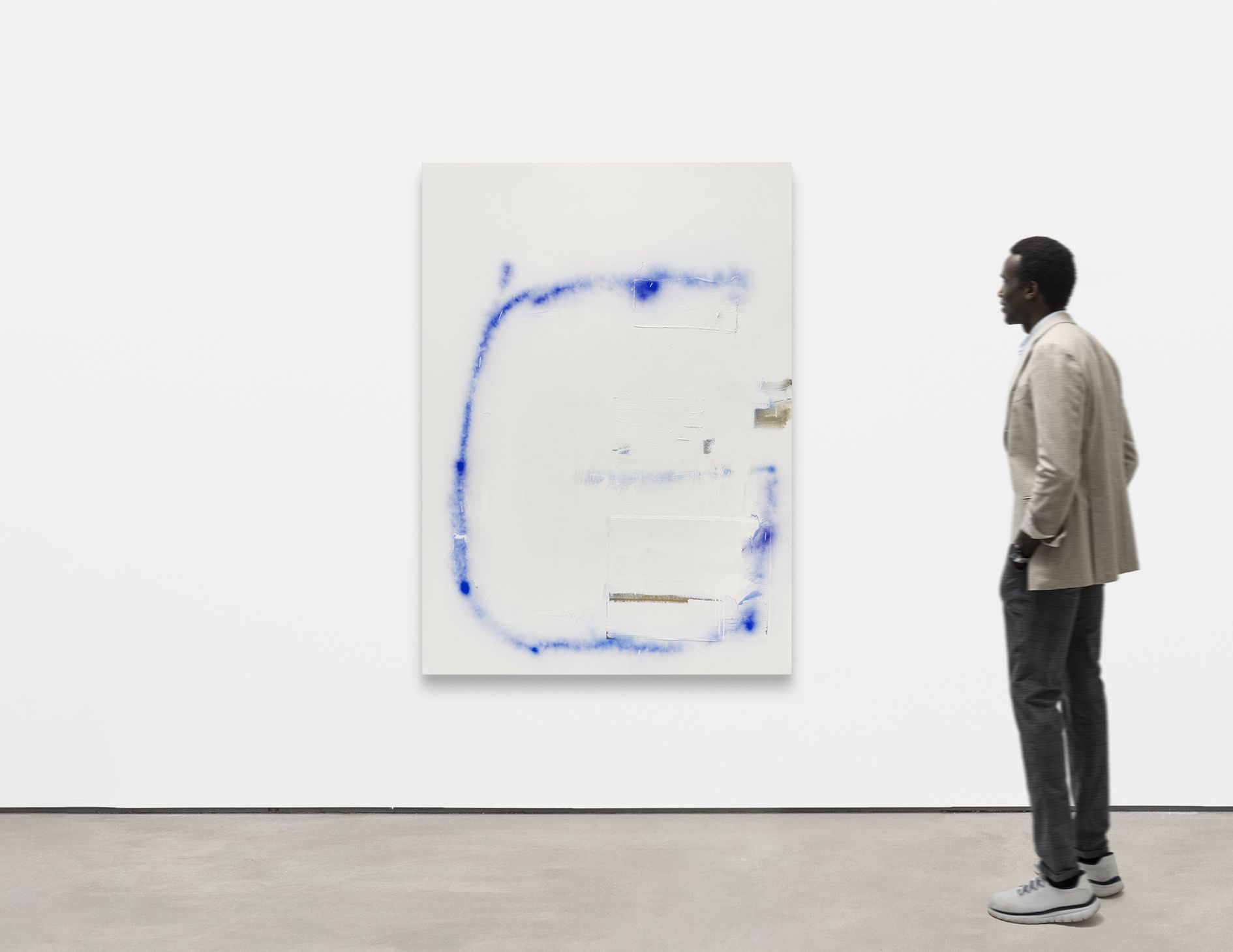


David Ostrowski’s practice continuously engages the concept of total reduction in painting, a conscious rejection of painterly codes and traditions. His recent work directly explores the ontology of painting and its semantics. In Untitled (Letters) (2025), Ostrowski renders the letter G in a faint blue line of spray paint. At first, this elusive symbol seems to be contained within a terrain of white emptiness, but upon closer inspection, the various layers within the painting’s surface reveal a wealth of complexity and sophistication. By painting over collaged remnants from his studio, he creates an elaborately textured monochrome field. Like all Ostrowski’s works, Untitled (Letters) (2025) challenges any simple interpretations and exemplifies how the artist achieves the greatest effects using the most minimal means.
David Ostrowski (*1981, Cologne) lives and works in Cologne. Solo exhibitions include The Perimeter, London (2026), Aranya Art Center, Beidaihe (2025), Fig., Tokyo and Ramiken, New York (both 2023), Lady Helen, London (2020, with Angharad Williams) Avant-Garde Institute, Warsaw (2020, with Tobias Spichtig), Jir Sandel, Copenhagen and Leeahn Gallery, Seoul (both 2020), Sundogs, Paris and Piece Unique, Cologne (both 2019), Wschód, Warsaw (2018), Halle 9 Kirowwerk, Leipzig and Blueproject Foundation, Barcelona (both 2017), Leopold Hoesch Museum, Düren (2016, with Michail Pirgelis), Arken Museum of Modern Art, Copenhagen and Kunstraum Innsbruck (both 2015), Rubell Family Collection, Miami and Fondazione Sandretto Re Rebaudengo, Turin (both 2014). Recent group exhibitions include Standard Oslo and Weiss Falk at XYZcollective, Tokyo (both 2023), Catherine Zeta, Cologne (2022), and Akademie der Künste, Berlin and Fuhrwerkswaage, Cologne (both 2021).

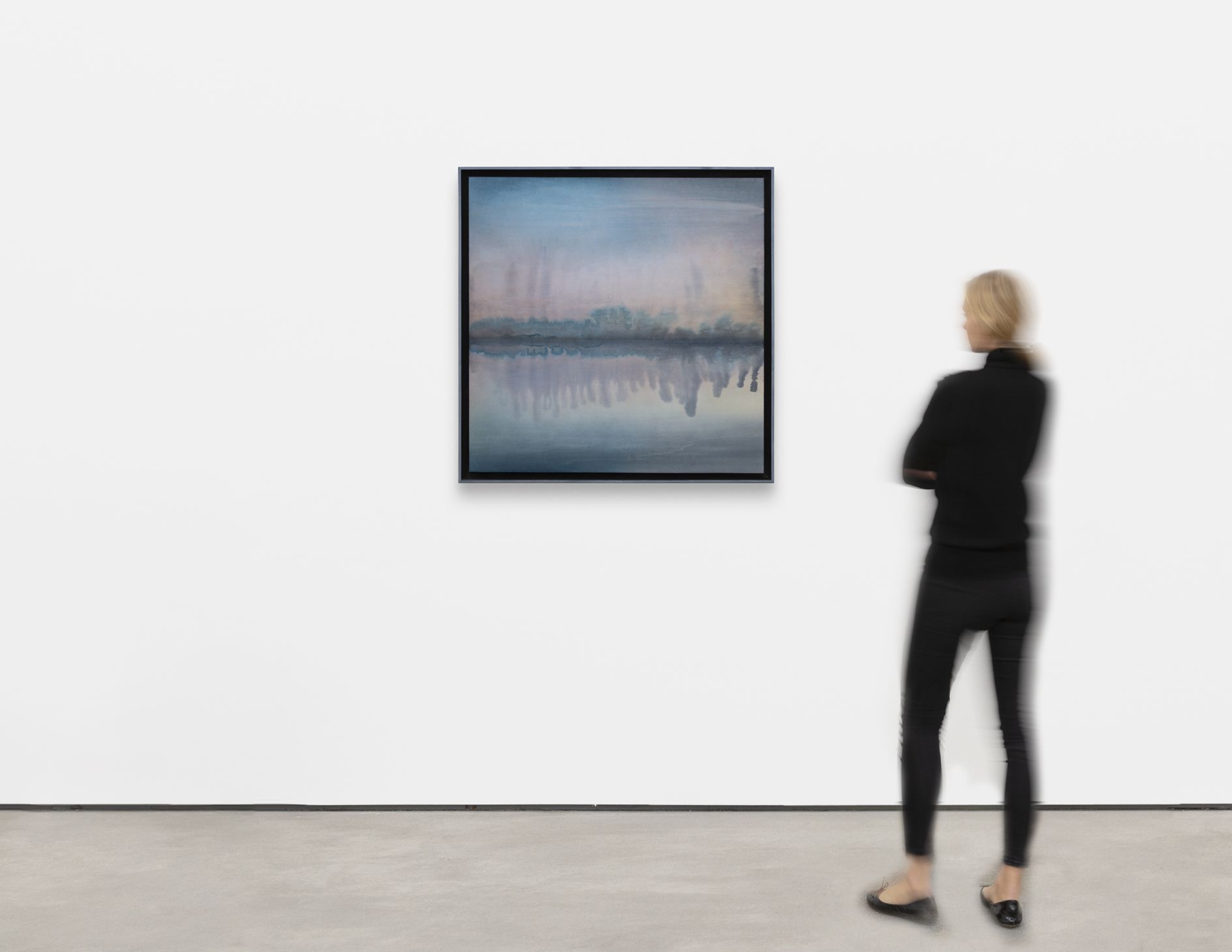

Robert Elfgen’s works thrive on a specific kind of narrative and symbolic density, on biography, everyday observations and an acute sensibility for the subliminal poetry of myths and rituals. Elfgen does not paint his paintings; he builds them. Working like a sculptor, he uses solid materials such as wood and brass, which he then stains, saws and shapes. Chin Blu (2026) demonstrates this direct, handcrafted yet resolutely sensual approach, which leads Elfgen to an image reminiscent of nineteenth-century romantic landscape painting. A hushed, luminous scene emerges directly from the wooden support itself, with the visible grain beneath the paint softening into veils of mist that drift through a sky washed in dusky blues, mauves and pale apricot, an effect that lends the work a tactile, painterly quality. The other essential elements of the motif are created by erratically flowing ink and metallic spray paint, which Elfgen tames to form a low line of trees, their dark silhouettes doubled in perfect stillness on the surface of the lake below.
Robert Elfgen (*1972, Wesseling, Germany) lives and works in Cologne and Brittany, France. From 1997 to 2001, Elfgen studied under John M. Armleder at the Braunschweig University of Art (HBK). He studied under Rosemarie Trockel at the Kunstakademie Düsseldorf from 2001, becoming her Meisterschüler in 2004. Selected solo exhibitions include Fuhrwerkswaage, Cologne (2025), PIBI Gallery, Seoul (2022 with An Gyungsu), Sprüth Magers, Berlin (2021), Leopold-Hoesch-Museum, Düren, Germany (2016), Oldenburger Kunstverein, Oldenburg, Germany (2015), Sprüth Magers, Cologne (2008), westlondonprojects, London (2006), and Bonner Kunstverein, Bonn (2005). Selected group exhibitions include Langen Foundation, Neuss, Germany (2025), Villa Stuck, Munich (2017), me Collectors Room Berlin / Stiftung Olbricht (2014), Zentrum für Kunst und Medien, Karlsruhe, Germany, and Sammlung Falckenberg, Hamburg (both 2007–08).


Pamela Rosenkranz’s artistic practice visually explores the profound scientific and sociocultural systems that affect humanity. Her interdisciplinary approach incorporates elements from neurology, art history, biorobotics and literature, a conscious blend of nature and culture. In Rosenkranz’s Healer Scrolls (2021–ongoing), the artist focuses specifically on the simultaneously archaic and contemporary image of the serpent, using ancient kirigami cuts and folds to evoke a pattern that resembles the scales of a snake. Healer Scrolls (Nommy Vibes) (2026) continues the artist’s negotiation with this squamate form, its diamond-like scales now laid over an accumulation of stuffed animals and plush objects – the debris of so-called “cute culture” – visible only as a ghostly underlayer, half-dissolved beneath the iridescent surface. The blush pinks, dusty mauves and soft ceruleans that suffuse the work are not incidental; they are the affective palette of kawaii and of algorithmically optimized tenderness. Rosenkranz veils this iconography of childlike innocence beneath a reptilian skin, implicating sweet objects within longer histories of desire and consumerism.
Pamela Rosenkranz (*1979, Uri, Switzerland) lives and works in Zurich. Selected solo exhibitions include Stedelijk Museum, Amsterdam (2025), Neuer Berliner Kunstverein (2024), the High Line, New York (2023–24), Kunsthaus Bregenz (2021), GAMeC, Bergamo (2017), Fondazione Prada, Milan (2017), Kunsthalle Basel (2012), Centre d’Art Contemporain, Geneva (2010). Rosenkranz’s project Our Product was selected for the Swiss Pavilion at the 56th Venice Biennale in 2015. Recent group shows include Kunstmuseum Basel (2025), Deste Foundation, Hydra (2023), Kunstmuseum Winterthur and MIT List Visual Arts Center, Cambridge (both 2022), Schinkel Pavillon, Berlin, and Institute of Contemporary Art, Los Angeles (both 2021), Sharjah Art Foundation, Sharjah (2020), Museum MMK für Moderne Kunst, Frankfurt, Centre Georges Pompidou, Paris, Okayama Art Summit, and the 15th Biennale de Lyon (all 2019).
Frieze Seoul
September 3–5, 2026
Private View: September 2
Booth: B22

