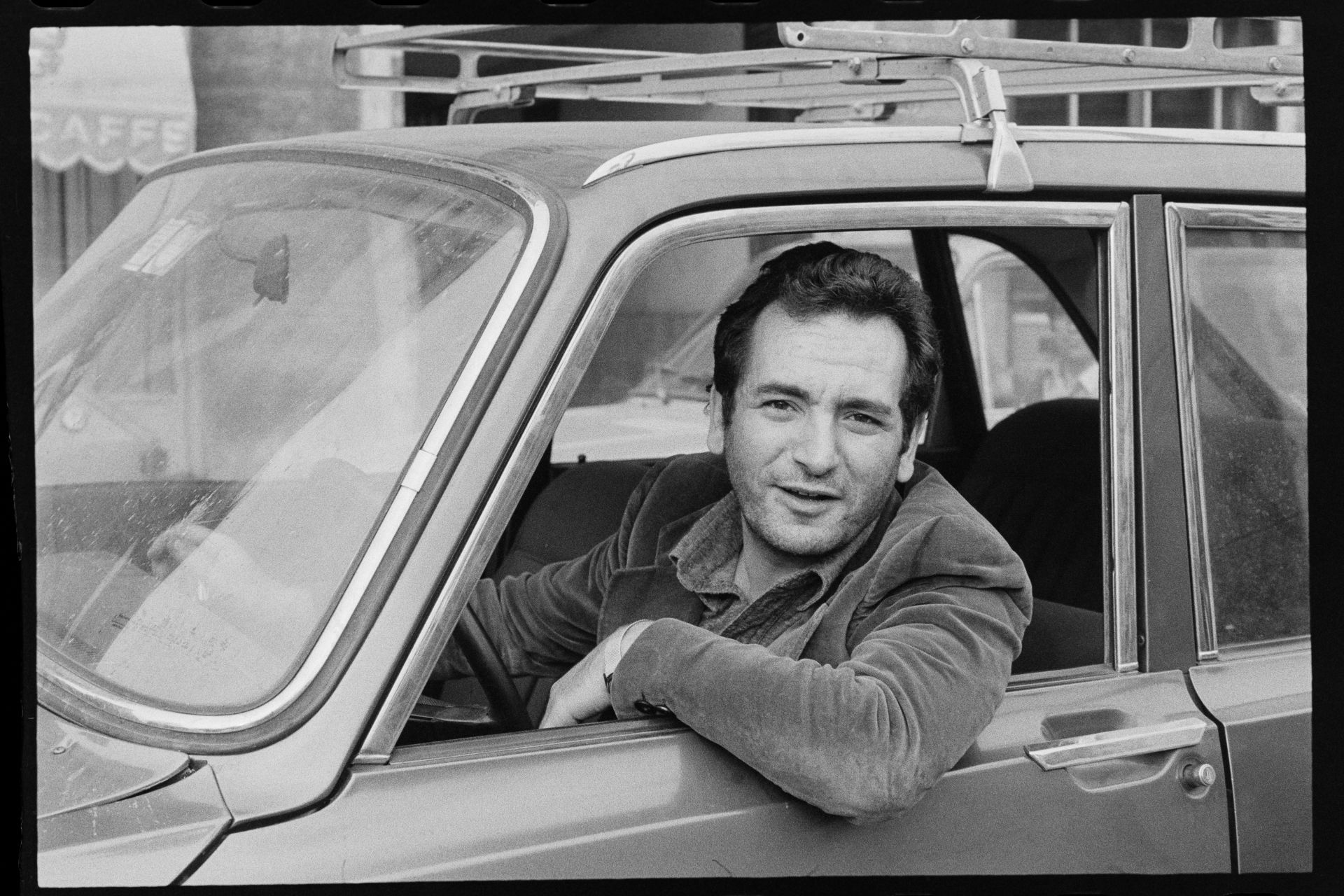
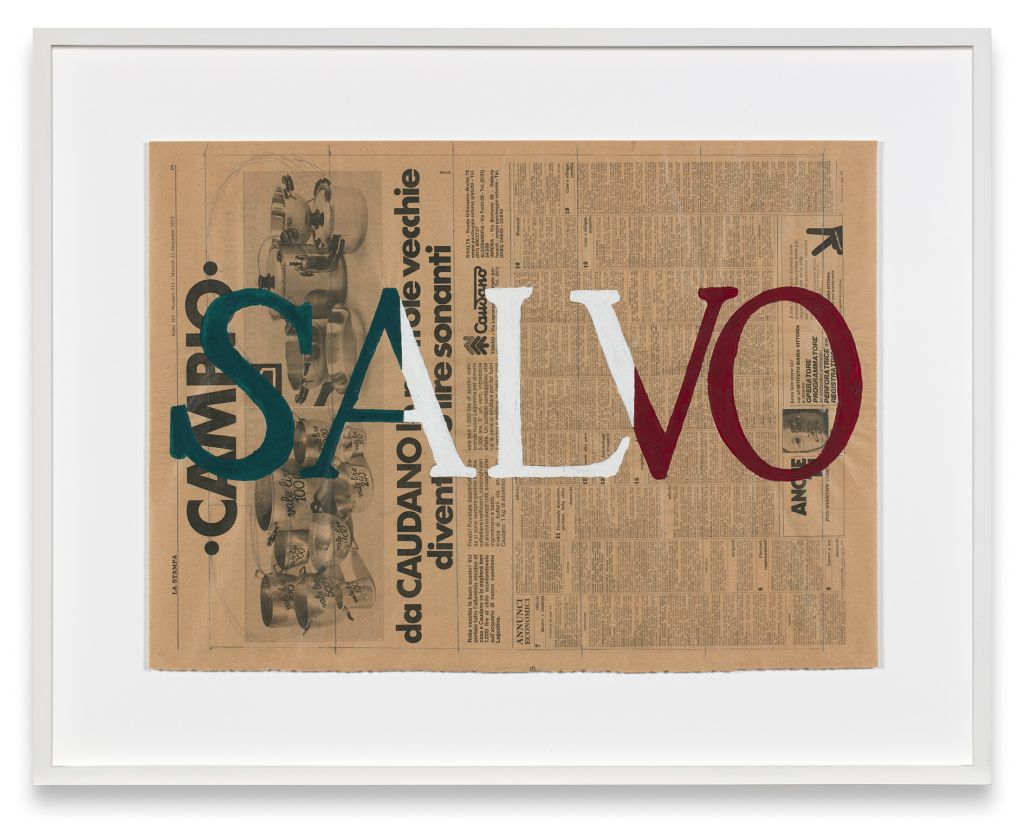
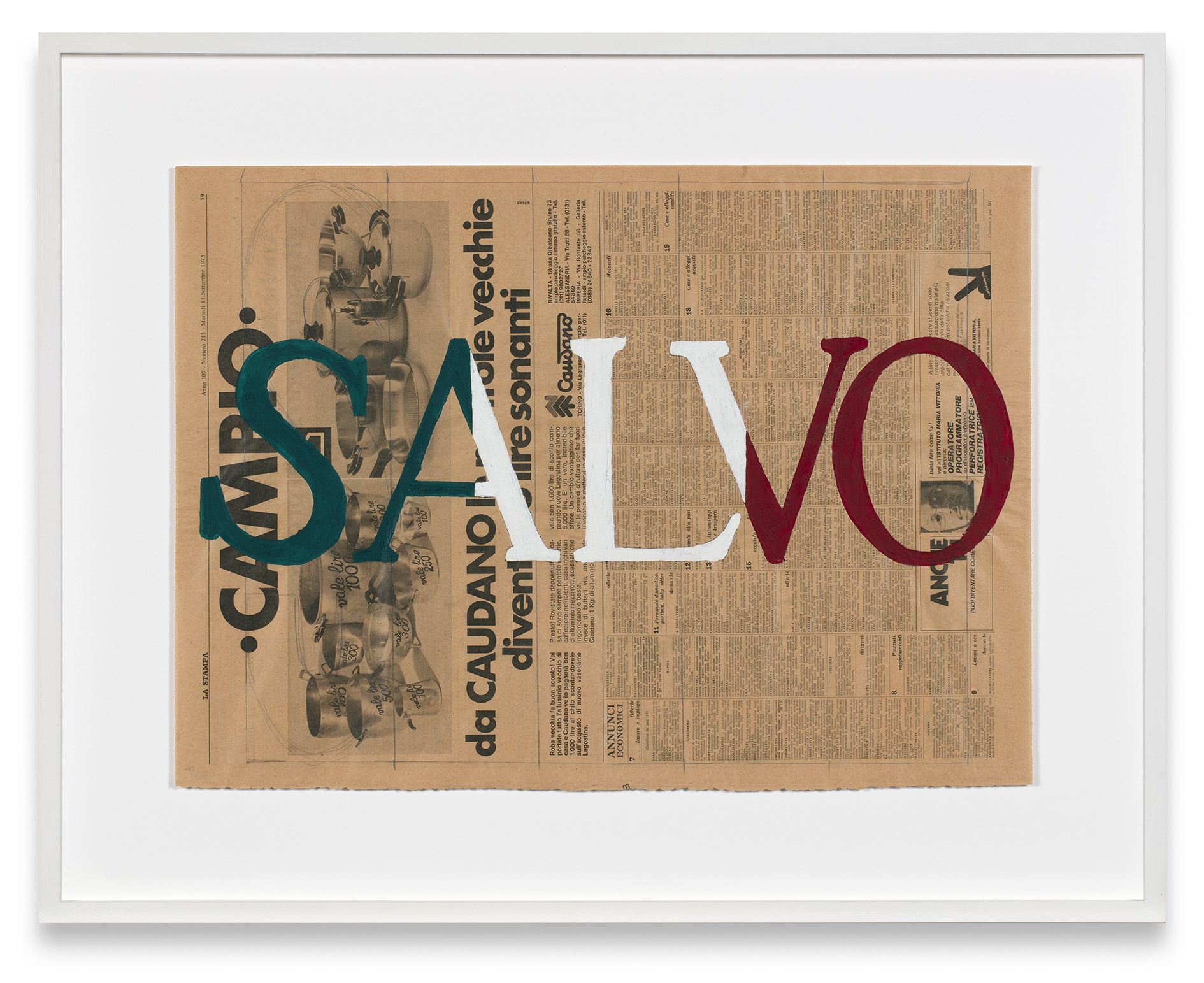
Born Salvatore Mangione, Salvo came of age as an artist in Turin during the 1960s, a time when the city was home to a vibrant and radical avant-garde community. There, he became close with Alighiero Boetti and moved in circles alongside Mario Merz, Giuseppe Penone, and Gilberto Zorio, developing an experimental conceptual practice that employed text and photography as its foundation. His work from this period is analytical and art historically minded, including Autoritratto (come Raffaello) (1970), a piece that restages an important self-portrait by the Italian Renaissance artist Raphael, and his headstones series (1970–72), which feature words and phrases derived from literary and poetic sources that evoke the transience of life. Despite receiving significant recognition for this work, participating in the prestigious Documenta 5 in 1972, Salvo made the profound and deeply original decision to devote his practice exclusively to oil painting.
For more than forty years, Salvo painted surreally colored and highly imaginative compositions of pastoral countrysides, folkloric and religious imagery, and fantastical ruins that recall classical capriccios. His artistic practice repeatedly features motifs of lush trees, billowing clouds, and imposing mountains, reducing such imagery to its most concentrated form. When representing man-made constructions, Salvo portrays such structures in harmony with the natural world; the tension of the work lies instead between soft, curvy lines and harsh, sharp ones. His paintings are infused with a sublime brightness that gives each piece a contemplative atmosphere. Serene and dreamlike, Salvo’s polychromatic paintings reinvigorate our perception of the world around us.