
Anne Imhof is recognized internationally for her genre-spanning practice that encompasses performance and choreography, painting and drawing, and installation and sculpture. Her poignant abstractions are frequently characterized by a keen interest in the human body, and though her work is inherently multifaceted and continues to expand into ever more media, painting remains a consistent throughline within her œuvre. Poppy Runner III (2025) belongs to Imhof’s ongoing series of large-format paintings. The work takes as its source a film still from The Basketball Diaries (1995), a coming-of-age drama that explores addiction, adolescence and the struggles of urban life, starring Leonardo DiCaprio. The image is first digitally reworked—its visual information restructured until something new, even unstable, emerges—then translated into the traditional medium of oil paint, with layer after layer applied meticulously by hand across the canvas. This process highlights the figure’s gesture, rendering his youthful yet vulnerable body into something at once familiar and unsettling. Poppy Runner III marks the first work in this series to be rendered in color.
















Anne Imhof’s solo exhibition of new work is currently on view at Serralves Museum, Porto, through April 19, 2026.
Anne Imhof (*1978, Gießen, Germany) lives and works in Berlin and New York. Selected solo exhibitions include Park Avenue Armory, New York (2025), Kunsthaus Bregenz (2024), Stedelijk Museum, Amsterdam (2022), Palais de Tokyo, Paris (2021), Tate Modern, London (2019), Hamburger Bahnhof, Berlin (2016), Kunsthalle Basel (2016), MoMA PS1, New York (2015), Carré d’Art – Musée d’Art Contemporain de Nîmes (2014), and Portikus, Frankfurt (2013). Her work has also been featured in numerous group exhibitions, including at Aichi Triennale, Aichi Prefecture (2022), Kunstmuseum Winterthur (2022), Tai Kwun, Hong Kong (2019), La Biennale di Venezia (2017), where she was awarded the Golden Lion, La Biennale de Montréal (2016), Palais de Tokyo, Paris (2015), Centre Pompidou, Paris (2015), and Museum MMK für Moderne Kunst, Frankfurt (2014).
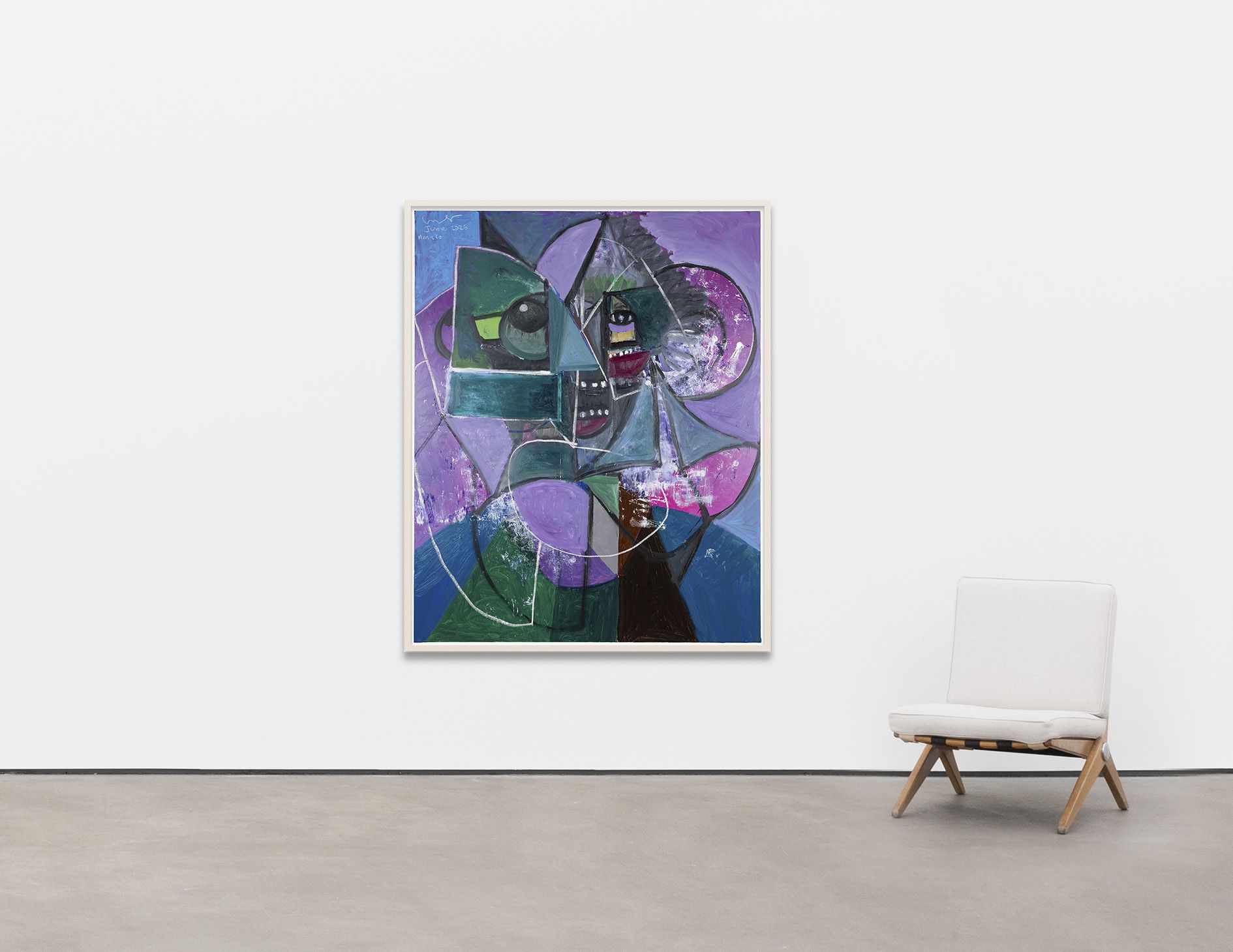


George Condo is an icon of contemporary American painting. His unique pictorial language reimagines the imagery and practices of Western art history, most especially modernism and abstraction, with vitality and dynamism. Abstract Human (2025) perfectly demonstrates Condo’s clear command of color and form, and his signature Picassoid style. The colorfully fragmented portrait, with its palette of deep blues, greens, and violets and its varied types of brushstrokes and painterly marks, constructs a plurality of simultaneous emotional states, an approach the artist refers to as “psychological Cubism.” A facet with a large eye on the left detaches from two mouth-like forms at the center, their white teeth bared, while another, smaller eye stares unblinking on the left. Through such fragmentation, Condo is able to concurrently question the logic of our exterior world and portray the complexity of our interior lives.
George Condo (*1957, Concord, NH) lives in New York. Selected solo exhibitions include Musée d’Art Moderne de Paris (2025–26), DESTE Foundation for Contemporary Art, Hydra, Greece (2024), Nouveau Musée National de Monaco – Villa Paloma, The Morgan Library & Museum, New York (both 2023), Long Museum, Shanghai (2021), Cycladic Art Museum, Athens and Maritime Museum, Hong Kong (both 2018), Phillips Collection, Washington, DC (2017), traveled to Louisiana Museum of Modern Art, Humlebæk, Denmark (2017), Museum Berggruen, Berlin (2016), New Museum, New York (2010), traveled to Hayward Gallery, London, Boijmans Van Beuningen, Rotterdam (both 2011), Schirn Kunsthalle, Frankfurt (2012) and Kunstmuseum Luzern (2008). Selected group exhibitions include Biennale di Venezia (2019, 2013), 13th Biennale de Lyon (2015), 10th Gwangju Biennale (2014), Whitney Biennial (2010, 1987), and the 48th Corcoran Biennial, Washington DC (2005).
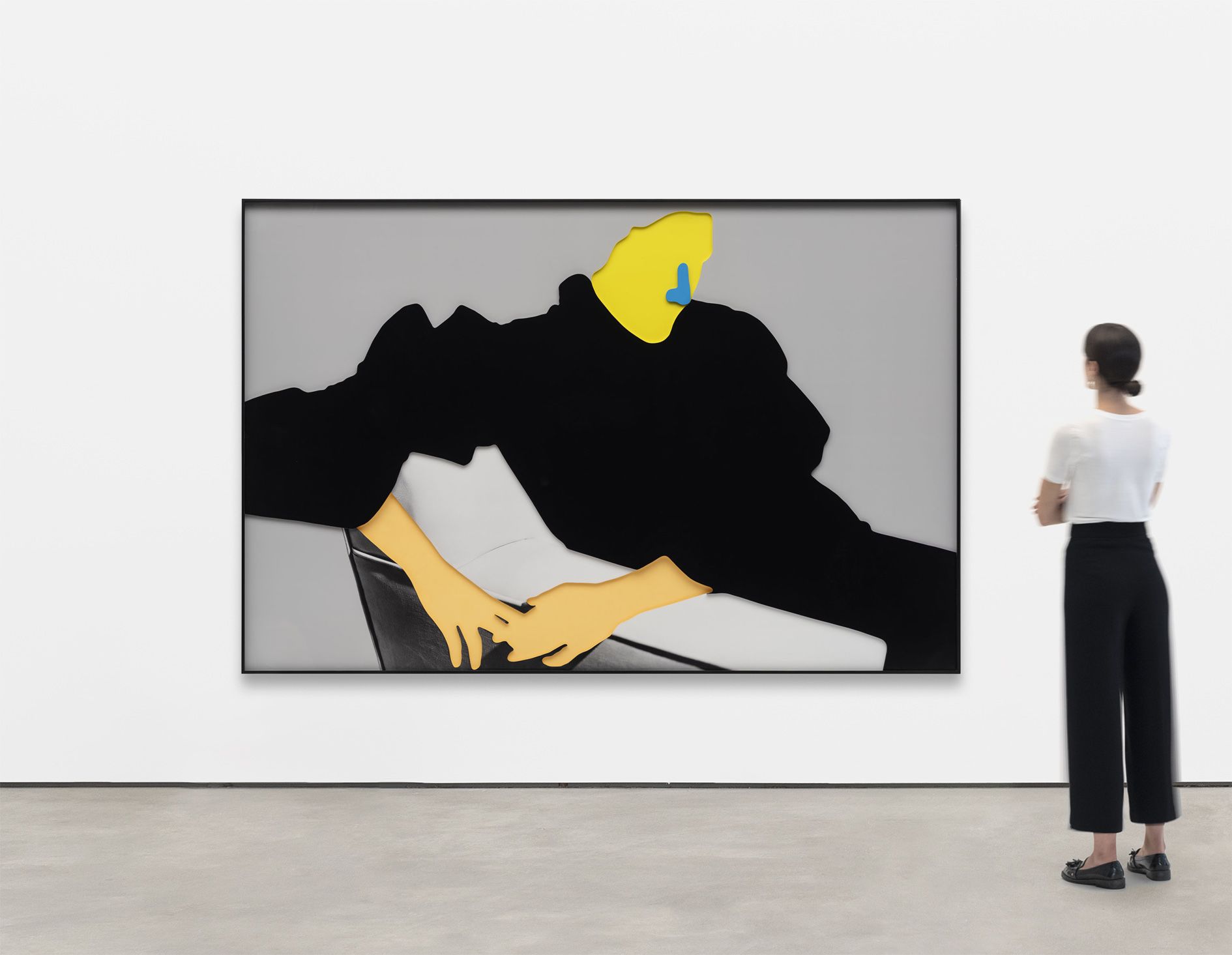
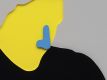
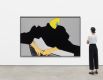
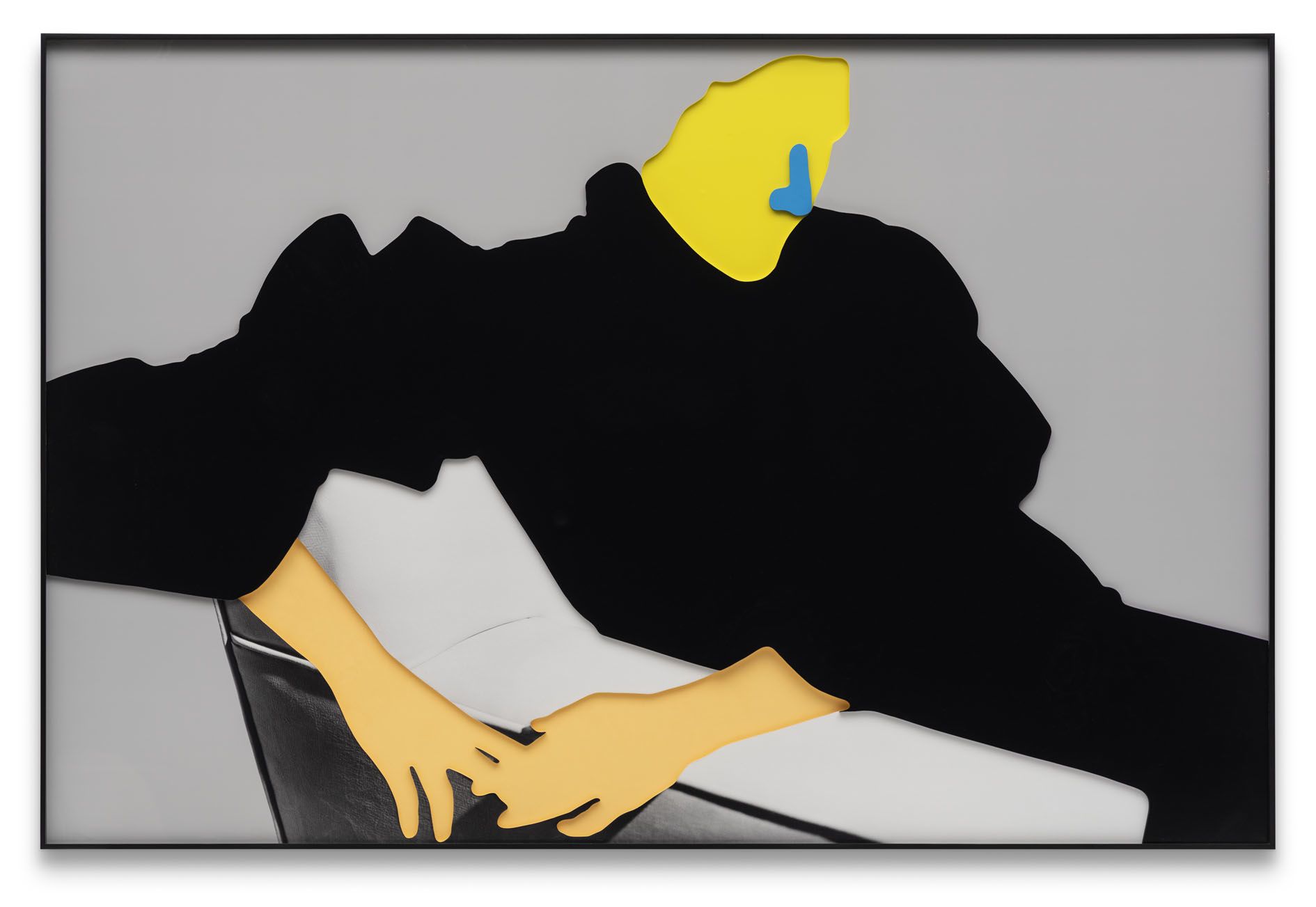
John Baldessari was an innovative force in contemporary art, one who expanded its parameters by insisting on the inextricable relationship between images and language. Over five decades, he developed works rooted in appropriation, erasure and montage, using recombined fragments to dismantle familiar narratives and construct new ones in their place. Noses & Ears, Etc. (Part Two): (Yellow) Face with (Blue) Nose, (Flesh) Hands, (Black Dress), and Chair (2006) belongs to a series combining digital photographic prints over-painted with acrylic paint and collage elements. Resisting easy categorization—part photography, part painting, part sculpture—the work engages the picture plane on three levels simultaneously.
Central to the series is a long-standing preoccupation: what we include or exclude from an image, and how that act of selection shapes meaning and memory. By isolating and colorizing fragmentary body parts against a black dress and gray chair, Baldessari draws on the logic of the uncanny, making visible the decisions and contingencies that are ordinarily absorbed into an image.
John Baldessari (1931–2020) lived and worked in Venice, California. Selected solo exhibitions include Bozar Centre for Fine Arts, Brussels (2025–26), Fondazione Querini Stampalia, Venice, Italy (2025), Museo de Arte Latinoamericano de Buenos Aires (2024), Moderna Museet, Stockholm (2020), Laguna Art Museum, Laguna Beach (2019), Museo Jumex, Mexico City (2017), Städel Museum, Frankfurt (2015), Garage Center for Contemporary Culture, Moscow (2013), Fondazione Prada, Milan (2010), Stedelijk Museum, Amsterdam (2011), Tate Modern, London (2009), Museum of Contemporary Art, Barcelona (2010), Los Angeles County Museum of Art (2010), and Metropolitan Museum of Art, New York (2010–11). Selected group exhibitions include the 53rd La Biennale di Venezia (2009), at which he was honored with the Golden Lion for Lifetime Achievement, Whitney Biennial (2009, 1983), Documenta V and VII (1972, 1982), and the Carnegie International (1985–86).
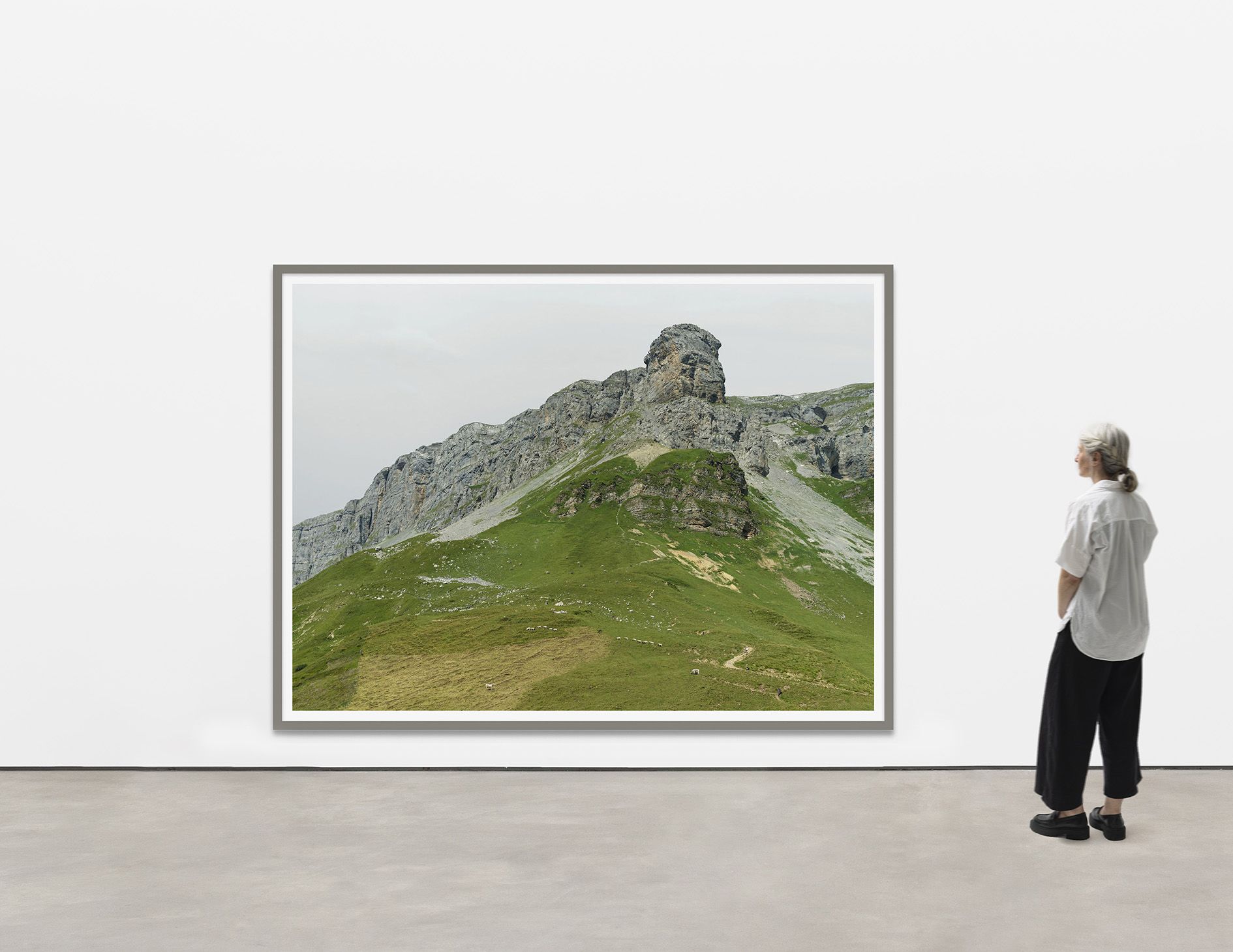

Andreas Gursky ranks among the most important photographers of his generation. His monumentally scaled works have redefined the medium in the twentieth and twenty-first centuries, distilling contemporary life into powerful visual statements. Interested in how globalization, consumerism and social phenomena shape contemporary society, Gursky examines the conditions of our changing planet. Klausenpass II (2025) revisits a pivotal moment in his artistic development. In 1984, he photographed this Swiss alpine pass with a large-format camera, only later noticing what his eye had missed but his lens had caught: tiny hikers scattered across the mountainside, flecks of color in a vast composition. This accidental discovery of photography’s ability to register details beyond immediate human perception shaped his subsequent practice. Over forty years later, Gursky returns to the same location at the same time of year.
The comparison reveals what incremental change conceals, as areas once snow-covered now lie dust-dry. Small dots of color—tourists, now joined by grazing livestock—still punctuate the landscape, echoing the composition of 1984 while revealing the remote terrain’s intensified human exploitation. Yet the essential relationship persists: the figures remain dwarfed by nature, our power to transform the landscape somehow coexisting with our enduring smallness within it.
Andreas Gursky (*1955, Leipzig) lives and works in Düsseldorf. Solo exhibitions include Fondazione MAST, Bologna (2023), Amorepacific Museum of Art, Seoul (2022), Museum Küppersmühle, Duisburg (2021), MdbK Leipzig (2021), Hayward Gallery, London (2018), National Museum of Art, Osaka (2014), National Art Center, Tokyo (2013), Stiftung Museum Kunstpalast, Düsseldorf (2013) and Louisiana Museum of Modern Art, Humlebæk, Denmark (2012). A solo exhibition organized by the Museum of Modern Art, New York (2001) toured to Museo Nacional Centro de Arte Reina Sofía, Madrid, Centre Georges Pompidou, Paris, Museum of Contemporary Art, Chicago and San Francisco Museum of Modern Art. His first retrospective was on view at Haus der Kunst, Munich, and toured to Istanbul Modern and Sharjah Art Museum (2007), then to Ekaterina Foundation, Moscow and National Gallery of Victoria, Melbourne (2008).
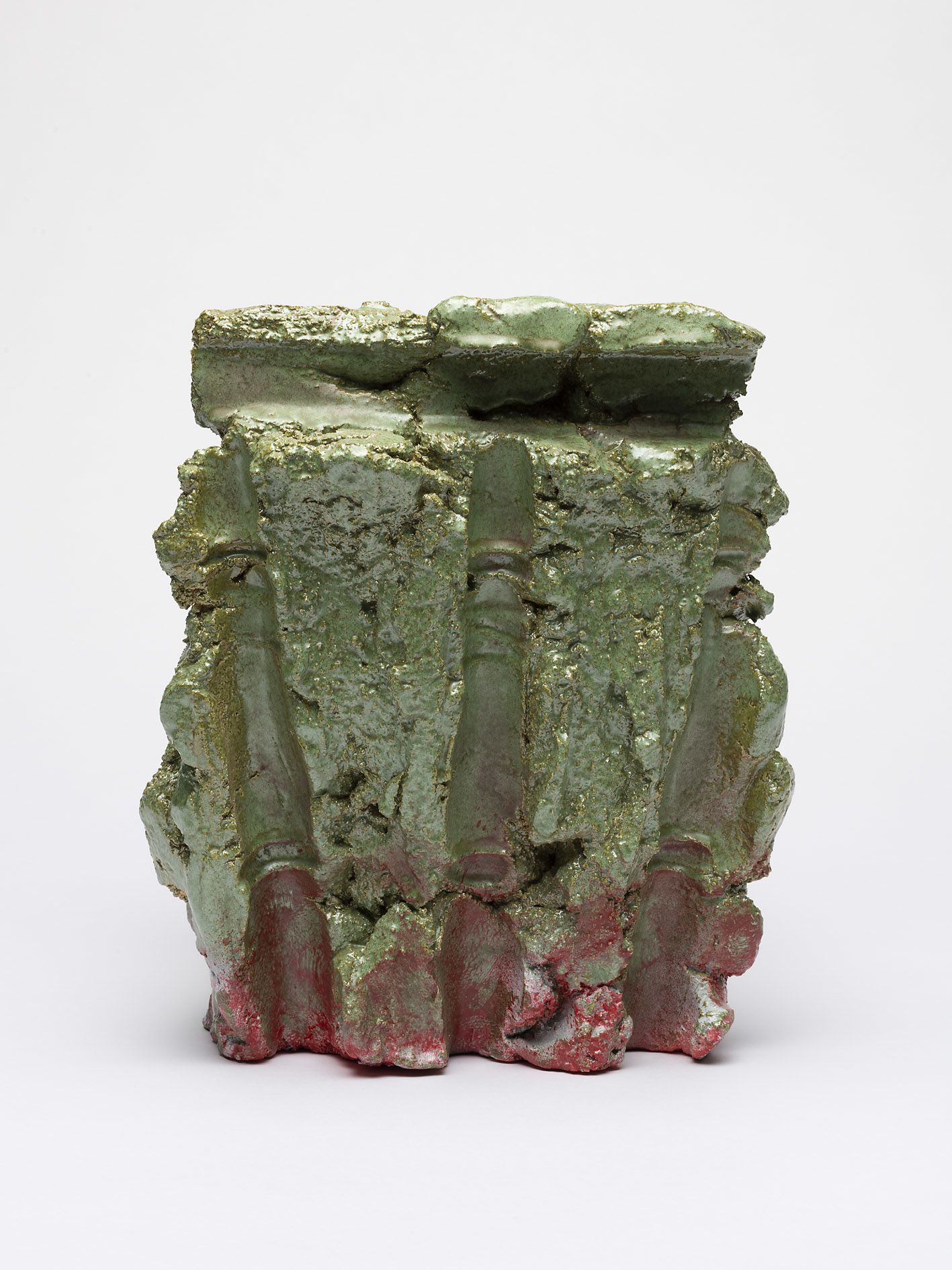
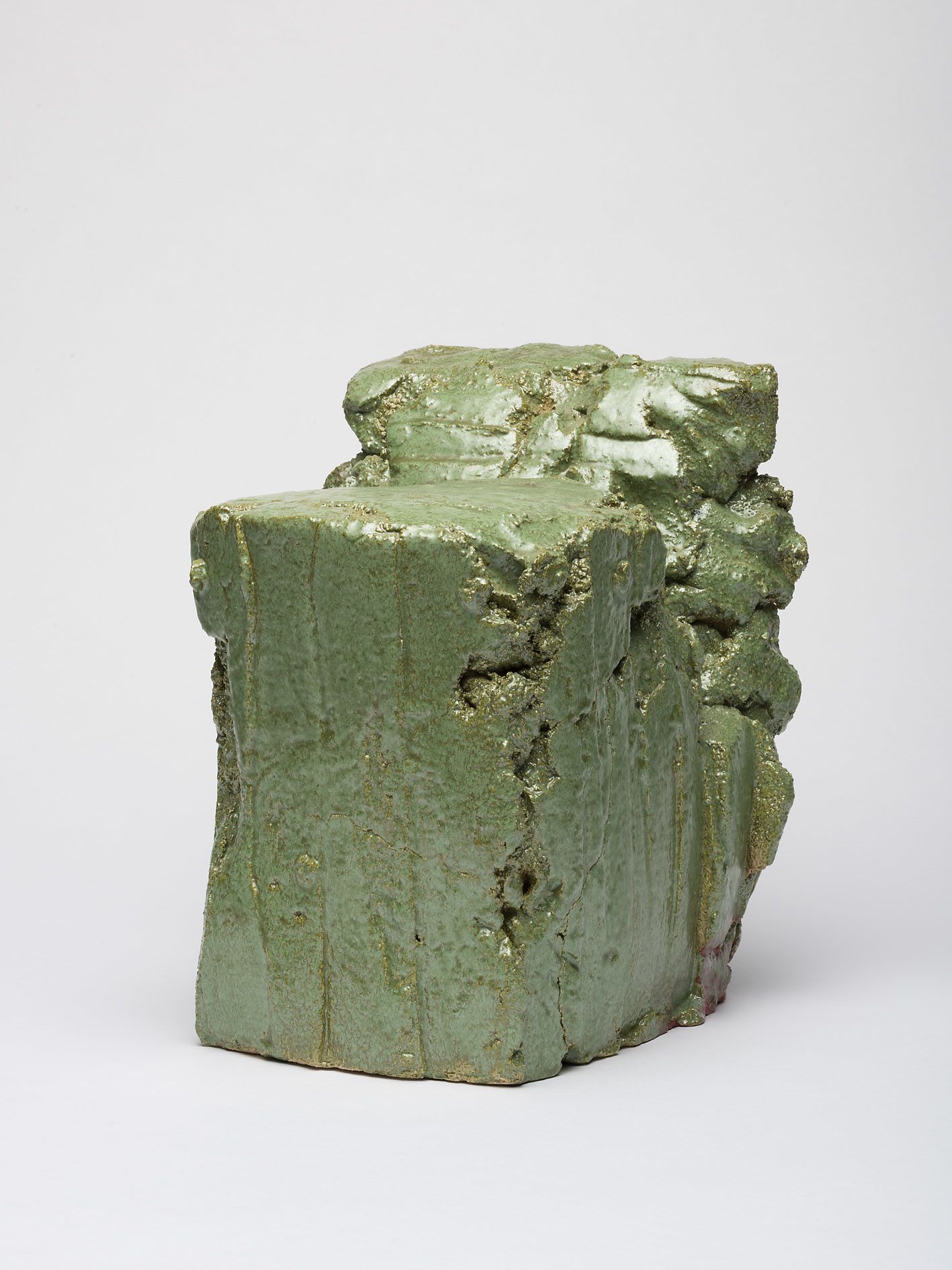


Since 2000, Rosemarie Trockel has developed an extensive ceramic œuvre, engaging with clay as both artistic medium and conceptual material. Her ceramics, which play with a web of cultural and social associations while addressing and subverting inherent contradictions, encompass a diverse range of forms. The human and animal body has been a longstanding preoccupation for the artist, along with its relationship to various technologies, and it manifests with visceral immediacy in her ceramics. Detox (2013) is a lusciously glazed green cuboid form bearing on one side the imprint of three extravagantly slender fingers. The indentations are partially lined with red paint along their lower third. This gesture of pressing fingers into clay mirrors how bodies respond to force, the fired depressions recalling the way skin gives, however briefly, under pressure.
Rosemarie Trockel (*1952, Schwerte, Germany) lives and works in Berlin. Solo exhibitions include Sungkok Art Museum, Seoul (2024), Museum MMK für Moderne Kunst, Frankfurt (2022–23), Moderna Museet Malmö (2018–19), Pinacoteca Agnelli, Turin (2016), Kunsthaus Bregenz (2015), traveling exhibition at Museo Nacional Centro de Arte Reina Sofía, Madrid, New Museum, New York and Serpentine Gallery, London (2012–13) and WIELS, Brussels, Culturegest, Lisbon and Museion Bozen, Bolzano (201213). In 2005, a major retrospective of her work opened at Museum Ludwig, Cologne and traveled to MAXXI, Rome. In 1999, Trockel became the first woman artist to represent Germany at La Biennale di Venezia. Her work was also included in Documenta 10 (1997) and Documenta 13, Kassel (2012), as well as La Biennale di Venezia (2022).

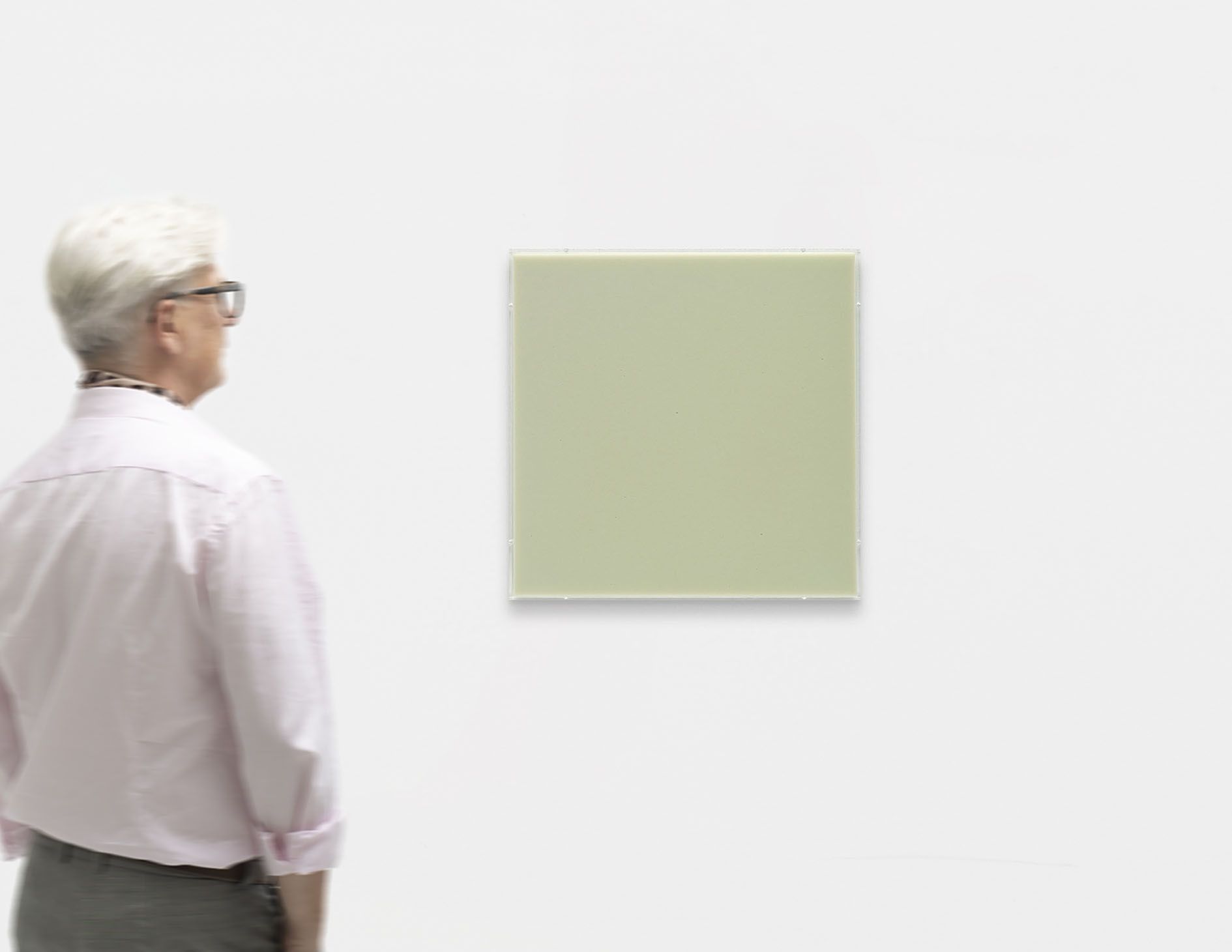


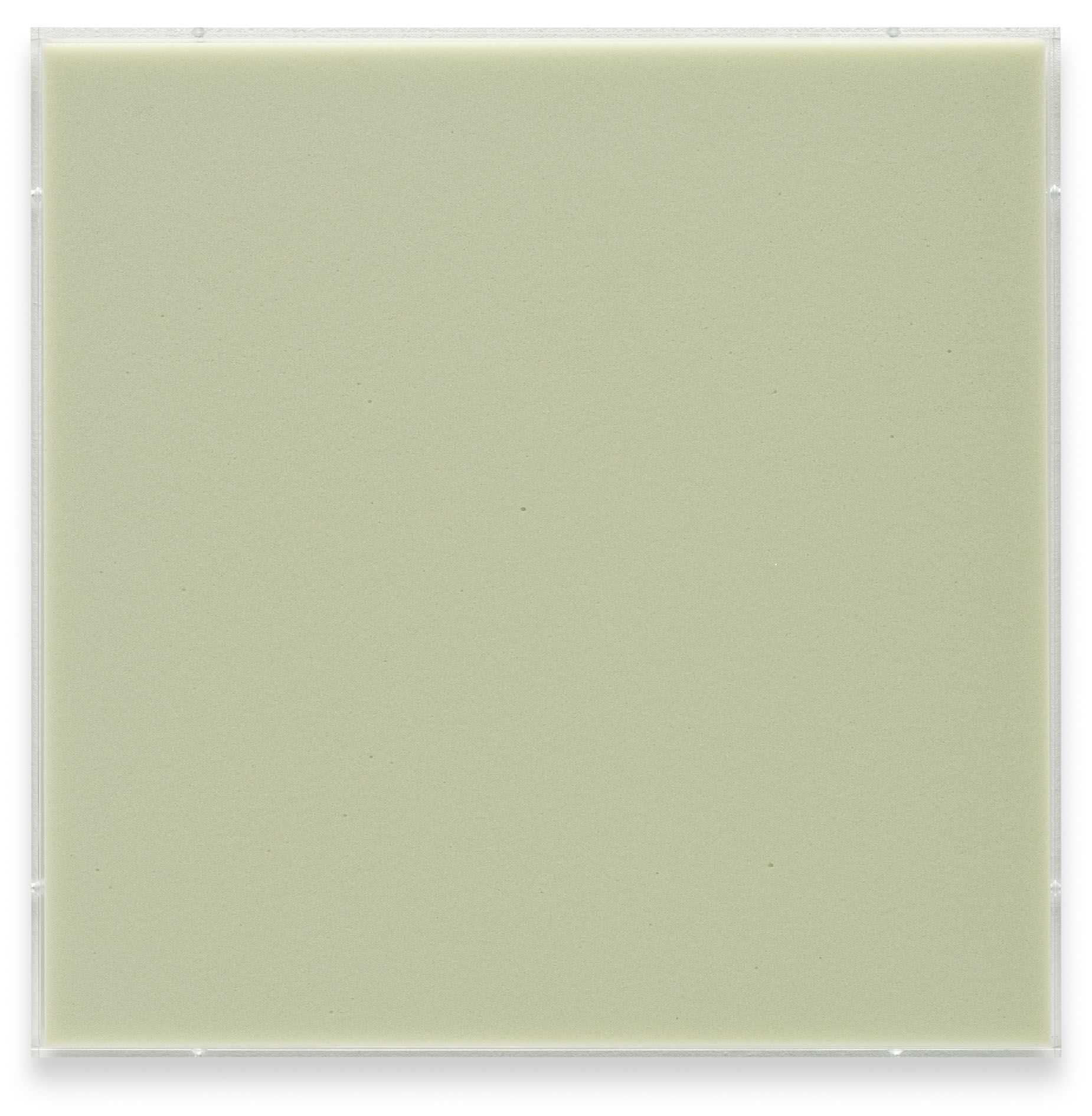
Rosemarie Trockel is widely regarded as one of the most important and influential conceptual artists working today. Her sculptures, collages, ceramics, knitted works, drawings and photographs are noted for their subtle social critique and range of subversive, aesthetic strategies. Sandman 1 (2023) comprises a square of shimmering polyfoam encased in plexiglass. Viewed frontally, the monochrome foam functions as a color field, recalling painting while asserting its status as three-dimensional object, an engagement with Minimalism’s austere language that demonstrates how modest materials can yield formal beauty. Yet as the foam undergoes material change within its transparent case, the work’s understated humor emerges: the title Sandman 1—conjuring fairy tales and sleep while referencing the foam’s eventual transformation into plastic sand—introduces precisely the kind of metaphorical associations that Minimalism resisted.
Rosemarie Trockel (*1952, Schwerte, Germany) lives and works in Berlin. Solo exhibitions include Sungkok Art Museum, Seoul (2024), Museum MMK für Moderne Kunst, Frankfurt (2022–23), Moderna Museet Malmö (2018–19), Pinacoteca Agnelli, Turin (2016), Kunsthaus Bregenz (2015), traveling exhibition at Museo Nacional Centro de Arte Reina Sofía, Madrid, New Museum, New York and Serpentine Gallery, London (2012–13) and WIELS, Brussels, Culturegest, Lisbon and Museion Bozen, Bolzano (201213). In 2005, a major retrospective of her work opened at Museum Ludwig, Cologne and traveled to MAXXI, Rome. In 1999, Trockel became the first woman artist to represent Germany at La Biennale di Venezia. Her work was also included in Documenta 10 (1997) and Documenta 13, Kassel (2012), as well as La Biennale di Venezia (2022).


Hyun-Sook Song understands painting to be an act of concentrated meditation that visually records the artist’s state of mind. Her decades-long practice has been defined by a distinctive style: simple compositions of deliberate linework that are reminiscent of East Asian calligraphy, rendered in egg tempera. In Triptych: 5 Brushstrokes III, 8 Brushstrokes, 7 Brushstrokes (2023), Song paints three neutral-toned canvases in which a dark ellipse rests atop a translucent foundation against a gradient backdrop. Besides a horizontal post and the white fabric it leaves behind, the compositions are identical. A rarity within her practice, this triptych highlights Song’s theme of repetition, which manifests in both her technique and motifs. The work is also emblematic of the artist’s economy of gesture, naming the number of brushstrokes needed to complete each of its three elements. In doing so, Song prompts viewers to identify and trace each measured line, to understand its enigmatic balance of abstraction and figuration by tracking her meticulous movements in their creation.
Hyun-Sook Song (*1952, Damyang, Jeollanam-do, South Korea) lives and works in Hamburg. Her work is currently featured prominently in the group exhibition Isa Mona Lisa at the Hamburger Kunsthalle, running through October 18, 2026. Selected solo and group exhibitions include Hamburger Kunsthalle, National Museum of Modern and Contemporary Art, Seoul, Gwangju Museum of Art, Mediations Biennale, Poznań, Leeum Samsung Museum of Art, Seoul, Mori Art Museum, Tokyo, Asian Art Museum, San Francisco, Berkeley Art Museum, San Francisco, and Deichtorhallen, Hamburg. Hyun-Sook Song’s work is included in the collections of institutions, such as Kunstmuseum Bern, Kunstmuseum Bonn, Hamburger Kunsthalle, Kunstmuseum Düsseldorf, Leeum Samsung Museum of Modern Art, Seoul, Mori Art Museum, Tokyo, Fukuoka Asian Art Museum, Seoul Museum of Art, Gwangju Art Museum, and Gyeonggi Museum of Modern Art.
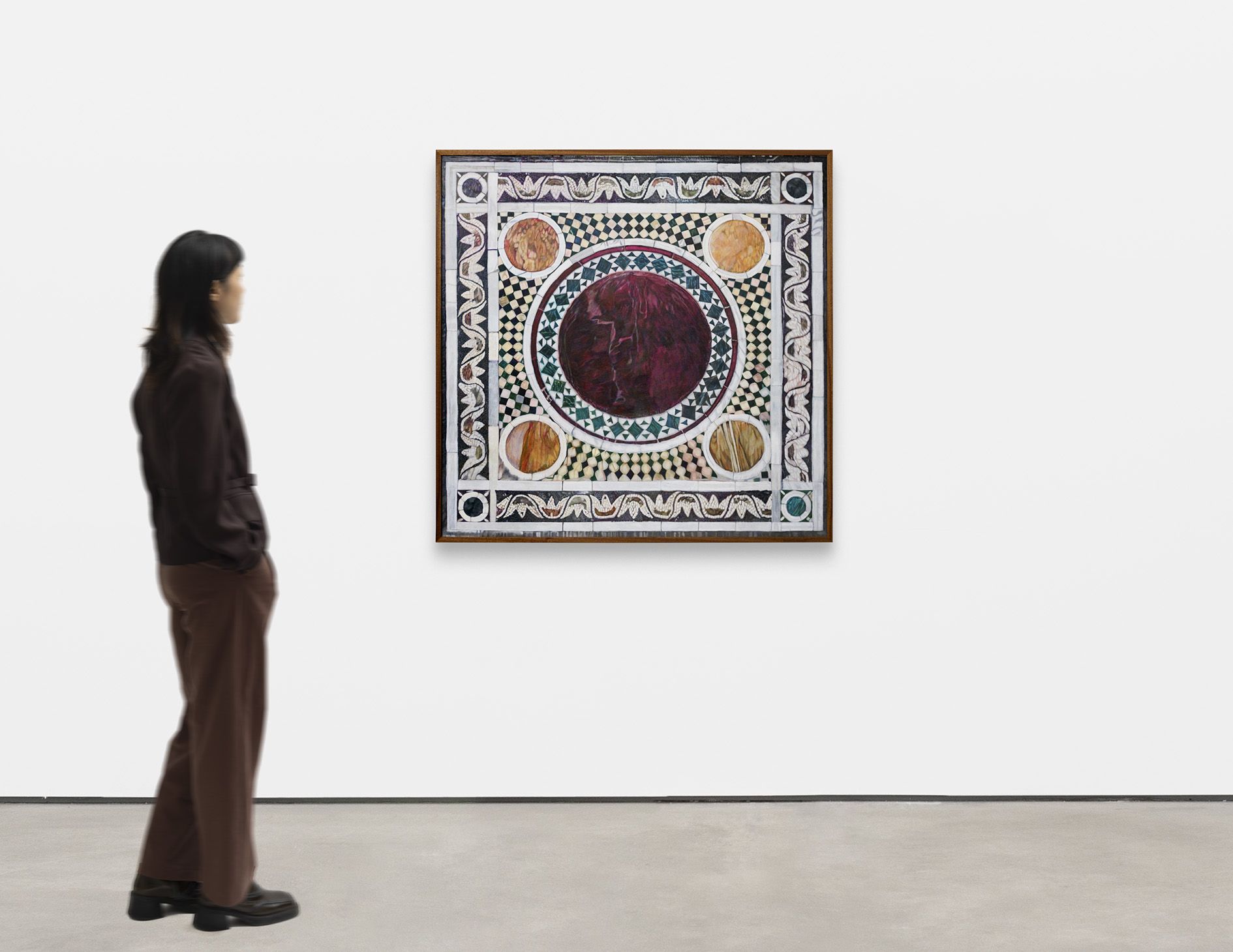
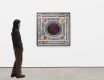
Gala Porras-Kim’s research-driven practice examines how our understanding of cultural artifacts is shaped by the museological and modern epistemological conventions that dictate their collection, taxonomy, preservation and display. San Vitale, Ravenna, marble floor reconstruction (2025) is the latest in her series of intricately detailed color pencil drawings depicting marble tiles in Ravenna, Italy—in this case, the church of San Vitale’s reconstructed floor mosaic. During the sixteenth century, the basilica’s floor was renovated not only for aesthetic reasons but also to elevate it significantly, protecting it from recurrent flooding. Performing a close reading of uncatalogued histories, Porras-Kim reveals the signs of care and neglect, conservation and flawed restoration efforts embedded within the surface. Using a medium that is itself inherently subjective and resistant to mechanical reproduction, this work challenges the notion of historical accuracy. By recording the visible layers of time, the drawing emphasizes how histories are shaped by intervention, subject to inevitable decay, and perpetually open to reinterpretation.
Porras-Kim was selected by Koyo Kouoh for the Applied Arts Pavilion in the Arsenale, a special project realized by La Biennale di Venezia in collaboration with the Victoria and Albert Museum, London. Her work is currently featured in two major international biennials: the Diriyah Contemporary Art Biennale in Saudi Arabia, on view through May 2, 2026, and the Singapore Biennale, on view through March 29, 2026.
Gala Porras-Kim (*1984, Bogotá) lives and works in Los Angeles and London. Her work has been exhibited at Kunsthalle Bern (2025), Carnegie Museum of Art, Pittsburgh (2025), Museum of Contemporary Art Cleveland (2025), Museum of Contemporary Art Denver (2024), MoMA, New York (2023), Leeum Museum of Art, Seoul (2023), MMCA, Seoul (2023), MUAC, Mexico City (2023), Liverpool Biennial (2023), Gwangju Biennial (2021), São Paulo Art Biennial (2021), and Whitney Museum of American Art, New York (2019, 2017).


Salvo was an Italian Conceptualist in dialogue with the burgeoning Arte Povera movement before his practice dramatically shifted in 1973, when the artist turned decisively to figurative painting. His oil paintings embrace the aesthetics of traditional art histories, from Giotto and Botticelli to Italian Futurism and Surrealism, employing flat geometric forms and rich colors that draw attention to the painting’s artifice. Mediterraneo (2008) is a simple composition of surreally colored trees with red trunks, green canopies, and purple shadows. Behind the verdant vegetation is a polychrome sunset or sunrise of rich yellows, bright oranges, and pale greens, which form curvy clouds. The painting’s sublime brightness is characteristic of Salvo’s renowned sumptuous light effects, which generate serene, dreamlike scenes.
Salvo (1947–2015) lived and worked in Turin. Solo exhibitions include Pinacoteca Agnelli, Turin (2025), Museum of Contemporary Art, Rome (2022), Museo d’Arte della Svizzera Italiana, Lugano (2017, with Alighiero Boetti), Museo d’Arte Contemporanea, Lissone (2015), Galleria d’Arte Moderna e Contemporanea, Turin (2007), Galleria d’Arte Moderna e Contemporanea, Bergamo (2002), Musée d’Art Contemporain, Nîmes and Museum Boijmans Van Beuningen, Rotterdam (both 1988), Kunstmuseum Lucerne (1983), Mannheimer Kunstverein and Museum Folkwang, Essen (both 1977). In addition to participating in Documenta 5 (1972) and the 1976 and 1988 editions of La Biennale di Venezia, recent group exhibitions include Kröller-Müller Museum, Otterlo, The Netherlands (2023), Kunsthaus Glarus, Switzerland (2022), Castello di Rivoli, Turin (2021) and Menil Drawing Institute, Houston (2020).
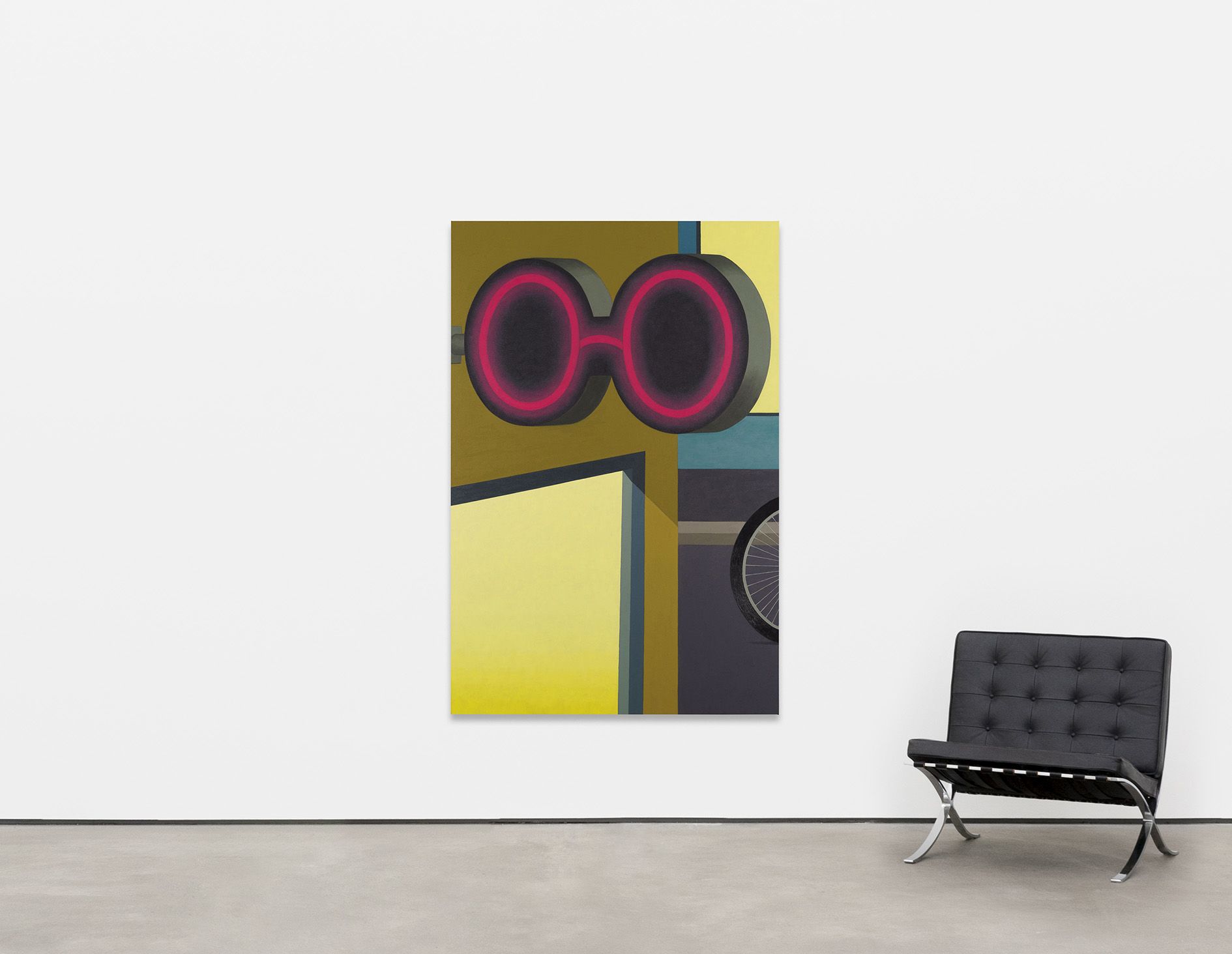

Henni Alftan’s artistic practice imagines everyday scenes of modern life that, at first, appear intimately familiar yet become increasingly elusive upon extended engagement. In Optician (2025), Alftan paints a neon red street sign advertising the services of the eye care professional indicated in the work’s title. On the empty street below the neon glasses, a bicycle wheel peeks into the painting’s composition. It is unclear if the bicycle is still or in motion, and, if the latter, who its operator is. In Optician and throughout her work, Alftan’s economy of means and careful cropping creates an alluring dichotomy of familiarity and mystery.
Henni Alftan (*1979, Helsinki) lives and works in Paris. Institutional group exhibitions include those at Centre Pompidou-Metz, France (2025), Longlati Foundation, Shanghai (2024), Amos Rex Art Museum, Helsinki (2024), Kemper Museum of Contemporary Art, Kansas City (2024), EMMA – Espoo Museum of Modern Art, Espoo, Museum of Contemporary Art Kiasma, Finland (both 2023), LACMA, Los Angeles (2022), ENSA Limoges, École Nationale Supérieure d’Art (2020), Musée des Beaux-Arts de Brest (2017). Alftan’s works are included in the collections of the Buffalo AKG Art Museum, New York, Dallas Museum of Art, Hammer Museum, Los Angeles, Helsinki Art Museum, High Museum of Art, Atlanta, Institute of Contemporary Art, Miami, Kuntsi Museum of Modern Art, Vaasa, Finland, Los Angeles County Museum of Art and the UBS Art Collection.
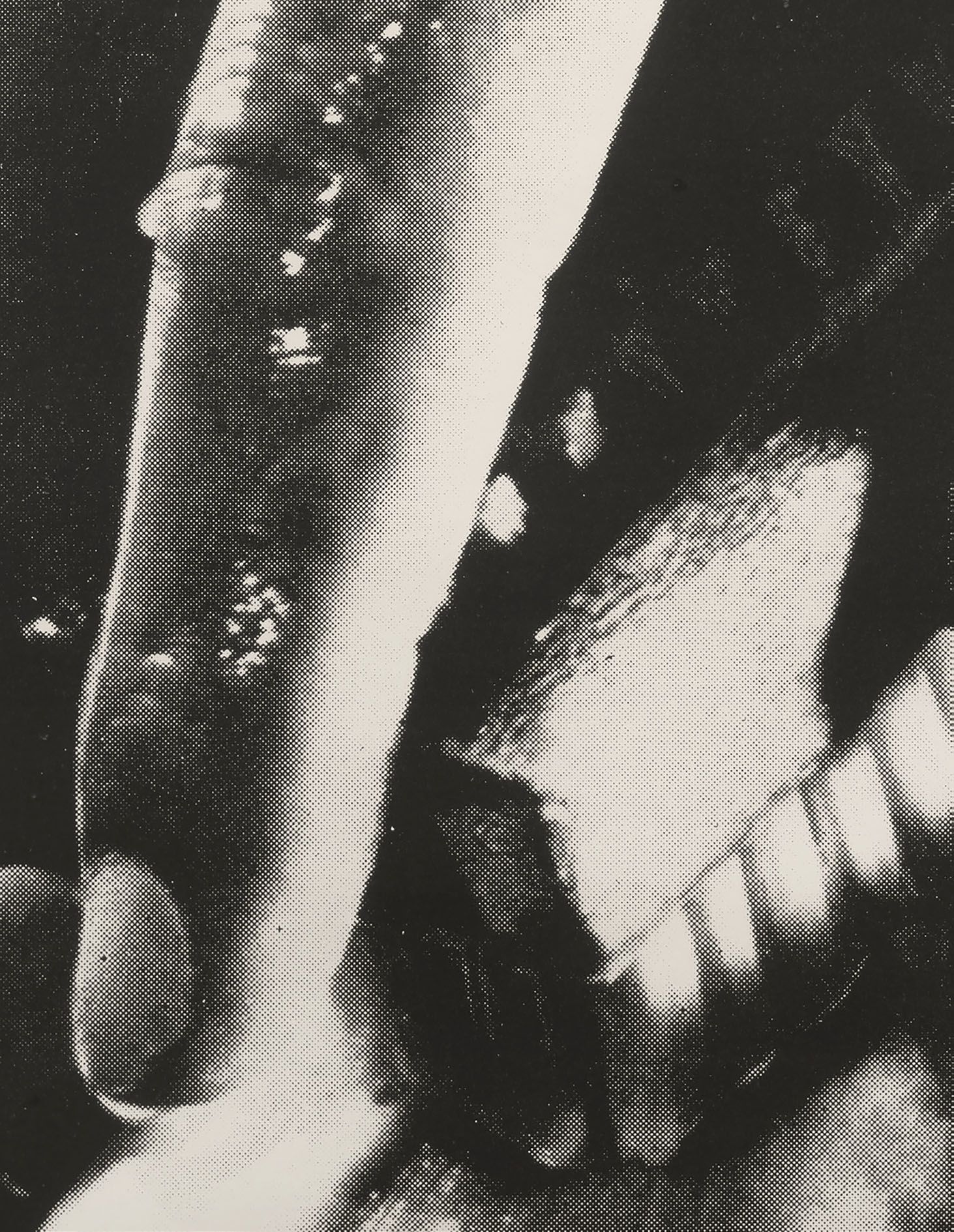


Since the late 1970s and ’80s, works by Barbara Kruger have been unmistakable for their distinct visual language that combines black-and-white found imagery with bold, insistent texts, and often bordered with a red artist frame. This straightforward aesthetic sets the stage for complex ideas around power, influence and politics to emerge and impact the viewer. Untitled (Do you follow orders?) (1990) stems from a significant series of columnar panels that Kruger produced in 1989–90—several of which were included in a 1990 exhibition at Monika Sprüth Gallery, Cologne—each presenting a powerful question with an equally evocative appropriated black-and-white image. In this work, the question includes the artist’s characteristic direct address (“you,” implicating the viewer) set against an image of two hands holding a bar of soap and a scrub brush, which call to mind ideas around cleanliness, labor and control.
Barbara Kruger (*1945, Newark, NJ) lives and works in Los Angeles and New York. Recent solo shows include Museo Guggenheim Bilbao (2025), ARoS Art Museum, Aarhus, Serpentine Galleries, London (both 2024), Museum of Modern Art, New York, Los Angeles County Museum of Art, Neue Nationalgalerie, Berlin (all 2022), Art Institute of Chicago (2021), Amorepacific Museum of Art, Seoul (2019) and National Gallery of Art, Washington, DC (2016). Recent group exhibitions include Langen Foundation, Neuss, Germany (2025), The Broad, Los Angeles (2023), La Biennale di Venezia (2022), Isabella Stewart Gardner Museum, Boston (2021), Museum of Modern Art, Warsaw (2021), The Metropolitan Museum of Art, New York (2020), Walker Art Center, Minneapolis (2020), Nationalmuseum, Stockholm (2019) and Hamburger Bahnhof, Berlin (2018).


Jenny Holzer’s White Purple Curve (2005) is an LED sign emitting purple and white lights, featuring selections from one of her most iconic text series, Truisms (1977–79), a group of single-sentence declarations written by Holzer to resemble existing truisms, maxims, and clichés. Since the 1970s, LED signs have become integral to Holzer’s practice and her most visible medium. Often displayed in public spaces, their poetic and critical content raises questions about the complexities, paradoxes and ironies of social identity and politics, while also revealing the power of language. The vivid colors, the dynamism of tickers and the words’ linear movement engage viewers while they process information, altering their physical and psychological perception of meaning. Captivating both physically as well as conceptually, White Purple Curve highlights the beauty and intensities of the artist’s diverse œuvre.
In 2026, Jenny Holzer will open solo exhibitions at Serralves Museum, Porto in June and the Musée d’Orsay, Paris in October.
Jenny Holzer (*1950, Gallipolis, OH) lives and works in New York. Major surveys of her work were on view at the Guggenheim Museum, New York (2024) and Kunstsammlung Nordrhein-Westfalen, Düsseldorf (2023), and in 2022 she curated an exhibition on Louise Bourgeois’ work at Kunsthalle Basel. Other selected solo shows include Guggenheim Museum, Bilbao (2019), Tate Modern, London (2019), Massachusetts Museum of Contemporary Art, North Adams (2017–present), Blenheim Art Foundation, Woodstock (2017), Museo Correr, Venice (2015), Neue Nationalgalerie, Berlin (2011, 2001), DHC/ART Foundation for Contemporary Art, Montreal and The Baltic, Gateshead (both 2010), Fondation Beyeler, Basel and Whitney Museum of American Art, New York (both 2009), Walker Art Center, Minneapolis (1991), Hamburger Kunsthalle (2000), as well as Dia Art Foundation, New York and Guggenheim Museum, New York (both 1989).
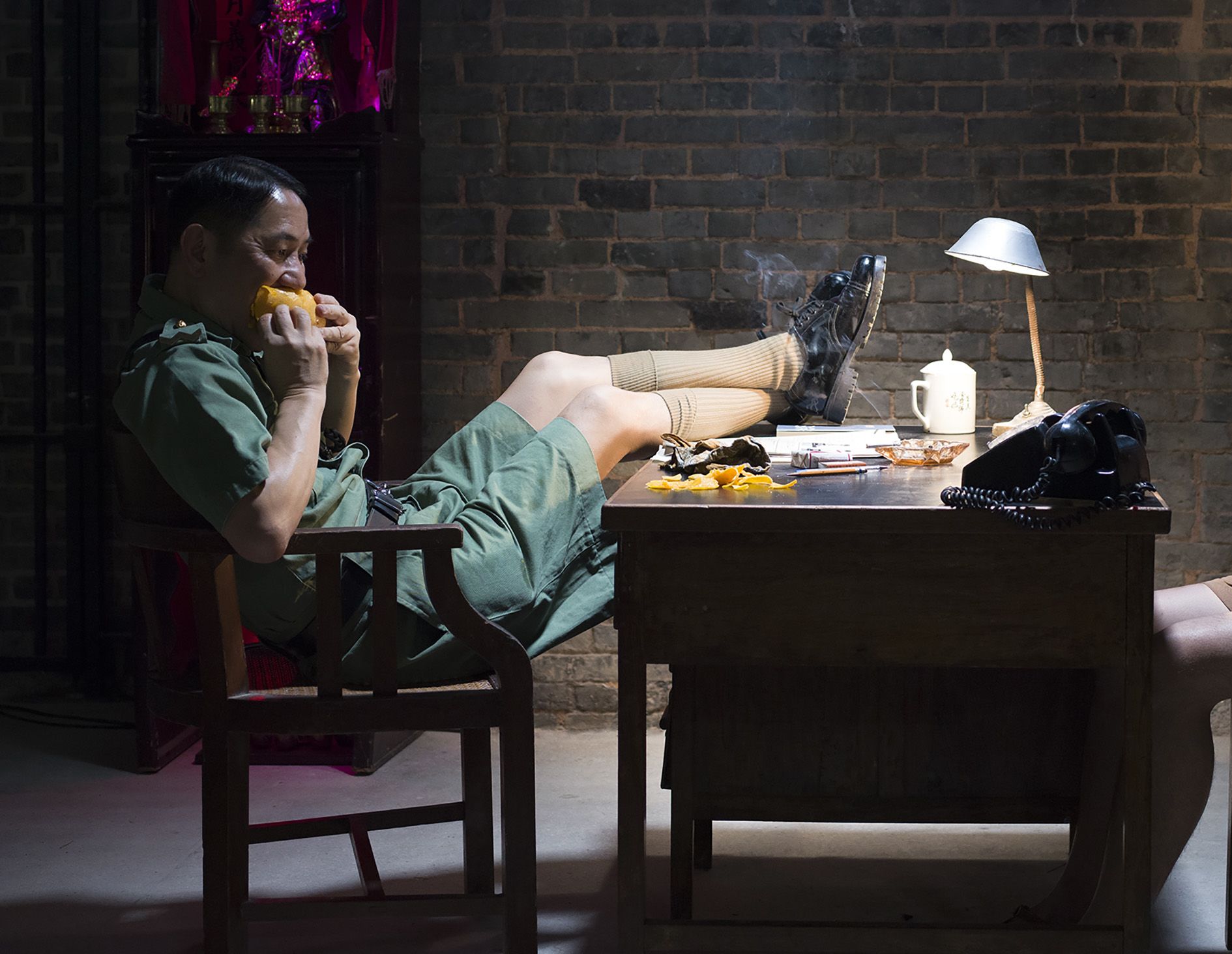
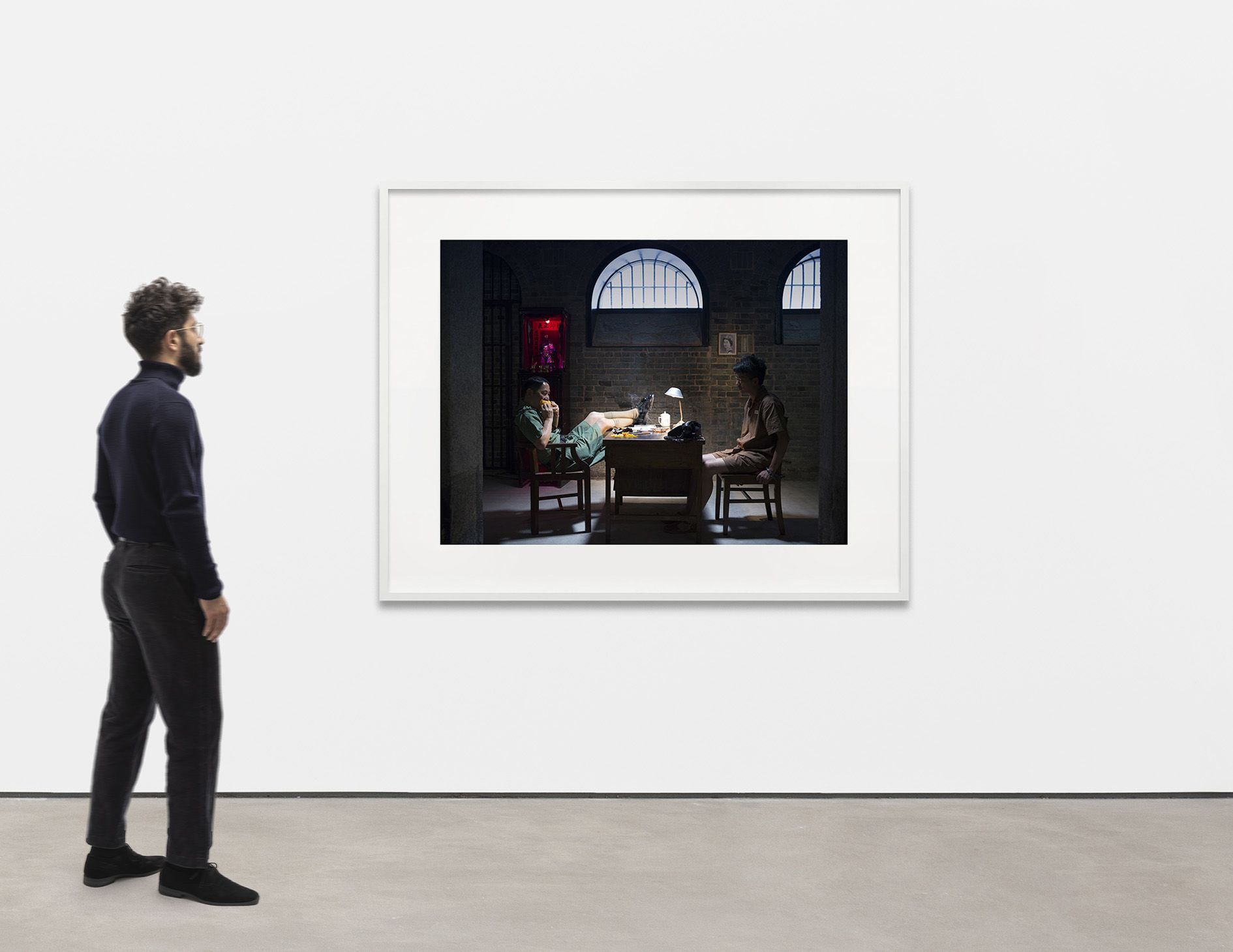
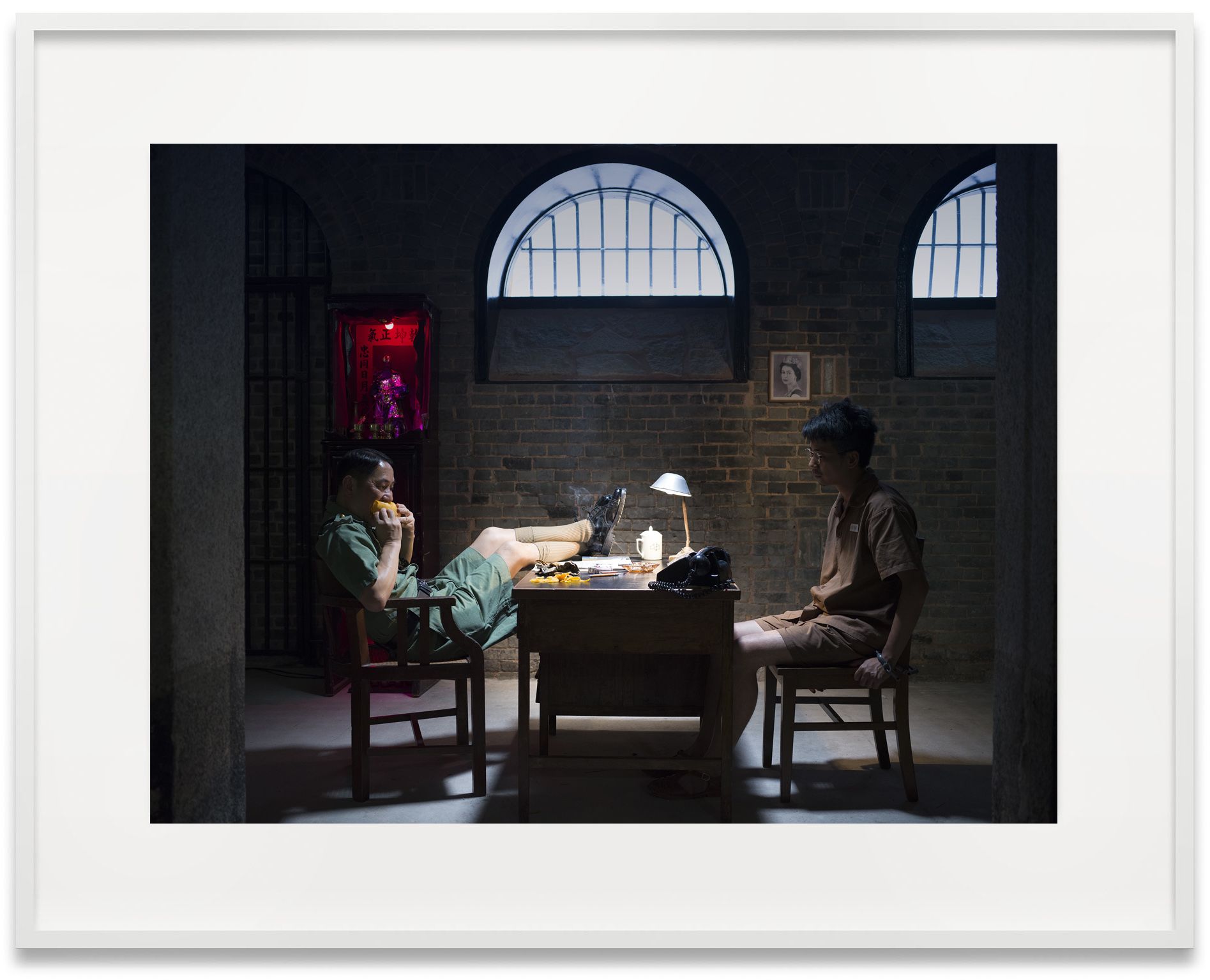
Celebrated internationally for her wide-ranging multimedia work, Cao Fei regularly explores the intersections between humanity, technology, capital, and the digital age. The photograph Prison Architect 10 relates to Cao Fei’s film Prison Architect (both 2018), the first collaboration between the artist and the award-winning cinematographer Kwan Pun Leung. The film features a poignant monologue from an architect who expresses a deep moral conflict regarding the design of carceral spaces. Set in Hong Kong’s vibrant Central district, the narrative draws on the dark historical legacy of Victoria Prison. Through a dual-timeline structure of the present and an indistinct past, the male and female leads explore themes of confinement across parallel realities. This dialogue serves as a vehicle for the artist to examine the profound connections between human agency, the physical world, and freedom.
Cao Fei opens two major exhibitions this spring, DASH at Fondazione Prada, Milan, on April 9, 2026, and Testimonies to the Near Future at Kunstmuseum Basel on May 30, 2026.
Cao Fei (*1978, Guangzhou) lives and works in Beijing. Selected solo exhibitions include Sydney Modern, Art Gallery of New South Wales; Museum of Art Pudong, Shanghai; Lenbachhaus, Munich (all 2024), MAXXI, the National Museum of 21st Century Arts, Rome and UCCA Center for Contemporary Art, Beijing (both 2021), Serpentine Galleries, London (2020), Centre Pompidou, Paris (2019), Tai Kwun Contemporary in Hong Kong and K21 Düsseldorf (both 2018), MoMA PS1 (2016), Secession, Vienna and Bonnefantenmuseum, Maastricht (both 2015) and Tate Modern, London (2013). Cao Fei’s work has been featured in group exhibitions and major biennial and triennial exhibitions worldwide since the early 2000s. In 2021, she was awarded the Deutsche Börse Photography Foundation Prize.

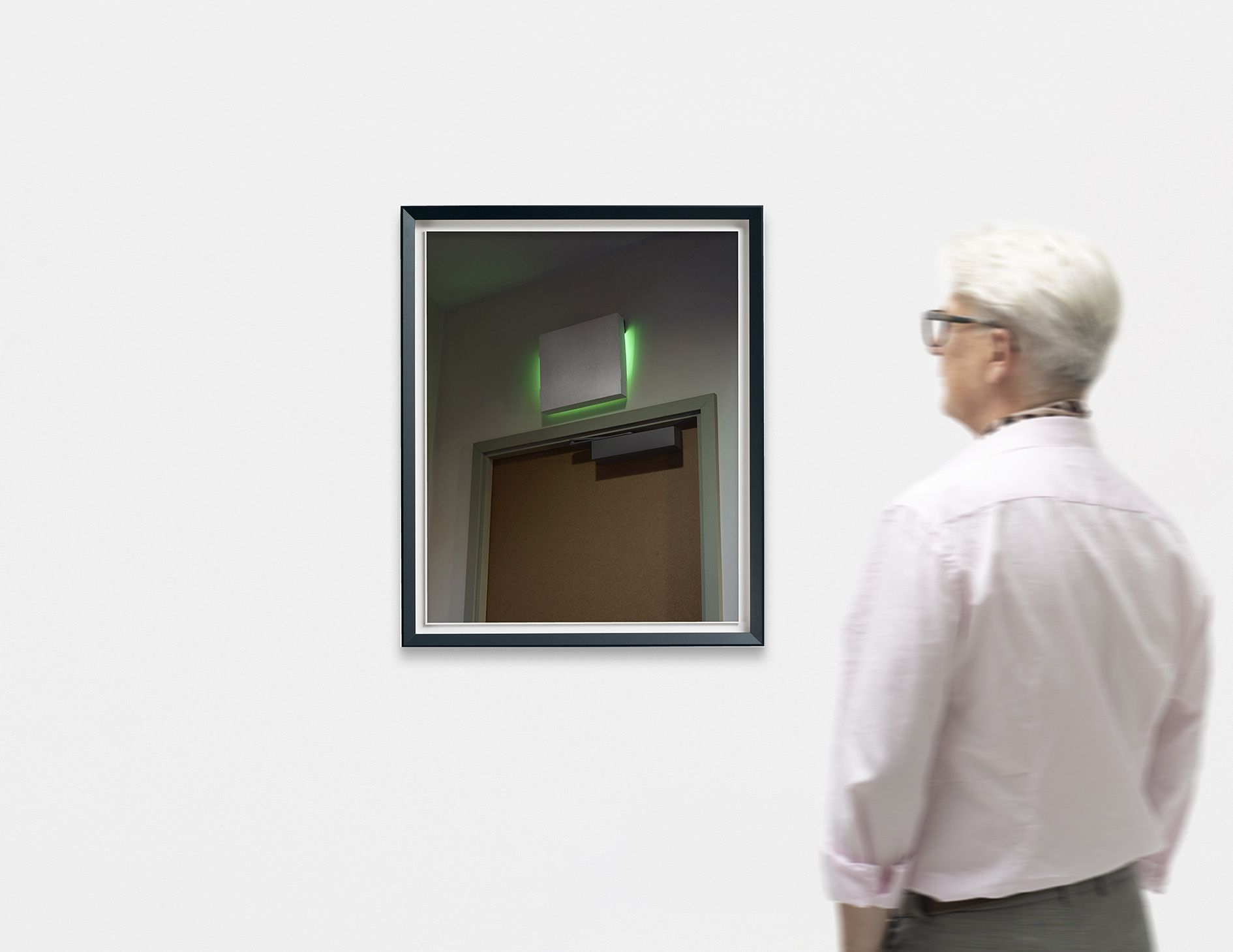

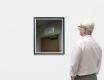
Thomas Demand’s meticulous, large-scale models contemplate the typical spaces and scenes that we encounter on a daily basis. For his Dailies, a series he began in 2008, Demand converts everyday moments, such as a damaged office ceiling or a sponge left on the bathtub rim, that he captures on his phone into sculptures rendered in paper—a material as universal as the subjects depicted. Daily #29 (2017) painstakingly recreates the green glow of an exit sign above a nondescript, institutional doorway. A closer look reveals the sign, which is missing its letters, to be a cardboard pizza-style box, subtly indicating that this image is, in fact, a remodeling of reality. Demand’s pared-down aesthetic renders quotidian, even trivial, scenes remarkable; each Daily requires only a few elements to produce a vivid photograph that displays allure in the mundane and mystery in the ordinary.
Thomas Demand (*1964, Munich) lives and works in Berlin. Demand was the subject of a major touring retrospective, The Stutter of History, which has been exhibited at Taipei Fine Arts Museum (2025), Museum of Fine Arts, Houston (2024), Jeu de Paume, Paris (2023), Israel Museum, Jerusalem (2023–24), and UCCA Edge, Shanghai (2022). Other selected solo exhibitions include Museum of Contemporary Art, Toronto (2022), Centro Botín, Santander, Garage Museum of Contemporary Art, Moscow (both 2021), Fondazione Prada, Venice (2017, 2007), Modern Art Museum of Fort Worth (2016), Los Angeles County Museum of Art (2015), Museum of Contemporary Art, Tokyo (2012), Neue Nationalgalerie, Berlin (2009), Hamburger Kunsthalle, Hamburg (2008), Serpentine Gallery, London (2006), Museum of Modern Art, New York (2005), Kunsthaus Bregenz (2004), Louisiana Museum of Modern Art, Humlebæk (2003), and Castello di Rivoli, Turin (2002). He represented Germany at the 26th São Paulo Biennale in Brazil in 2004.
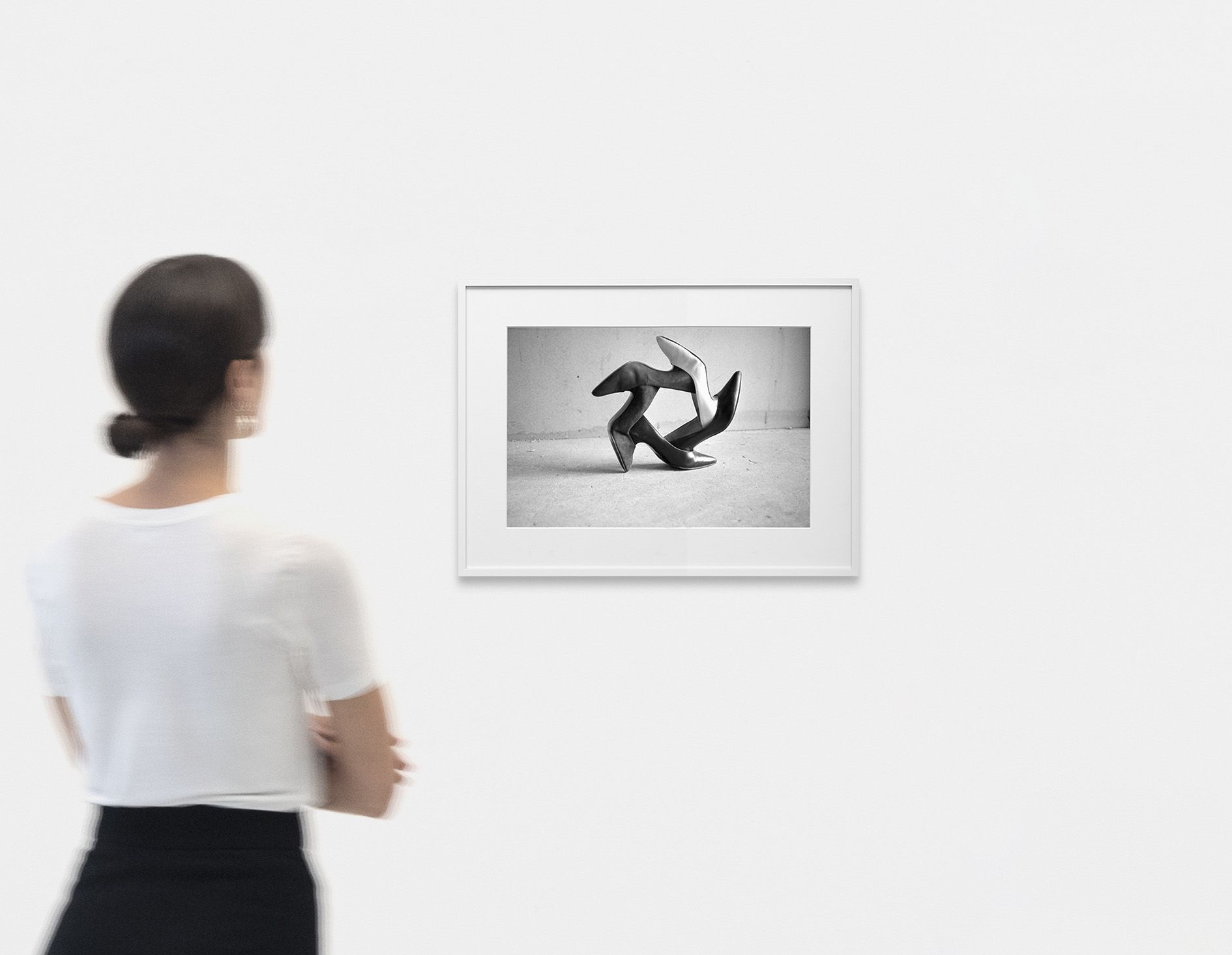
Since the artist duo Peter Fischli and David Weiss began working together in 1979, their joint practice has documented the material world with visual wit, recasting the ordinary and mundane as whimsical and spectacular. In their series Equilibres, Fischli and Weiss photograph assemblages of everyday objects composed in imaginative, precariously balanced, temporary structures that seem destined to collapse at any moment. Flirtation, Love (1984) captures an especially incredible construction: five high heels, each snugly fit into the toe box of the one behind it. The result is an absurd but balanced gear-like construction that tests the limits of stability. An exploration of boredom and its existential implications, Flirtation, Love documents the structure’s brief cohesive state before its inevitable collapse.
Peter Fischli (*1952 in Zurich) and David Weiss (1946–2012) began working together in the late 1970s, continuing their collaborative practice until Weiss’ death. Solo exhibitions include Aspen Art Museum (2017), Art Institute of Chicago and San Francisco Museum of Modern Art (both 2017), Fondation Beyeler, Riehen/Basel (2016), Serpentine Gallery, London (2014), 21st Century Museum of Contemporary Art, Kanazawa (2010), and Museo Nacional Centro de Arte Reina Sofía, Madrid (2009). Major retrospectives include Tate Modern, London (2006), Kunsthaus Zürich (2007), Deichtorhallen Hamburg (2008), as well as Solomon R. Guggenheim Museum, New York and Museo Jumex, Mexico City (2016). Their work has been included in the Venice Biennale (2013, 2003, 1988), the Venice Architecture Biennale (2012), the Gwangju Biennale, South Korea (2010), Documenta X (1997) and Documenta VIII (1987). In 2003, Fischli and Weiss were awarded the Golden Lion at the 50th Venice Biennale.


Icons of German postwar photography, Bernd and Hilla Becher meticulously documented industrial architecture across Europe and North America, challenging the perceived gap between documentary and fine art photography. Water Tower, Liévin, F (2012) is characteristic of the Bechers’ formal arrangements: a black-and-white frontal view of a tall water tower in Liévin, a municipality in northern France. The photograph’s location is revealed not just in the title of the work, which is customary within the Bechers’ practice, but also, unusually, in the sign above the structure. Text is rare within the Bechers’ œuvre, especially of such large type. In photographing so many utilitarian structures, their practice simultaneously distills each construction into a taxonomy of visually and functionally homogeneous structures, whilst emphasizing the particular and eccentric character of each.
Bernd (1931–2007) and Hilla Becher (1934–2015) lived in Düsseldorf and worked together since 1959. A major solo show of their work will be on view at Fondazione MAST, Bologna (April 23–September 27, 2026), which traveled from Die Photographische Sammlung/SK Stiftung Kultur, Cologne (September 5, 2025–February 1, 2026). Other selected solo exhibitions include The Metropolitan Museum of Art, New York (2022), which traveled to San Francisco Museum of Modern Art (2022), National Museum Cardiff, Wales (2019), Josef Albers Museum Quadrat Bottrop (2018), Die Photographische Sammlung/SK Stiftung Kultur, Cologne (2016, 2013, 2010, 2006), Hamburger Bahnhof, Berlin (2005), Centre Pompidou, Paris (2004), K21 Kunstsammlung Nordrhein-Westfalen, Düsseldorf (2003) and 44th Venice Biennale (1990). Group exhibitions include Barbican Art Gallery, London (2014), Pinakothek der Moderne, Munich (2014, 2004), MoMA, New York (2013), Solomon R. Guggenheim Museum, New York (2010), Hamburger Bahnhof, Berlin (2008), The National Museum of Modern Art, Tokyo (2005), Hammer Museum, Los Angeles (2004), Tate Modern, London (2004, 2003) and Documenta XI, VII, VI and V, Kassel (2002, 1982, 1977, 1972).


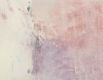


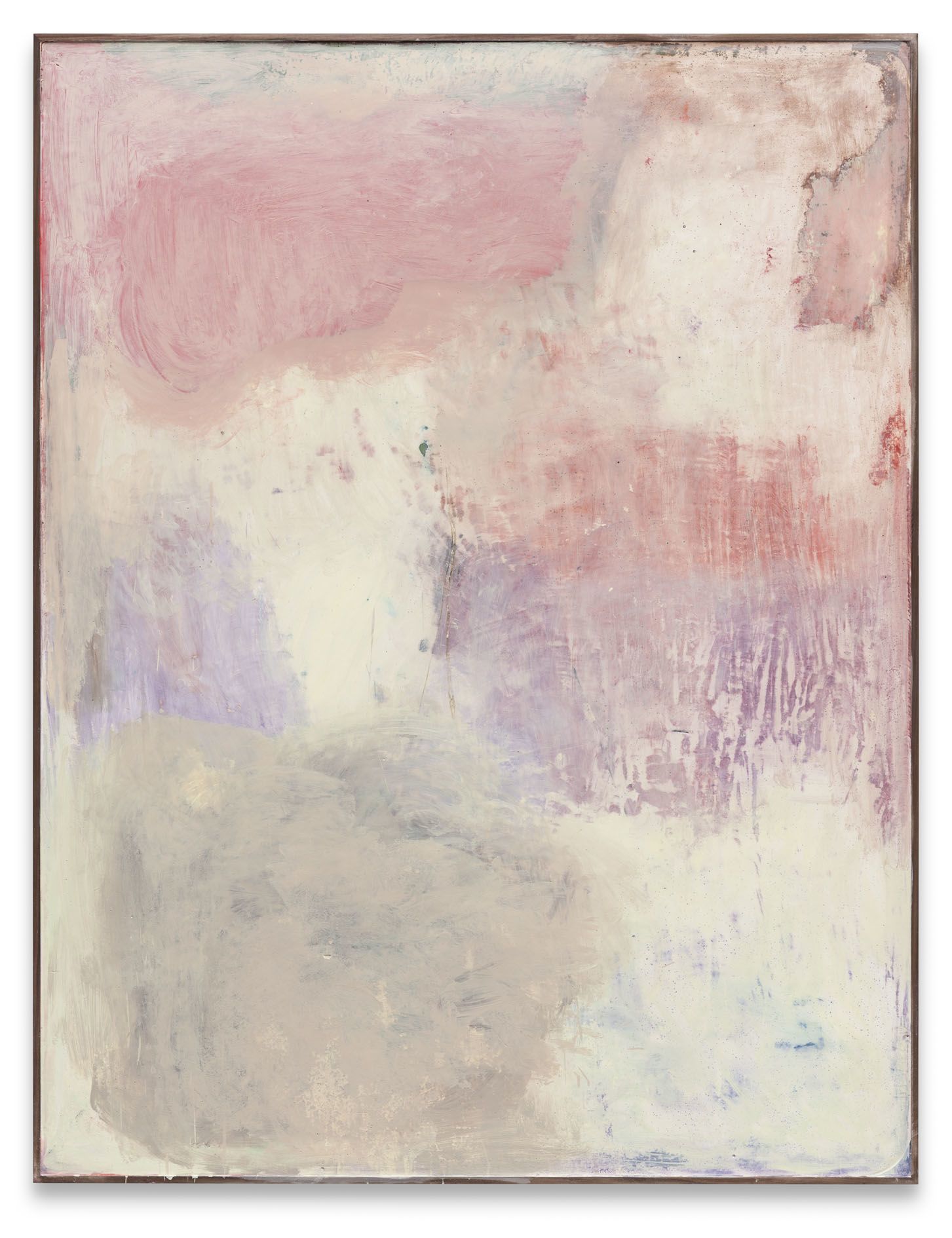
Thea Djordjaze’s distinctive paintings exemplify an embodied practice that investigates the poetics and particularities of space, alongside the inherent characteristics of her chosen materials. Her ongoing series of plaster-filled wooden frames with pigment both embedded within and layered upon their porous surfaces occupies a hybrid territory between painting and relief, fusing painterly gestures with sculptural presence. In Untitled (2026), a broad field of blush pink, built up in thick, heavily worked impasto, meets patches of purple and red, while a turbulent area of brown counterbalances the composition. Hints of green and blue emerge through the creamy plaster ground, which is extensively marked with grooves, punctured holes and pronounced scratches— asserting the work’s identity as what Djordjadze terms a “relief painting” rather than a flat surface. These textured layers, along with paint splashes and drips, invest the work with a tangible sense of immediacy and gestural energy, revealing painting as a site of physical negotiation between artist, medium and space.
Thea Djordjadze (*1971, Tbilisi) lives and works in Berlin. Solo shows include Hamburger Kunsthalle (2025), Lenbachhaus, Munich (joint presentation with Rosemarie Trockel, 2024), WIELS, Centre d’Art Contemporain, Brussels (2023), Musée d’Art Moderne et Contemporain (MAMC), Saint-Etienne (2022), Martin-Gropius-Bau, Berlin (2021), Kunst Museum Winterthur (2019), Portikus, Frankfurt (2018), Pinakothek der Moderne, Staatliche Graphische Sammlung, Munich (2017), Secession Wien, Vienna (2016), MoMA PS1, New York (2016), South London Gallery (2015), MIT List Visual Arts Center, Cambridge, MA (2014), Aspen Art Museum, CO (2013), Malmö Konsthall (2012), Kunsthalle Basel (2009) and Kunstverein Nürnberg/Albrecht Dürer Gesellschaft, Nuremberg (2008). Recent group exhibitions include Kölnischer Kunstverein (2025), Fondation Beyeler, Riehen/Basel (2023), Hamburger Bahnhof, Berlin (2022), Tai Kwun – Centre for Heritage and Arts, Hong Kong (2020), and Deichtorhallen Hamburg (2019).


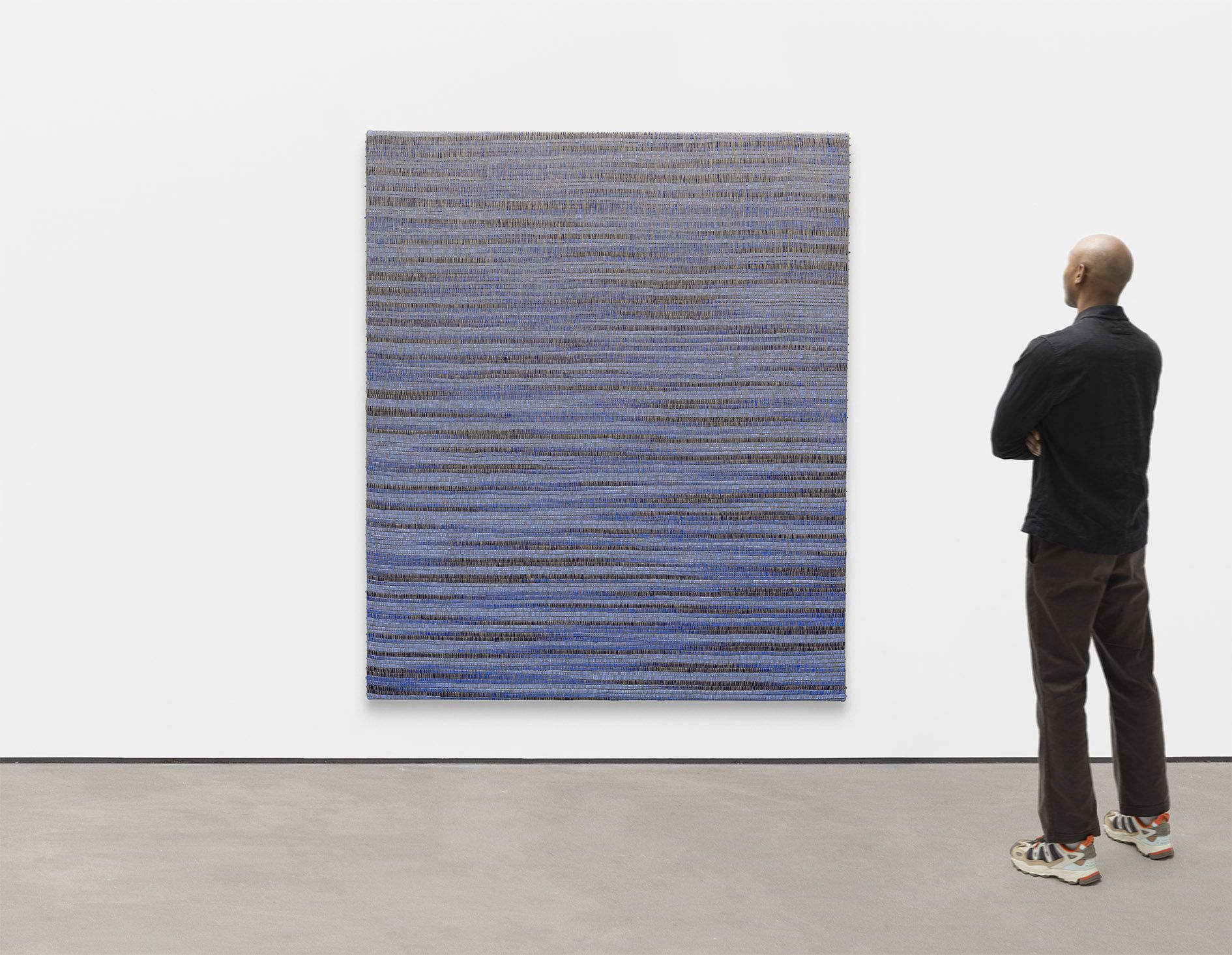


Analia Saban’s singular practice brings together opposing concepts into one work: two and three dimensions, painting and sculpture, digital and analog, industrial and handmade. Her series of woven paintings are no exception. To produce them, Saban weaves linen canvas with “threads” of paint, which she creates by drying thickly painted lines of acrylic into long, pliable strands. Using a Jacquard loom—half of which operates by computer, and half of which requires physical labor—she interlaces the paint with the linen into compositions that hover between representation and abstraction. Woven Horizontal Gradient as Weft (Top to Bottom, Blue Values) (2024) develops this series yet further with tonalities that shift between pale blue to a rich ultramarine.
Mesmerizing both in their symmetry and for their intricate process, Saban’s woven works remain in dialogue with the legacies of minimalist and monochromatic painting (including Agnes Martin, Robert Ryman and South American modernists, such as Hélio Oiticica and Mira Schendel), and at the same time reworks painterly conventions, incorporating elements of craft, design, and everyday materials and industries.
Analia Saban (*1980, Buenos Aires) lives and works in Los Angeles. In 2027, a major survey of her work organized by the Kemper Museum of Art, University of Washington, St. Louis, will open first at the Los Angeles County Museum of Art, then travel to the Kemper. Previous solo exhibitions include Modern Art Museum Fort Worth (2019), Qiao Space, Shanghai (2017–18), Blaffer Art Museum, Houston (2016), and Armory Center for the Arts, Pasadena (2014). Recent group exhibitions include Museum of Modern Art, New York (2025, 2023), National Gallery of Art, Washington, DC (2024), Getty Research Institute, Los Angeles (2024), Los Angeles County Museum of Art (2023), Museum of Modern Art, New York (2023), Sheldon Museum of Art, Lincoln, NE (2022), The Warehouse, Dallas (2022), Clark Art Institute, Williamstown, MA (2020), Marciano Art Foundation, Los Angeles (2019) and Hammer Museum, Los Angeles (2018).

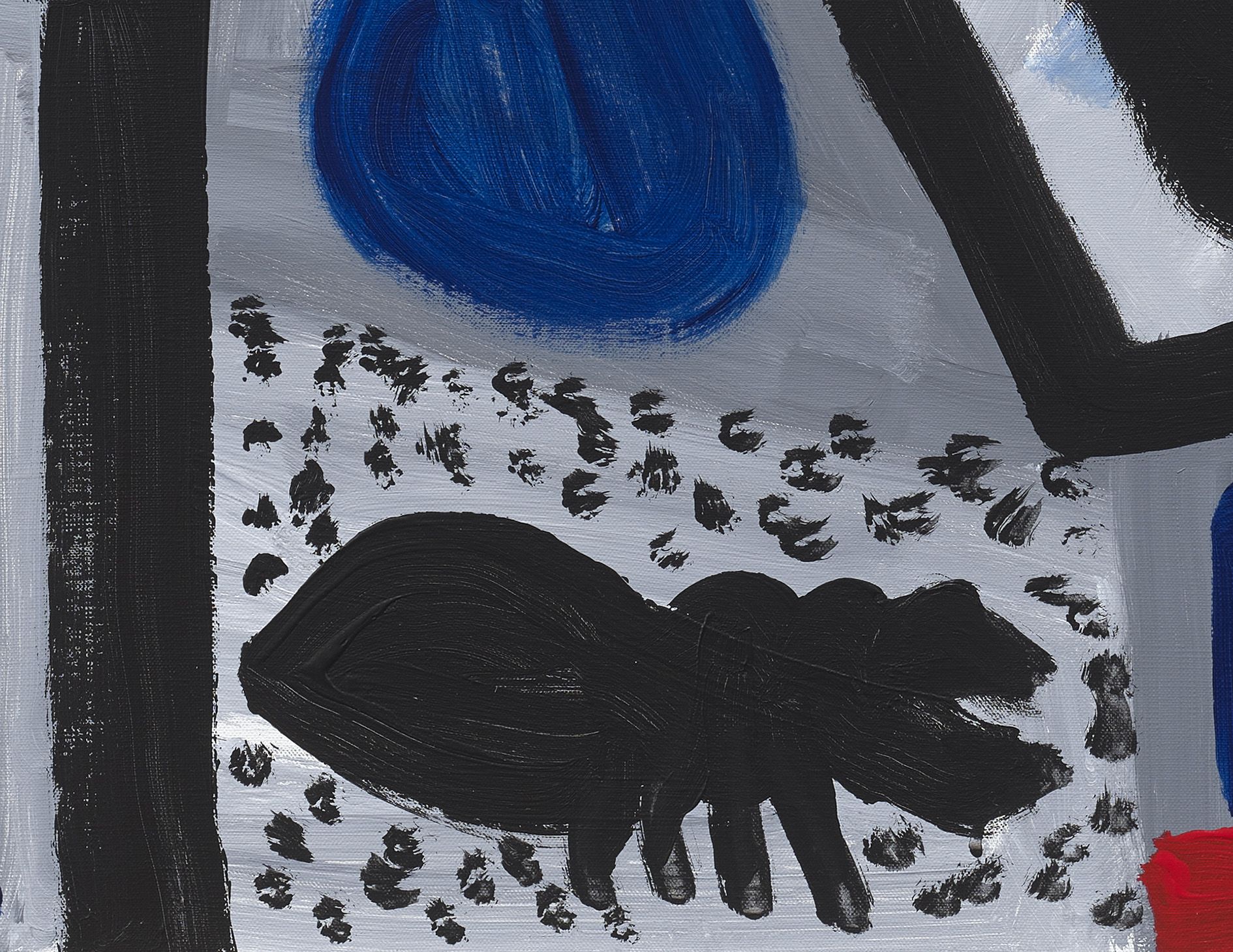
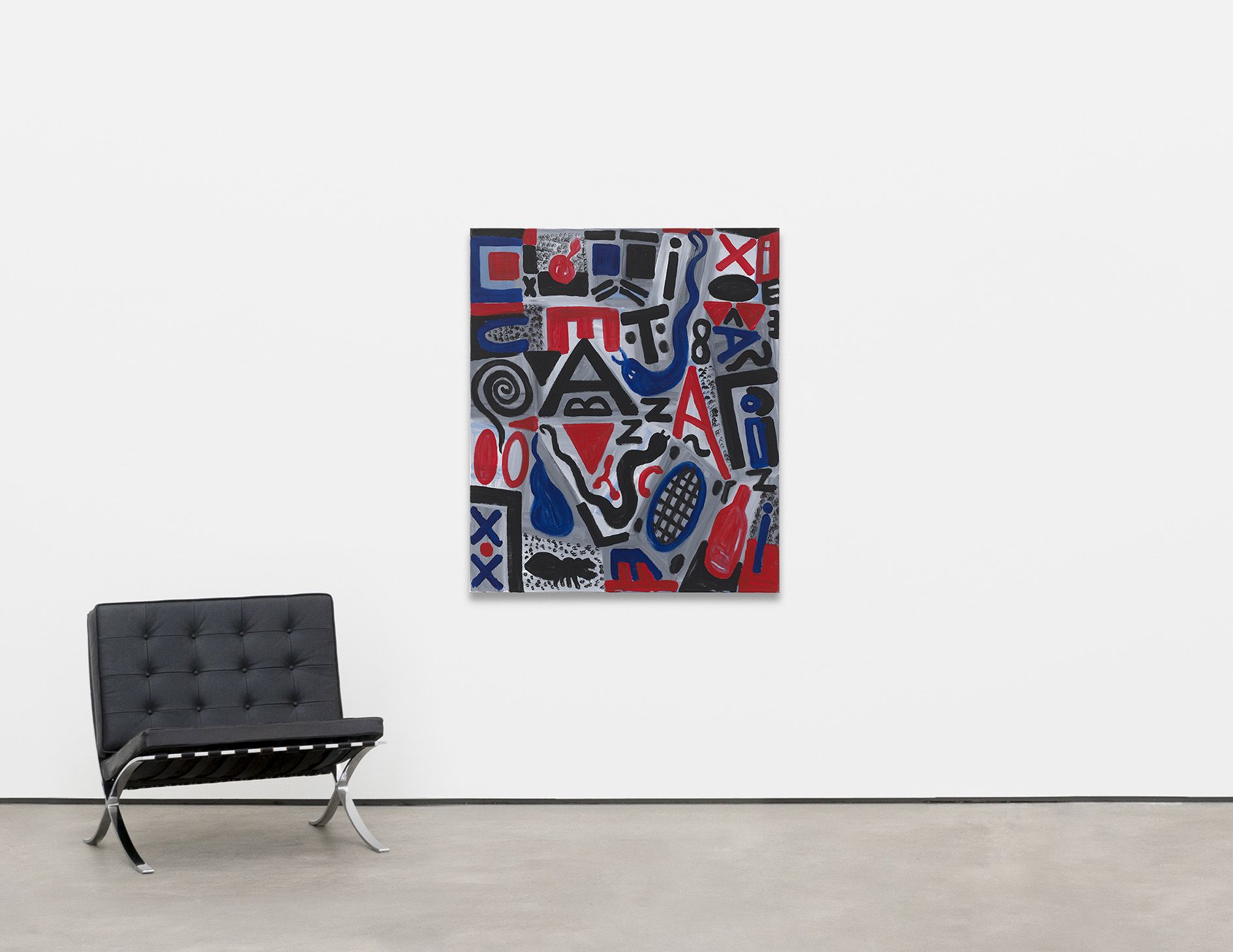


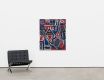
A.R. Penck’s work is characterized by a distinctive visual language that combines abstract symbols, graphic signs and figurative elements, forming a complex vocabulary through which he sought to negotiate individual experience and societal structures. Informed by decades spent working in East Germany, Penck relocated to West Berlin in 1980, where he soon achieved international recognition, with his works entering the collections of numerous Western museums and galleries throughout the decade. Im Fluss der Ereignisse (In the Flow of Events, 2009) is characteristic of his late work, populated by animals, letters and geometric shapes, rendered in bold contour lines with a restricted but intense color palette of blue, red and black. These elements interact across a shallow pictorial space, forming a dense and intricate network of signs that resists singular interpretation.
A.R. Penck (1939–2017). Selected solo exhibitions include Museum Jorn, Silkeborg (2022), Kunstmuseum Den Haag (2020), Ashmolean Museum, University of Oxford (2019), Fondation Maeght, Saint-Paul-de-Vence (2017), Musée d’Art Moderne de la Ville de Paris (2008), Schirn Kunsthalle, Frankfurt (2007), Städtische Museen Heilbronn (later traveled to Bremen, Recklinghausen, Luxemburg, Berlin, and Bad Homburg v.d. Höhe) (1999), Nationalgalerie Berlin, Staatliche Museen, Preußischer Kulturbesitz, Berlin (1988), Stedelijk Van Abbemuseum, Eindhoven (1987), Josef-Haubrich-Kunsthalle Köln (1981), Museum Boijmans Van Beuningen, Rotterdam (1979), also included in Documenta, Kassel (1992, 1982, 1977, 1972).
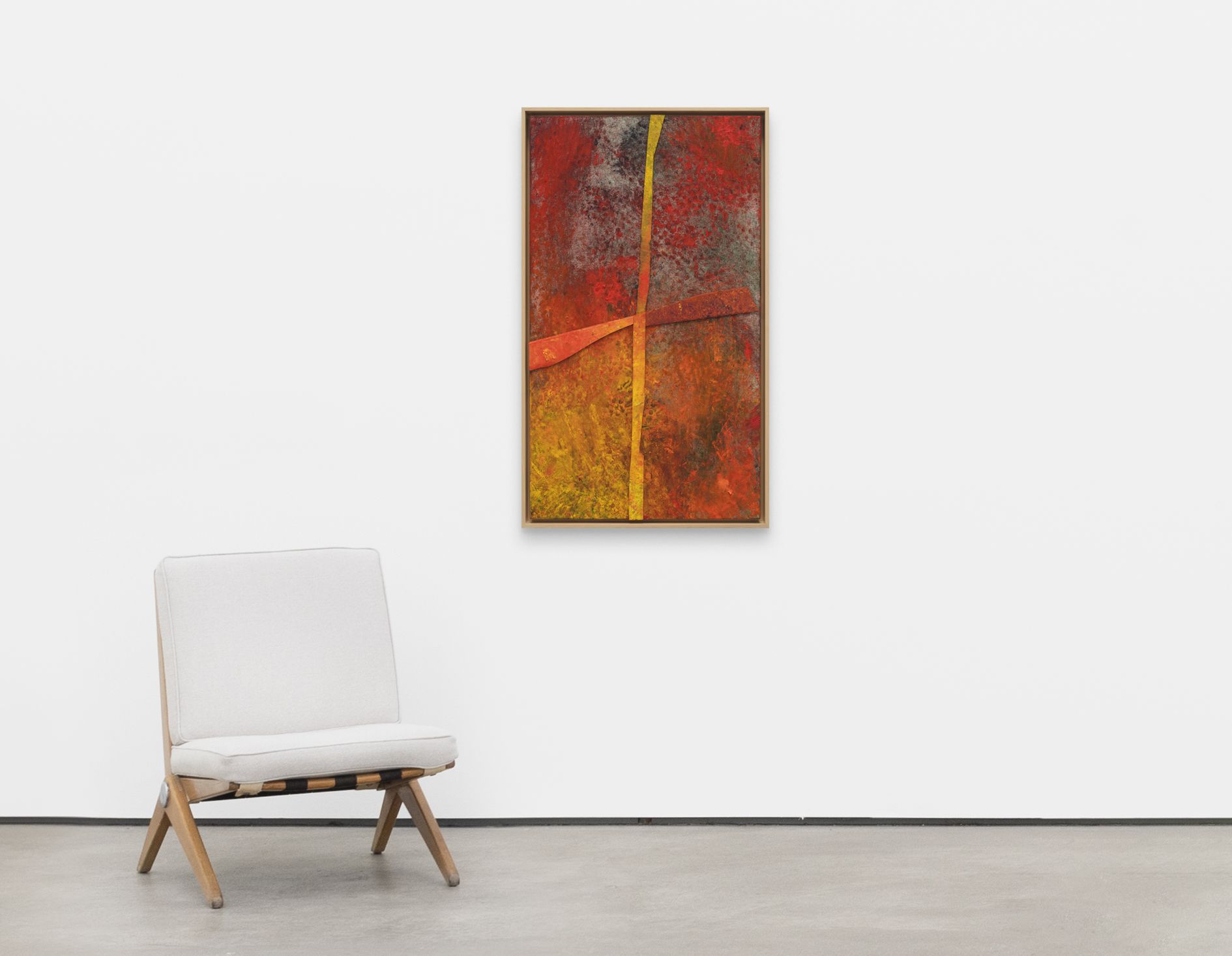
Sterling Ruby’s wide-ranging, multidisciplinary work also includes an array of painterly explorations. His TURBINE series (2021–present) builds on the artist’s earlier WIDW paintings (an abbreviation for “window”), featuring saturated color palettes, a range of gestural marks and collaged elements. Using similar materials, the TURBINE series abstracts the form of a windmill or propeller. “Moerheim Beauty” refers to a flower that has a red-orange hue. The composition of intersecting diagonals and bright orange and red tones allude to fire, smoke or storms, generating an undercurrent of unease or danger, as if the window of the earlier paintings had been blasted open. With references to Abstract Expressionism, Futurism, and Russian Constructivism, Ruby adeptly investigates the turbulence and instability of present times through painting.
Sterling Ruby’s solo exhibition Atropa is on view at Sprüth Magers, New York through March 28, 2026.
Sterling Ruby (*1972, American/Dutch) lives and works in Los Angeles. Solo exhibitions include MAMO – Centre d’art de la Cité Radieuse, Marseille (2025), Sogetsu Foundation, Tokyo (2023), Museum of Cycladic Art, Athens (2021), Institute of Contemporary Art, Boston (2020), Institute of Contemporary Art, Miami (2019), Nasher Sculpture Center, Dallas (2019), Museum of Art and Design, New York (2018), Des Moines Art Museum (2018), Museum of Contemporary Art, Los Angeles (2017), Winterpalais, Belvedere Museum, Vienna (2016). Ruby’s works are part of numerous museum collections, including the Museum of Modern Art in New York, Solomon R. Guggenheim Museum in New York, Centre Pompidou in Paris, Tate in London, Whitney Museum of American Art in New York, Los Angeles County Museum of Art, and Moderna Museet in Stockholm.
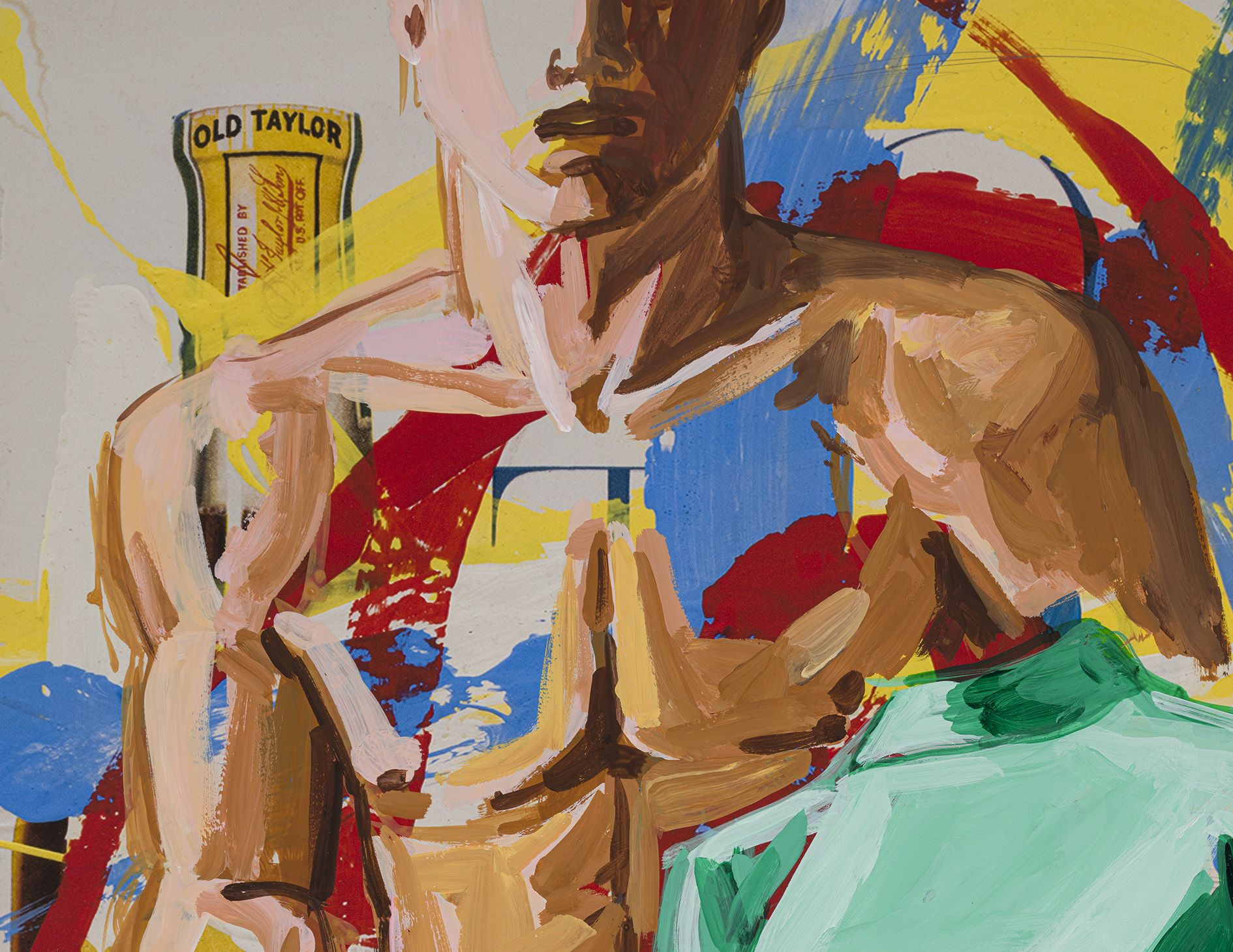


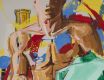


David Salle came to prominence in the 1980s as a leading figure of the Pictures Generation. His distinctive works are created by combining disparate visual fragments drawn from cartoon imagery, advertisement, graffiti, and art history into layered compositions that speak to our image-saturated contemporary moment. In the background of this untitled work on paper from 2024 is a vintage magazine advertisement for Old Taylor Bourbon—the bottle from the appropriated ad is visible on the left of the composition, as are fragments of the publicity copy on the bottom and right. Salle has layered brushy, abstract passages in bold primary colors—indexes of painterly activity—as well as the images of a muscular male torso and a female figure in a 1940s-era mint green dress. In piecing together his disparate references, the artist disrupts the connections between an image and any automatic interpretation assigned to it, while also reveling in the beauty, and incongruity, of our contemporary visual world.
David Salle’s solo exhibition, My Frankenstein, is on view at Sprüth Magers, Los Angeles through April 18, 2026.
David Salle (*1952, Norman, Oklahoma) lives and works in New York. Solo exhibitions include Edward Hopper Museum, New York (2024), Centro de Arte Contemporáneo de Málaga (2016), Museo de Arte Contemporáneo de Monterrey, Mexico (2000), Haags Gemeentemuseum, The Hague (1992), Tel Aviv Museum of Art, Bayerische Staatsgemäldesammlungen München, Munich (both 1989), Museum of Contemporary Art, Chicago, Whitney Museum of American Art, New York (both 1987), and a major retrospective at Stedelijk Museum, Amsterdam (1999, traveled to Museum Moderner Kunst Stiftung Ludwig, Vienna; Museo d’Arte Contemporanea Castello di Rivoli, Turin; Guggenheim Museum, Bilbao). Group shows include Hill Art Foundation, New York (2023), Whitney Museum of American Art, New York (2017, 2015), Museum of Contemporary Art, Chicago (2012), Metropolitan Museum of Art, New York (2009), La Biennale di Venezia (1993, 1982), Whitney Biennial (1991, 1985, 1983), Carnegie International, Pittsburgh (1985), and Documenta 7 (1982).


Mire Lee works with industrial materials and volatile substances to conjure forms that are at once beautiful and unsettling, evoking the body, its tensions and psychological trauma. Though resolutely abstract, her sculptures and wall-based works include appendages, membranes and structures that cannot help but feel embodied and lifelike. Suspended from the ceiling, Tentacles for Open Wound (studio prototype) (2025) is composed of long, flesh-like silicone tentacles partially coiled, with rope knotted around them, hanging like entrails pulled from within. The binding by rope carries the language of fetish and fixation, turning restraint into a psychological as much as physical condition. The work explores the threshold between inside and outside, exposing what is ordinarily concealed and rendering the interior of the body disturbingly present. It originated as a prototype for Lee’s large-scale installation Open Wound at Tate’s Turbine Hall, where several such forms were suspended across the vast industrial space.
Mire Lee (*1988, Seoul) lives and works in Seoul and Amsterdam. Her work was included in the 12th SITE Santa Fe International, Okayama Art Summit, Japan, and the group exhibition to ignite our skin at SculptureCenter, New York (all 2025). In 2024, she presented a site-specific work at Tate Modern’s Turbine Hall as a Hyundai Commission artist, which marked the first major presentation of Lee’s work in the UK. Other solo exhibitions include New Museum, New York (2023), Zollamt – Museum MMK für Moderne Kunst, Frankfurt (2022) and Art Sonje Center, Seoul (2020). Recent group exhibitions include National Museum of Modern and Contemporary Art – MMCA, Seoul (2024), Kraftwerk Berlin (2023), Busan Biennale, La Biennale di Venezia and 58th Carnegie International (all 2022) and Schinkel Pavillon, Berlin (2021).


Characterized by a reduced color palette, David Ostrowski’s practice engages with gesture and imperfection and challenges the ontology of painting. In his deceptively straightforward painterly language, rich with metaphor, he tries to trigger the greatest possible emotional affects and energies with the fewest artistic means. Referencing his most recent body of work, Hangers – a limited series featuring a single motif, a coat hanger – F (Bügel) (2022) continues the artist’s exploration of reduction through an everyday object. Leaving behind the previous series’ smaller format, Ostrowski returns to his signature large-scale canvas. The minimalist work abstracts the hanger’s shape in blue lines and with a curved hook that seems to be suspended from the work’s edge. Unconsciously, the viewer wonders about the missing garment, with which the work takes up the core idea of painterly emptiness with playful ease. F (Bügel) thus becomes a strong example of Ostrowski’s continuous engagement with the void.
Ostrowski’s work is currently on view in a solo exhibition at The Perimeter, London, through March 26, 2026. On May 22, 2026, he will open a solo show at Kunstverein Heilbronn in Germany.
David Ostrowski (*1981 in Cologne) lives and works in Cologne. Solo exhibitions include Aranya Art Center, Beidaihe (2025), Fig., Tokyo and Ramiken, New York (both 2023), Lady Helen, London (2020, with Angharad Williams) Avant-Garde Institute, Warsaw (2020, with Tobias Spichtig), Jir Sandel, Copenhagen and Leeahn Gallery, Seoul (both 2020), Sundogs, Paris and Piece Unique, Cologne (both 2019), Wschód, Warsaw (2018), Halle 9 Kirowwerk, Leipzig and Blueproject Foundation, Barcelona (both 2017), Leopold Hoesch Museum, Düren (2016, with Michail Pirgelis), Arken Museum of Modern Art, Copenhagen and Kunstraum Innsbruck (both 2015), Rubell Family Collection, Miami and Fondazione Sandretto Re Rebaudengo, Turin (both 2014). Recent group exhibitions include Standard Oslo and Weiss Falk at XYZcollective, Tokyo (both 2023), Catherine Zeta, Cologne (2022), and Akademie der Künste, Berlin and Fuhrwerkswaage, Cologne (both 2021).


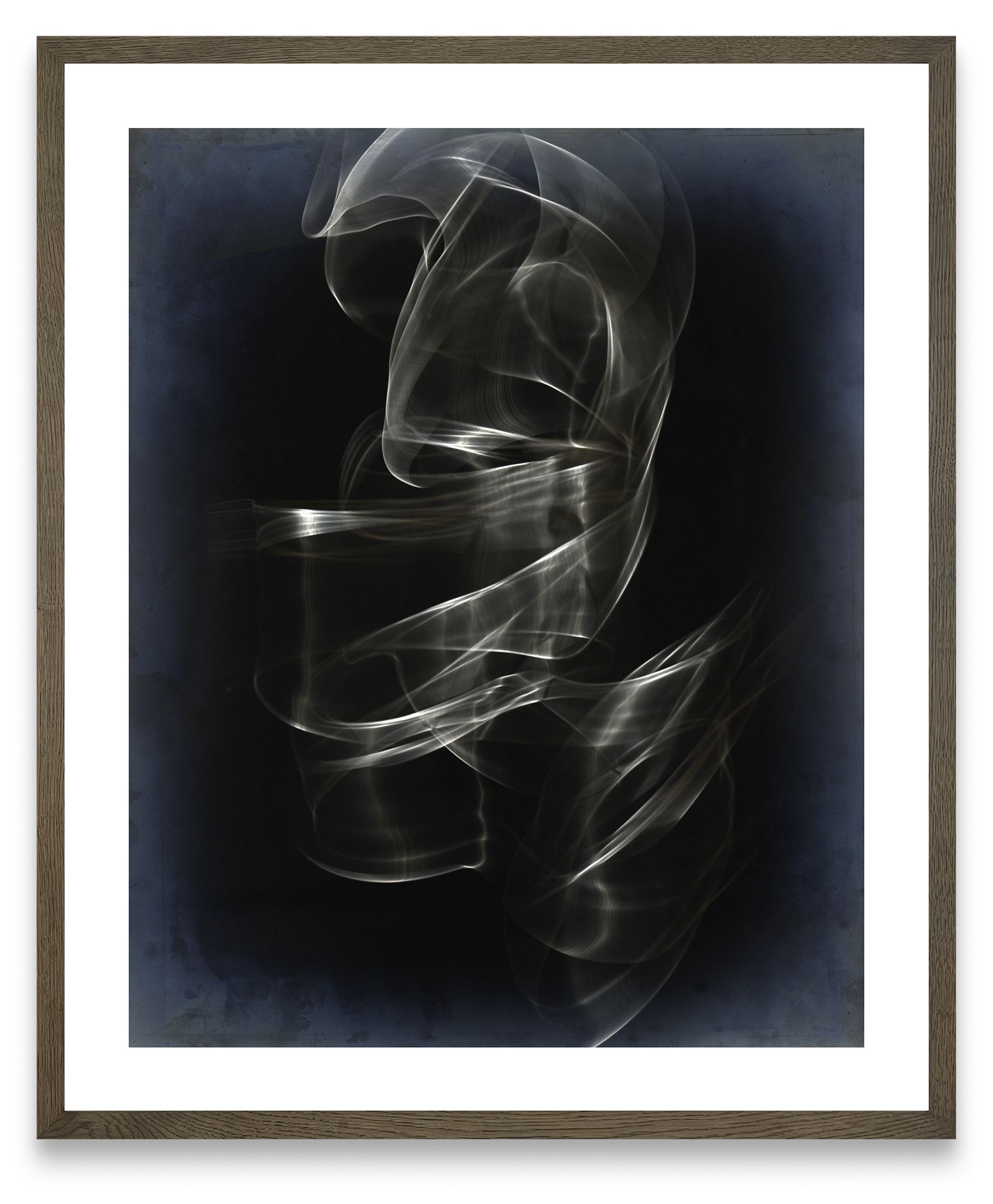
Throughout his career, German artist Thomas Ruff has investigated the relationship between reality and perception. Tirelessly questioning the photographic medium itself, Ruff creates photographs about photography. In his œuvre, he embraces the rapid changes in digital technologies while recalling the analog experiments of the early avant-garde. Presented here is a work from Ruff’s new series, which concerns itself with arranged objects, referencing 1950s and ’60s abstract photography that was marked by uninhibited explorations of the medium’s limits. The artist’s experimental approach transforms wire—bent, coiled, set in motion—into intriguing abstractions. Making light its subject and coincidence a principle of design, untitled#16 (2022) is an ambiguous image that lets viewers experience the elegance of chance in the procedures of photography.
Thomas Ruff (*1958, Zell am Harmersbach, Germany) lives and works in Düsseldorf. Selected solo exhibitions include Lishui Photography Museum, China (2025), Künstlerverein Malkasten, Düsseldorf (2024), National Taiwan Museum of Fine Arts, Taichung (2021), K20, Kunstsammlung Nordrhein-Westfalen, Düsseldorf (2020–21), National Portrait Gallery and Whitechapel Gallery, London (2017), National Museum of Modern Art, Tokyo (2016), S.M.A.K., Ghent, traveled to Kunsthalle Düsseldorf (both 2014) and Haus der Kunst, Munich (2012). In 2022, Thomas Ruff’s solo exhibition d.o.pe. was presented at Sprüth Magers, Berlin. Recent group shows include San Francisco Museum of Modern Art (2022–23), Museo Guggenheim Bilbao (2021), Museum of Modern Art, New York (2019), Tate Modern, London, and Victoria and Albert Museum, London (both 2018).
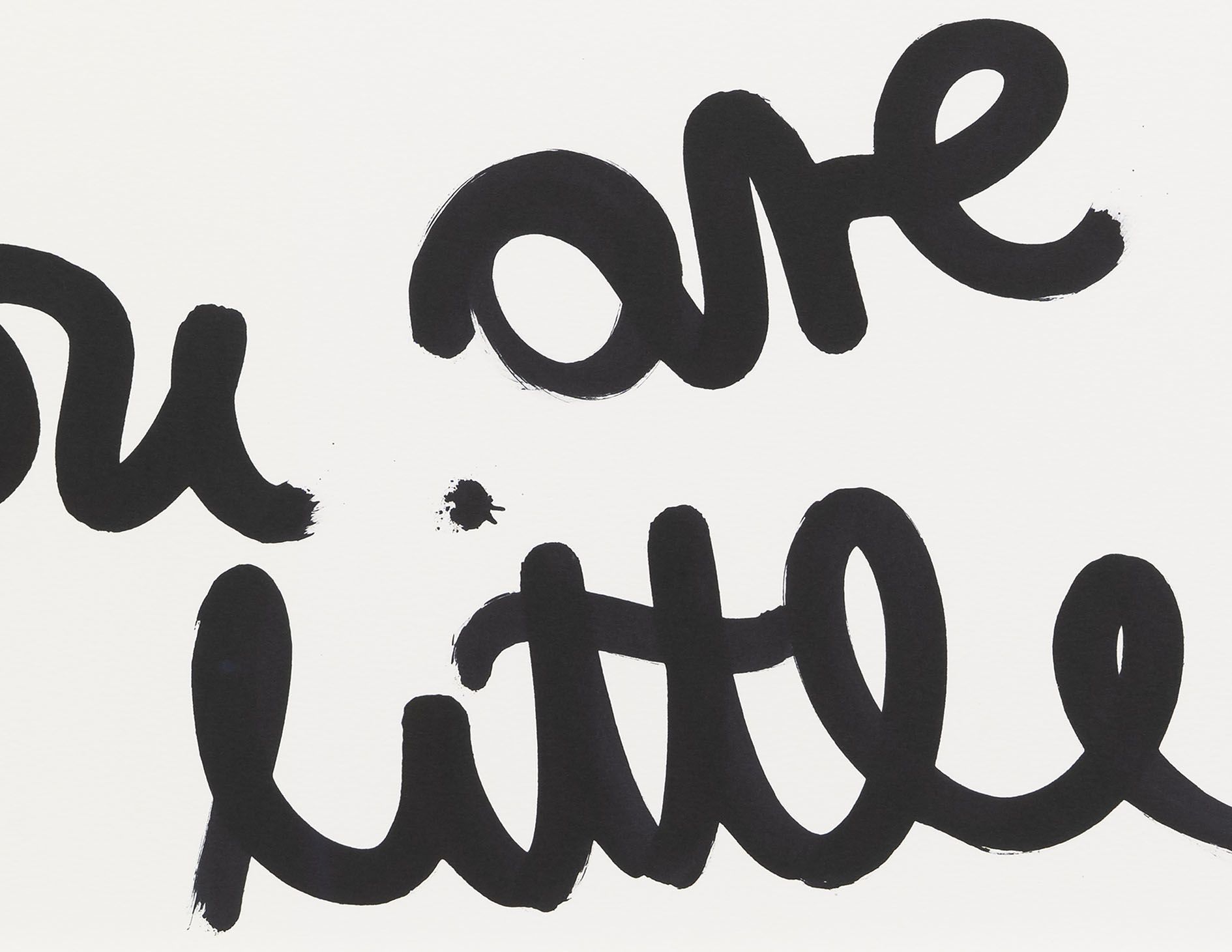
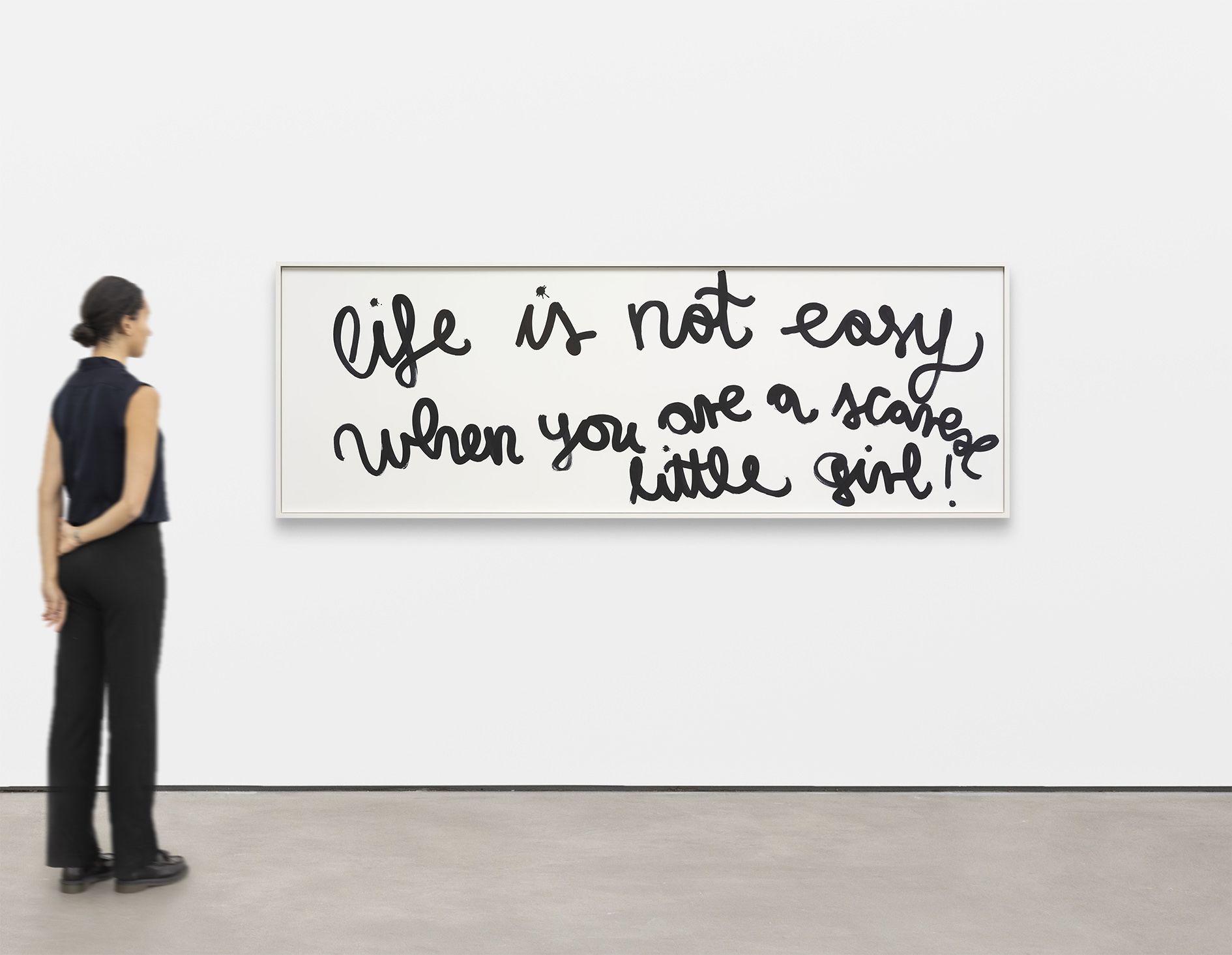
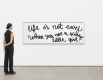
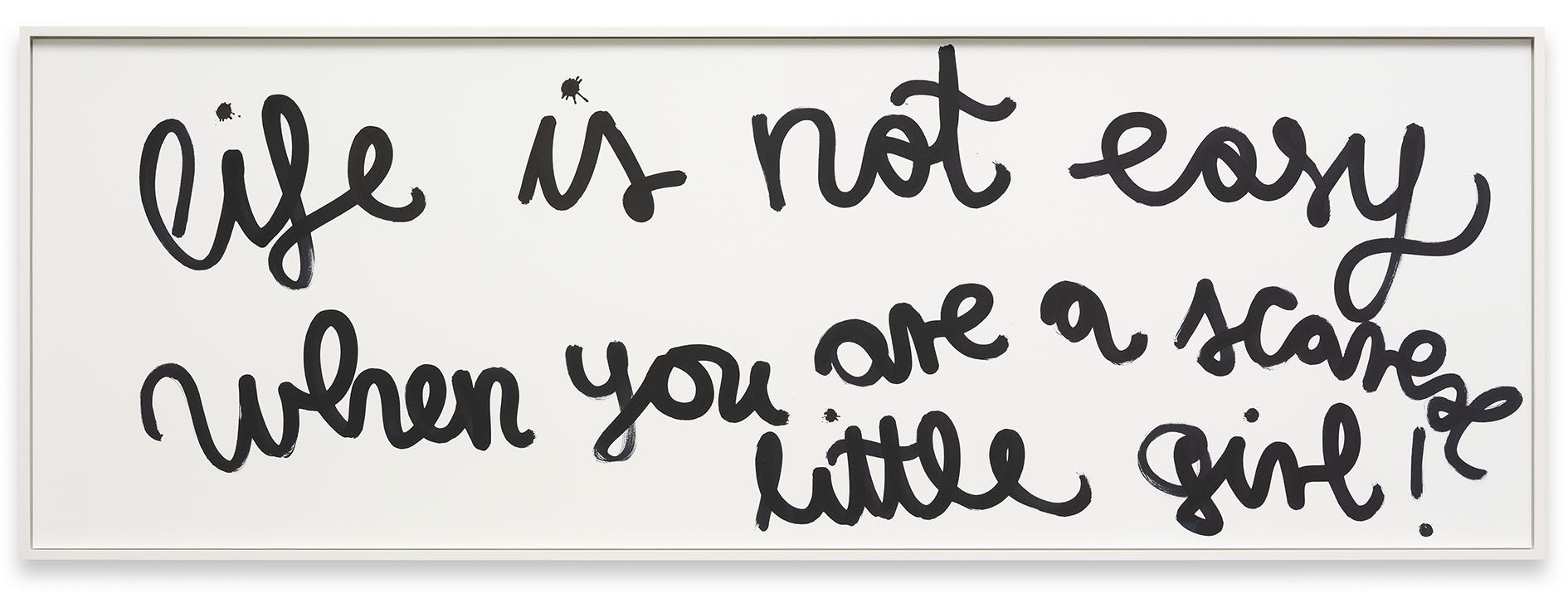
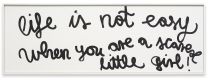
Nora Turato’s practice mines the language of everyday life, collecting phrases, slogans and speech fragments and redeploying them across performance, publication and installation. life is not easy when you are a scared little girl! (2025) extends the thematic preoccupations of her pool7 body of work, centering on the idea of the inner child, a psychic remnant which, Turato suggests, increasingly governs contemporary life, driving consumption and instilling fear in place of reason. Drawn from overheard speech and refracted through her own sensibility, the phrase operates as part observation, part provocation. Turato renders the text in looping, deliberately childlike curvilinear handwriting, as though a small hand wielded an oversized pen. The script enacts its own argument: by turning away from mechanical typography and digital conformity, Turato embraces the intuitive, the imperfect, the human.
Nora Turato (*1991, Zagreb) lives and works in Amsterdam. In spring 2025, she presented her first solo exhibition in the UK and performed pool7 at the ICA London. The pool7 cycle concluded with a site-specific work at the Meštrović Pavilion in Zagreb in winter 2025. Her performance Cue the Sun, commissioned by Performa, premiered during the Performa Biennial 2023 in New York. Recent solo exhibitions include ICA London (2025) Kunsthalle Wien (2024–25), Stedelijk Museum, Amsterdam (2024), Museum of Modern Art, New York (2022), Secession, Vienna (2021), Centre Pompidou, Paris, MGLC – International Centre of Graphic Arts, Ljubljana, and Sammlung Philara, Düsseldorf (all 2020), Serralves Museum of Contemporary Art, Porto, Kunstmuseum Liechtenstein, and Beursschouwburg, Brussels (all 2019).
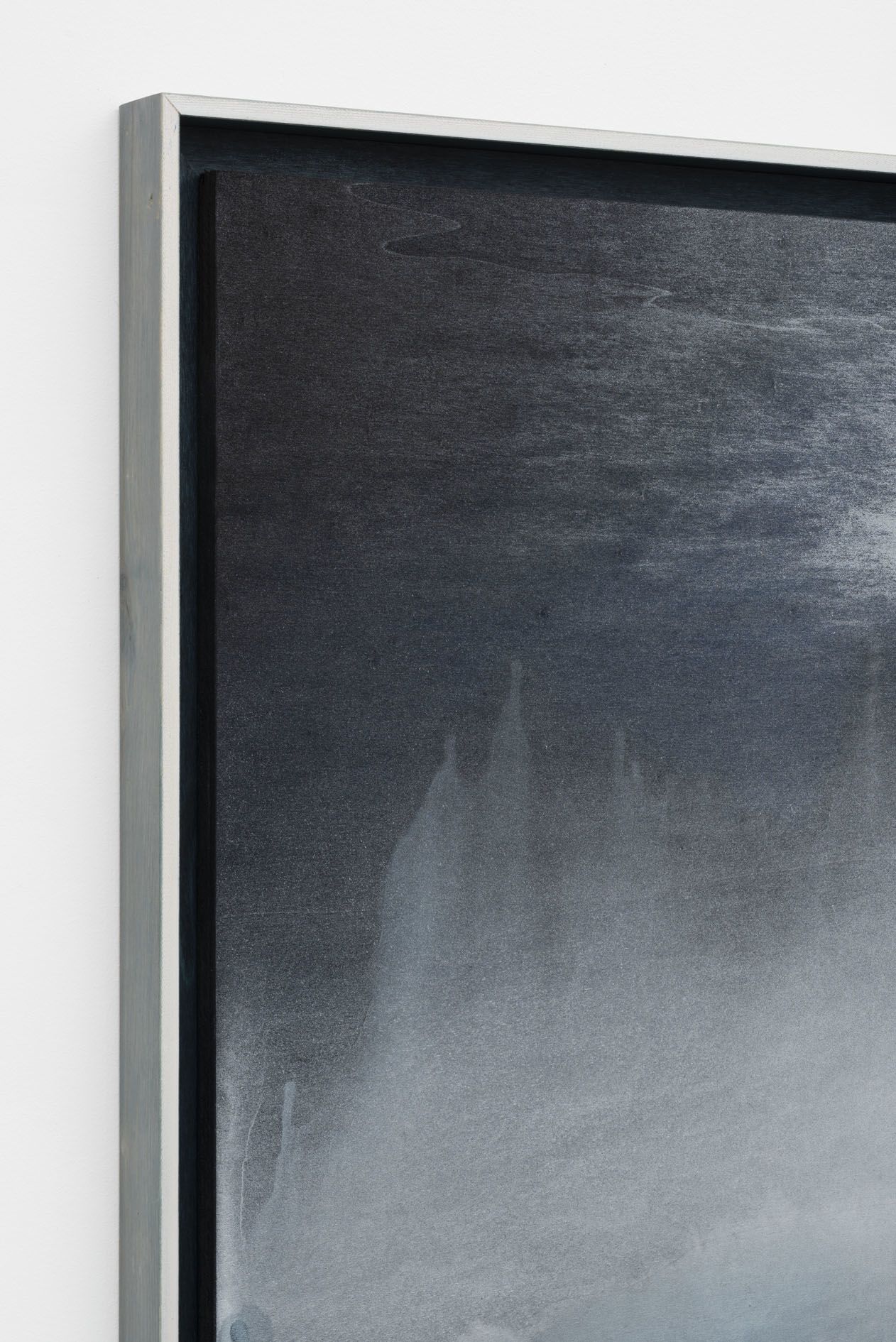

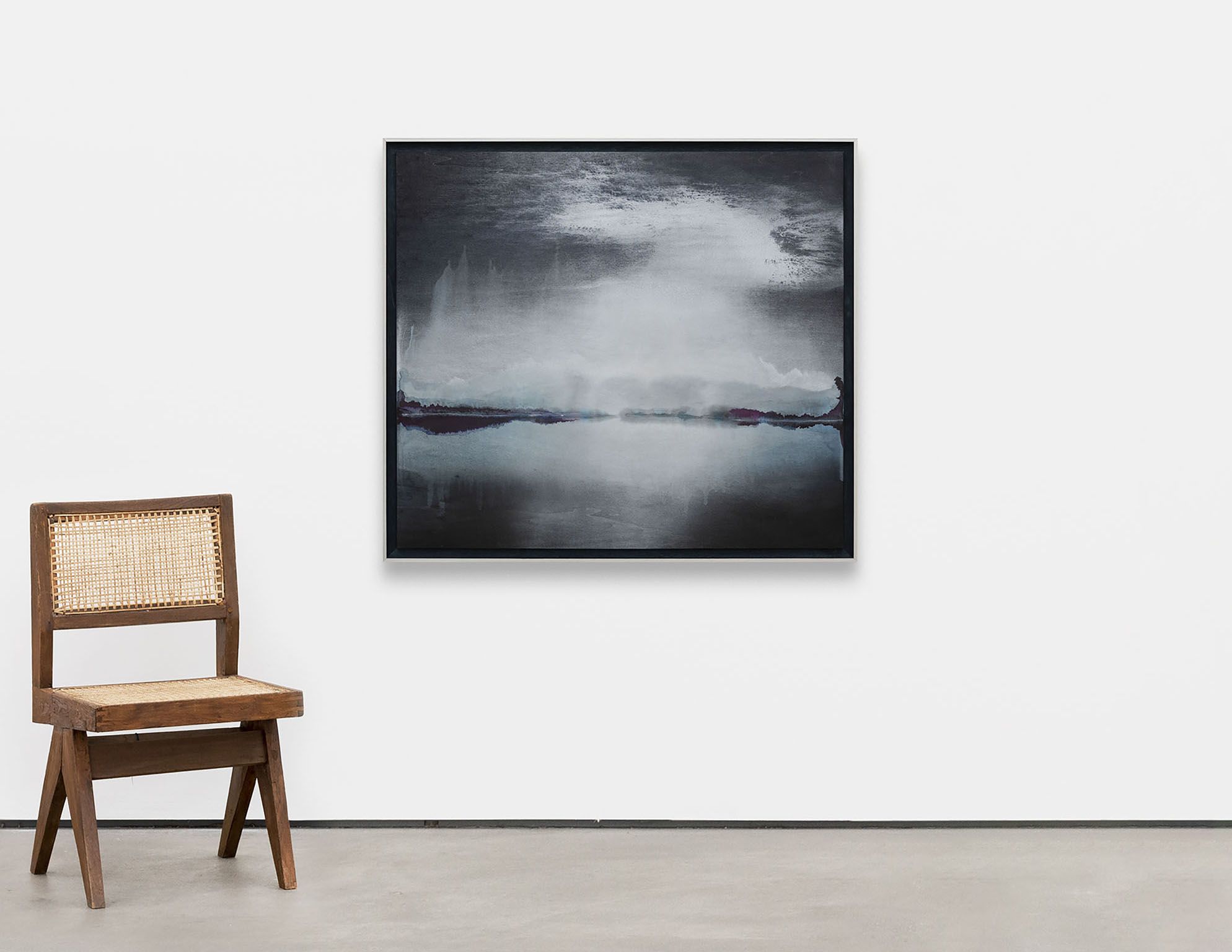


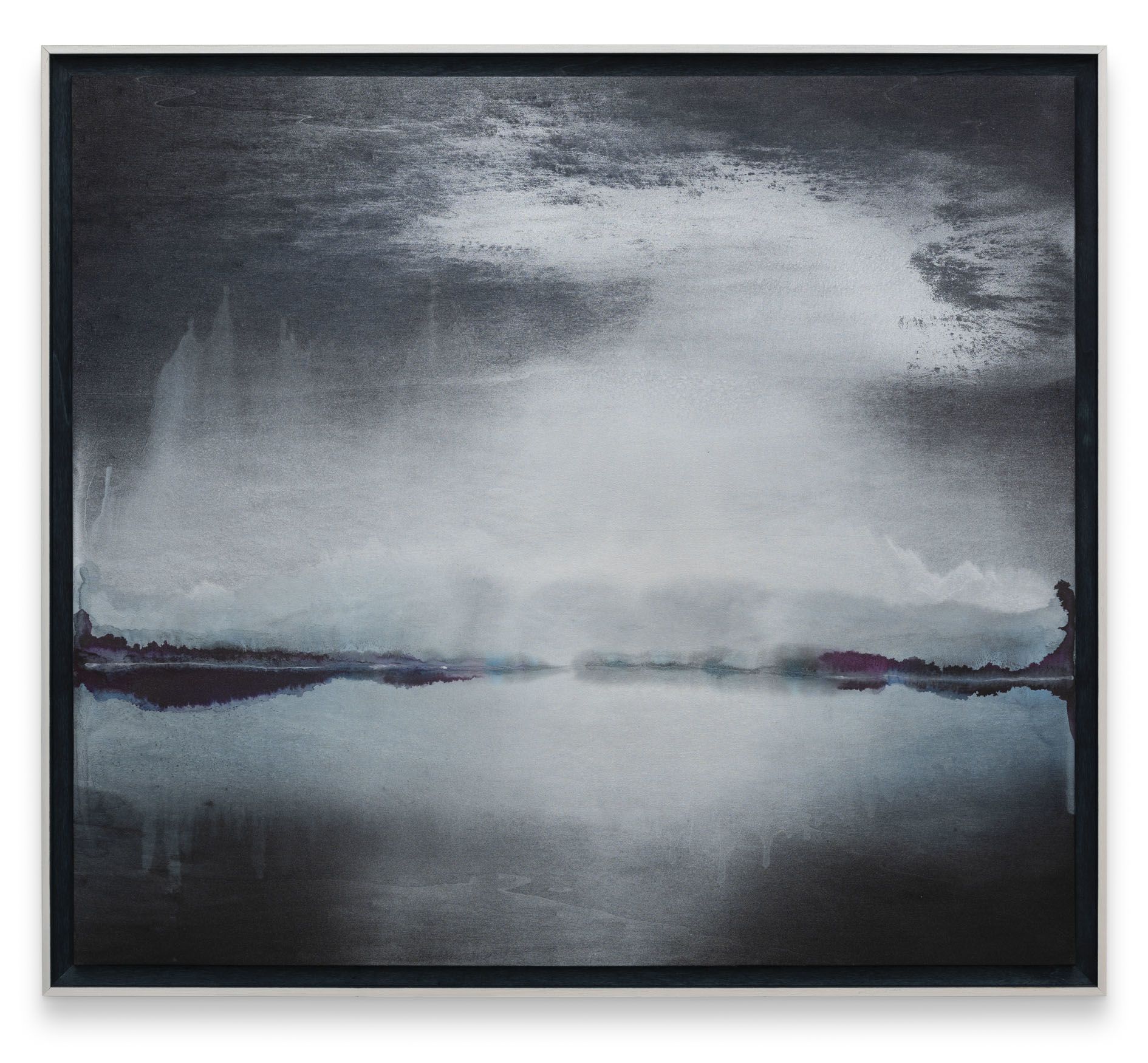
Robert Elfgen’s works thrive on a specific kind of narrative and symbolic density, on biography, everyday observations and an acute sensibility for the subliminal poetry of myths and rituals. Elfgen does not paint his paintings; he builds them. Working like a sculptor, he uses solid materials such as wood and brass, which he then stains, saws and shapes. Viveka (2023) demonstrates this direct, handcrafted yet resolutely sensual approach, which leads Elfgen to an image reminiscent of nineteenth-century romantic landscape painting. The gloomy winter scene emerges directly from the wooden support itself, with the visible grain beneath the paint transforming into icy showers pouring from dark gray clouds, an effect that lends the work a tactile, painterly quality. The other essential elements of the motif are created by erratically flowing ink and metallic spray paint, which Elfgen tames to form shadowy trees mirrored in a frozen lake.
A solo exhibition of Elfgen’s works will be on view at Sprüth Magers on the occasion of Gallery Weekend Berlin.
Robert Elfgen (*1972, Wesseling, Germany) lives and works in Cologne and Brittany, France. From 1997 to 2001, Elfgen studied under John M. Armleder at the Braunschweig University of Art (HBK). He studied under Rosemarie Trockel at the Kunstakademie Düsseldorf from 2001, becoming her Meisterschüler in 2004. Selected solo exhibitions include Fuhrwerkswaage, Cologne (2025), PIBI Gallery, Seoul (2022 with An Gyungsu), Sprüth Magers, Berlin (2021), Leopold-Hoesch-Museum, Düren, Germany (2016), Oldenburger Kunstverein, Oldenburg, Germany (2015), Sprüth Magers, Cologne (2008), westlondonprojects, London (2006), and Bonner Kunstverein, Bonn (2005). Selected group exhibitions include Langen Foundation, Neuss, Germany (2025), Villa Stuck, Munich (2017), me Collectors Room Berlin / Stiftung Olbricht (2014), Zentrum für Kunst und Medien (ZKM), Karlsruhe, and Sammlung Falckenberg, Hamburg (both 2007–08).


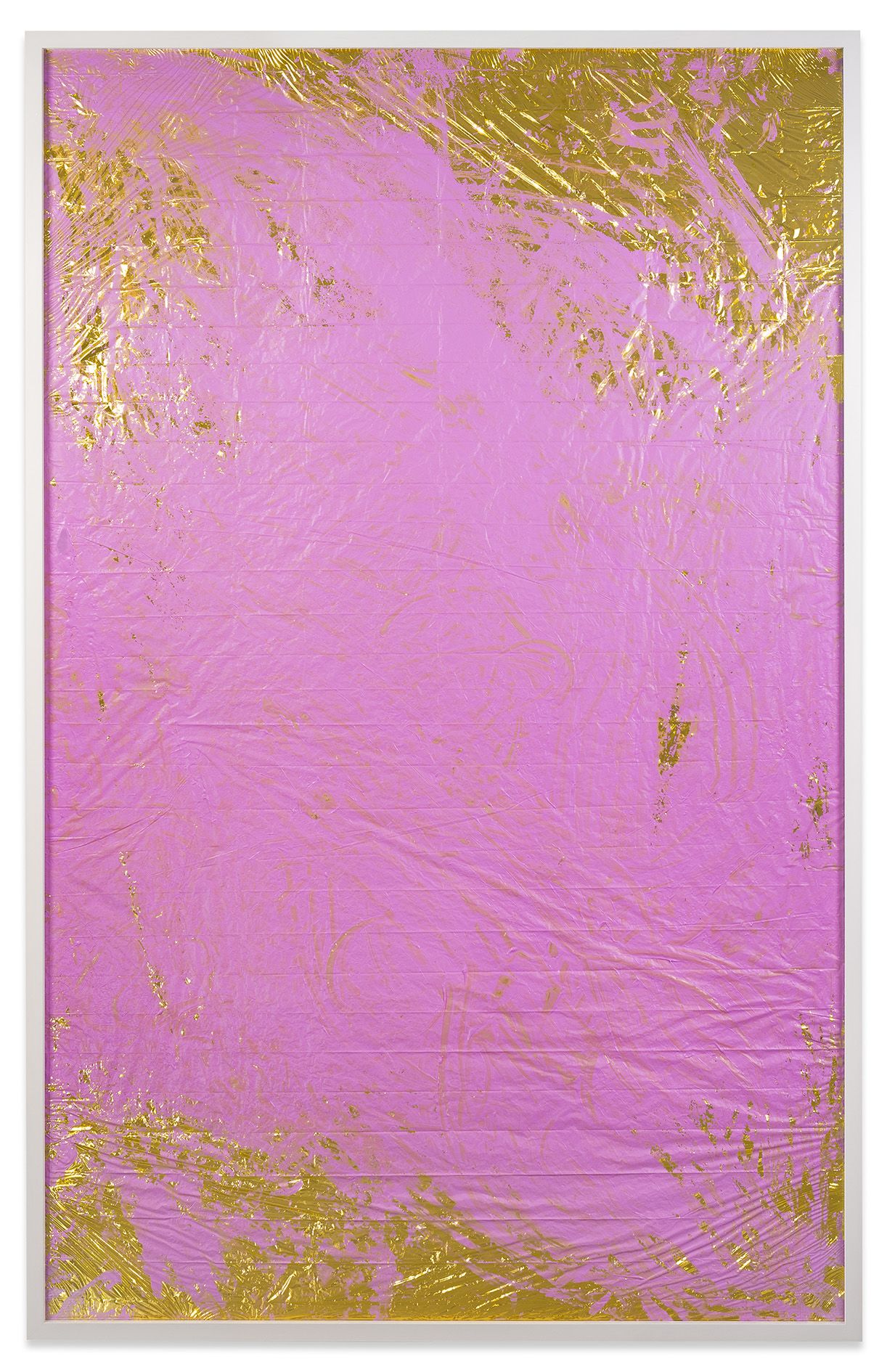
Exploring the phenomenon of perception, Pamela Rosenkranz’s practice—which encompasses sculpture, video, installation and painting—references neuro-scientific and biological findings. Consistently drawing attention to its material, her work poses questions about the role biochemical processes play in experiencing the world. Express Nothing (Flesh Filling) (2023) stems from an ongoing series of works that references the human body, its strengths and its frailties. Emphasizing the artist’s touch, Rosenkranz applies gestural swathes of color with her hands atop shimmering emergency blankets made of a brilliant metal-toned material (in this case, gold) used to prevent hypothermia in an emergency. The bright pink hue in this painting calls to mind “flesh” and the body, but also an unnatural, pharmaceutical understanding of it. Always in search of dissonance, Rosenkranz’s tactile paint application infuses the surface’s rich, alchemical resonance with a ghostly presence.
Pamela Rosenkranz (*1979, Uri, Switzerland) lives and works in Zurich. Selected solo exhibitions include Stedelijk Museum, Amsterdam (2025), Neuer Berliner Kunstverein (2024), the High Line, New York (2023–24), Kunsthaus Bregenz (2021), GAMeC, Bergamo (2017), Fondazione Prada, Milan (2017), Kunsthalle Basel (2012), Centre d’Art Contemporain, Geneva (2010). Rosenkranz’s project Our Product was selected for the Swiss Pavilion at the 56th Venice Biennale in 2015. Recent group shows include Kunstmuseum Basel (2025), Deste Foundation, Hydra (2023), Kunstmuseum Winterthur and MIT List Visual Arts Center, Cambridge (both 2022), Schinkel Pavillon, Berlin, and Institute of Contemporary Art, Los Angeles (both 2021), Sharjah Art Foundation, Sharjah (2020), Museum MMK für Moderne Kunst, Frankfurt, Centre Georges Pompidou, Paris, Okayama Art Summit, and the 15th Biennale de Lyon (all 2019).
Art Basel Hong Kong
March 27–29, 2026
Private View: March 25–26
Booth: 1C17

