The late Otto Piene, a founding member of the influential postwar art collective ZERO, consistently explored evolving notions of the material and immaterial in his work.
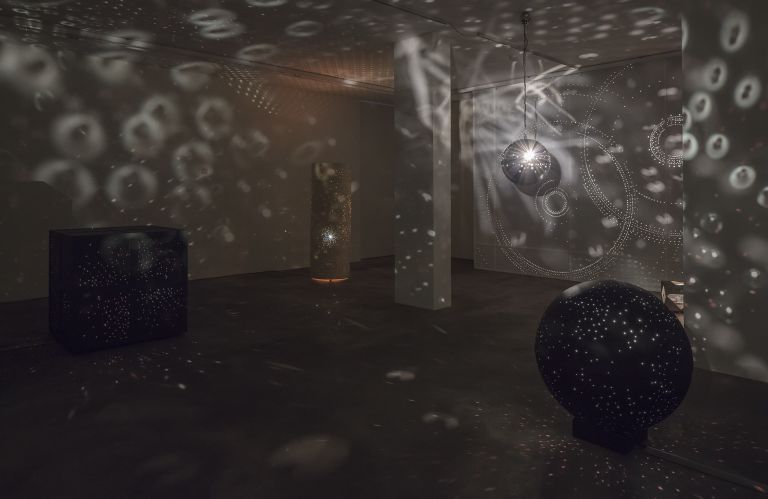
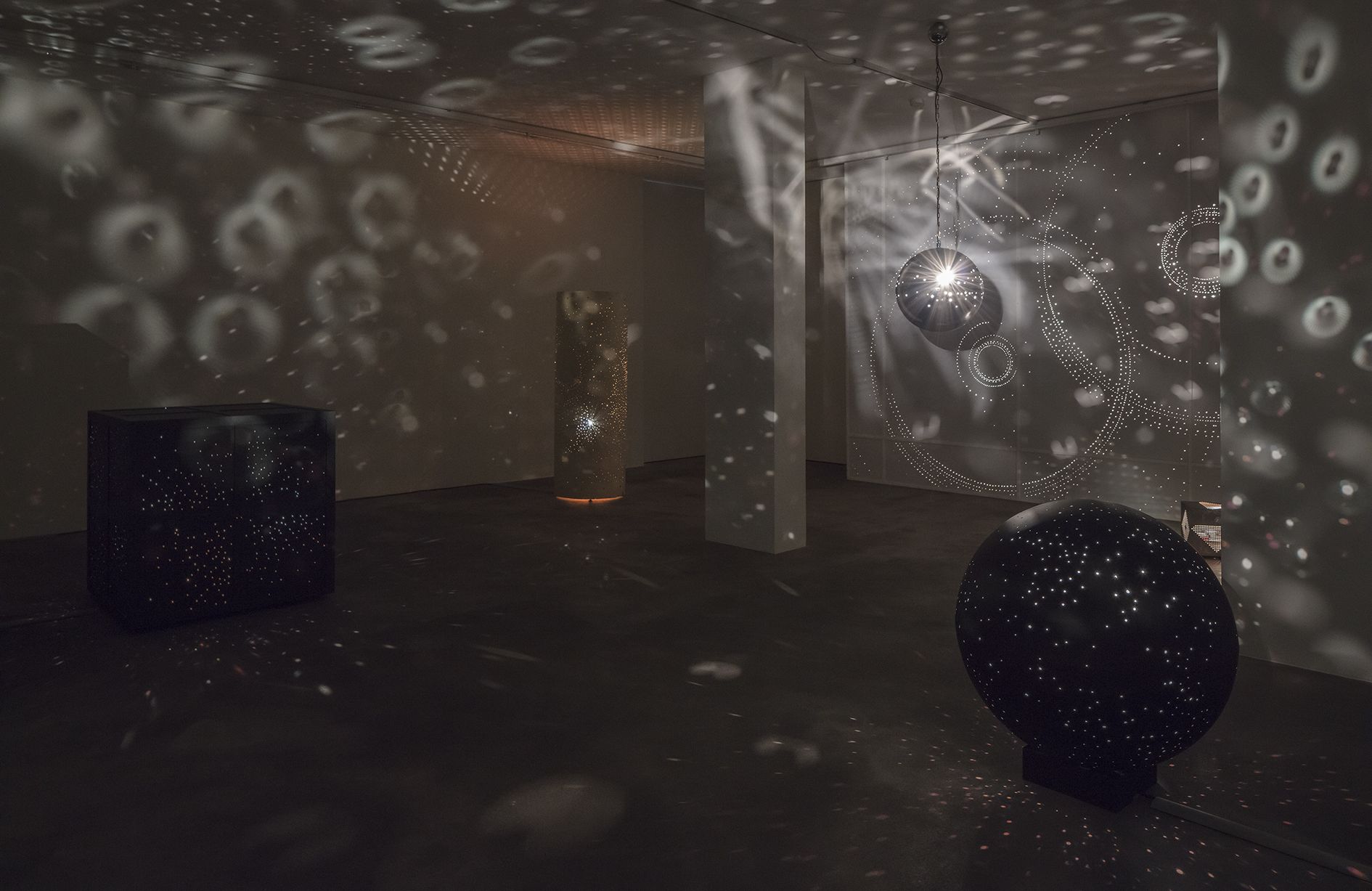
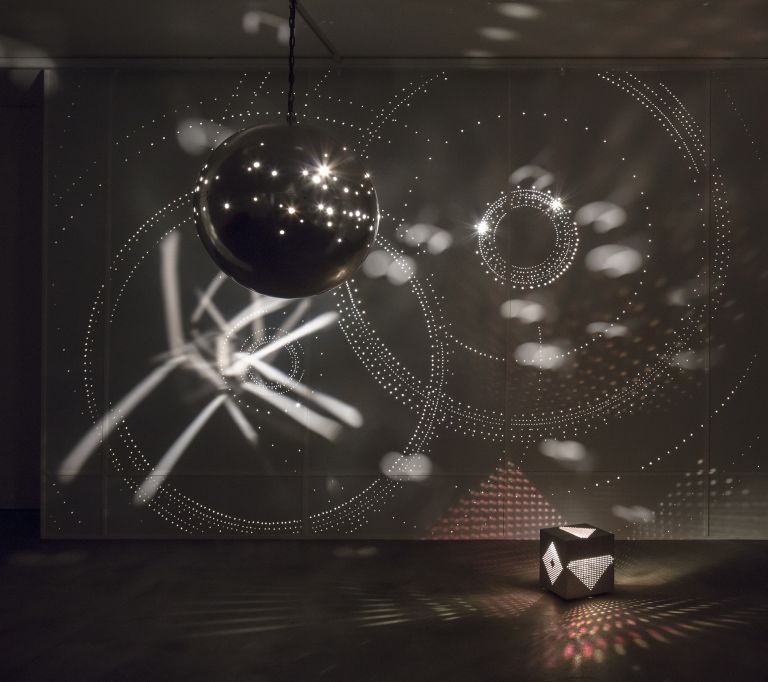
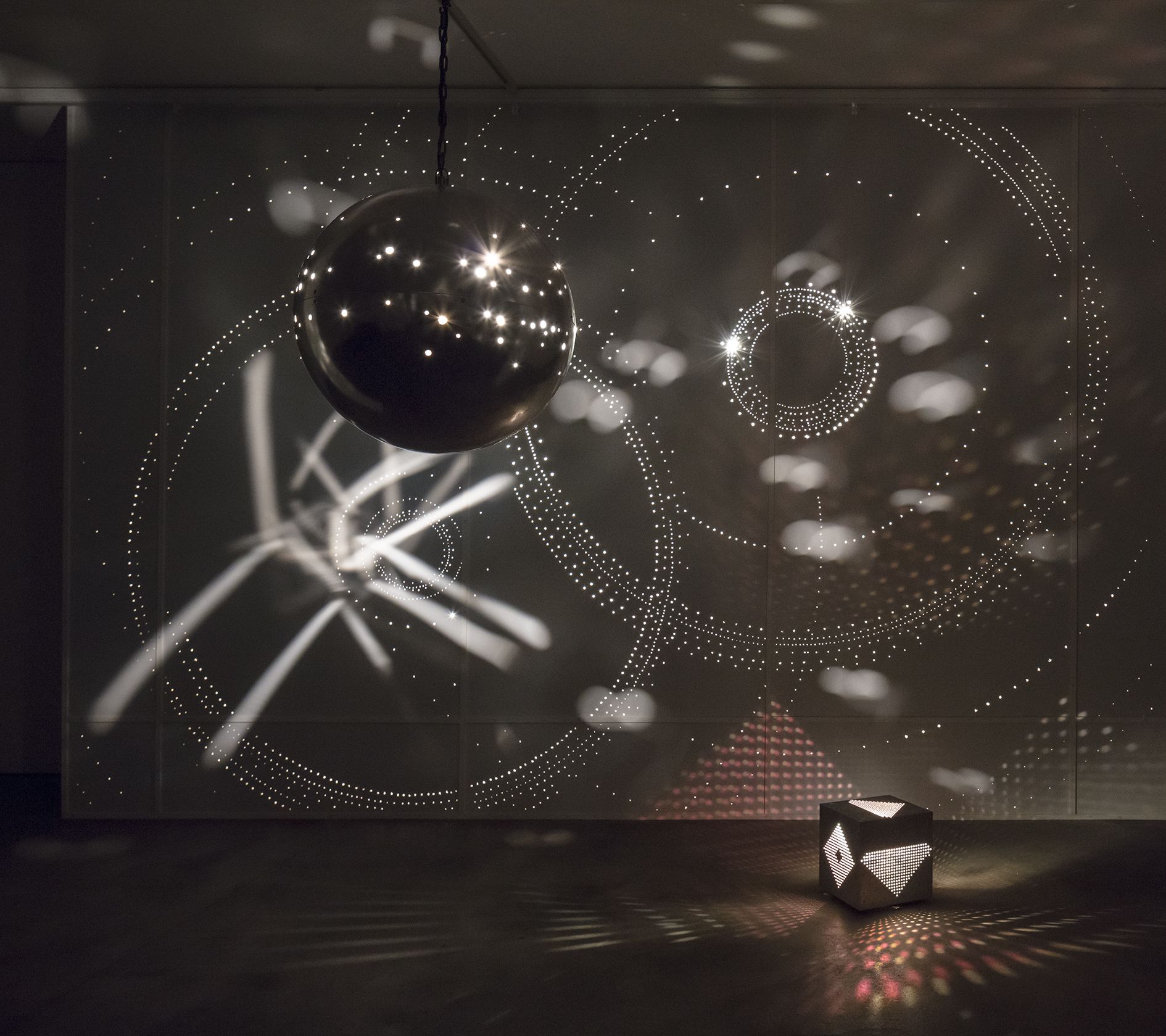
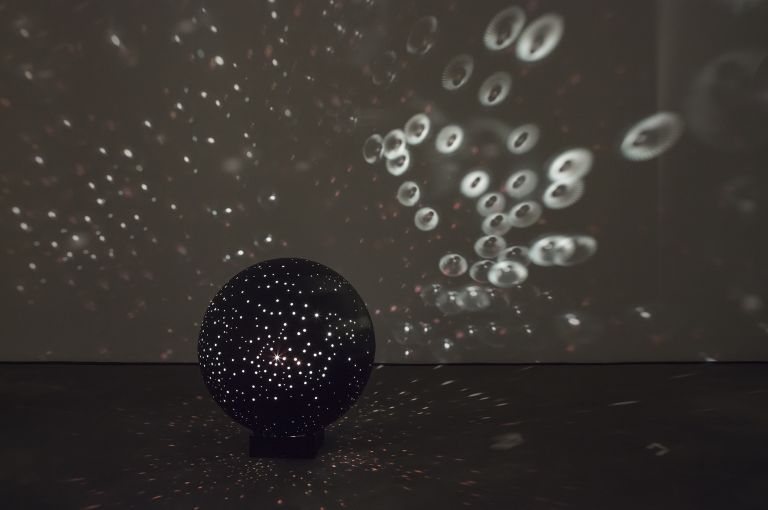
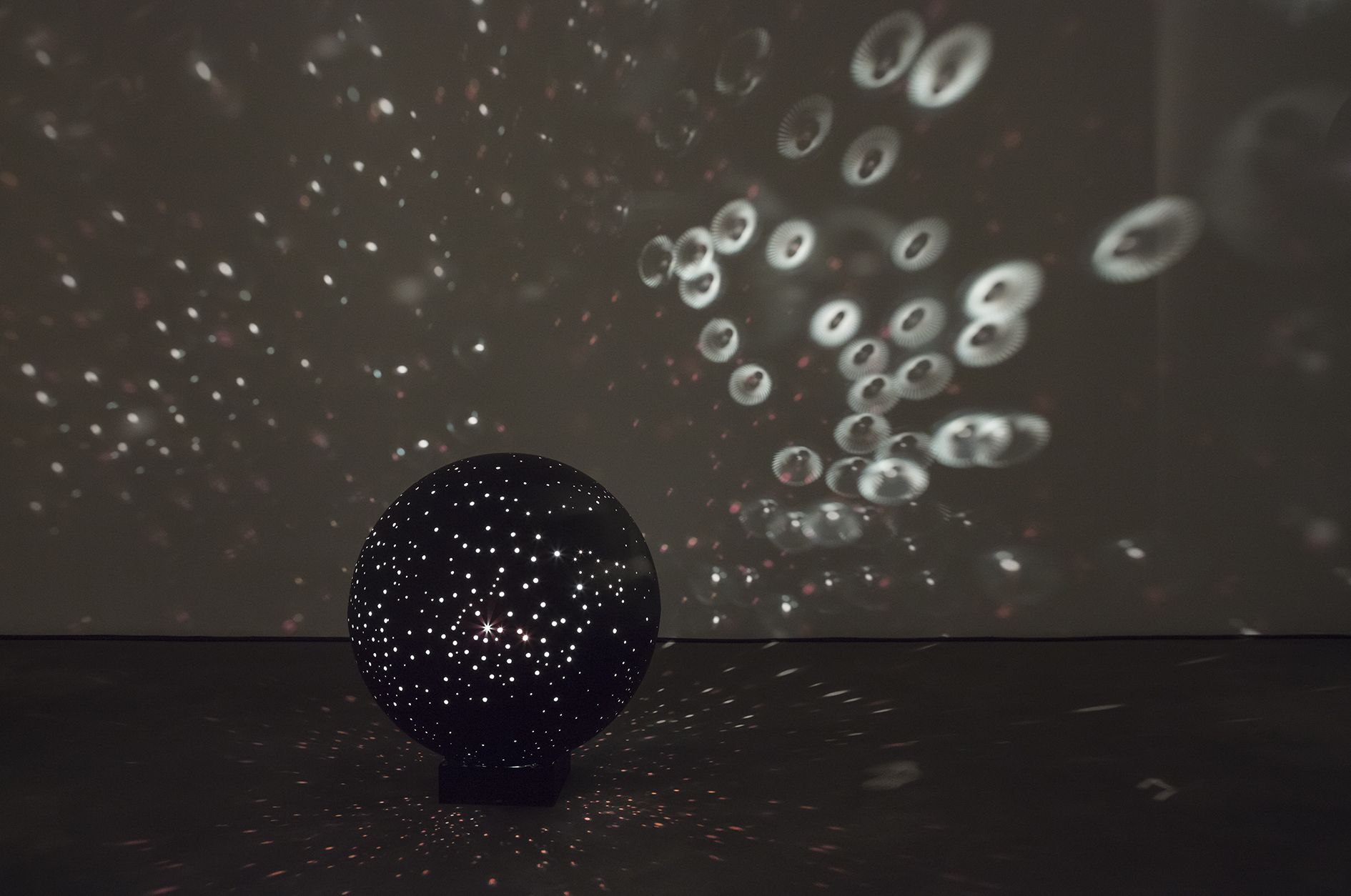
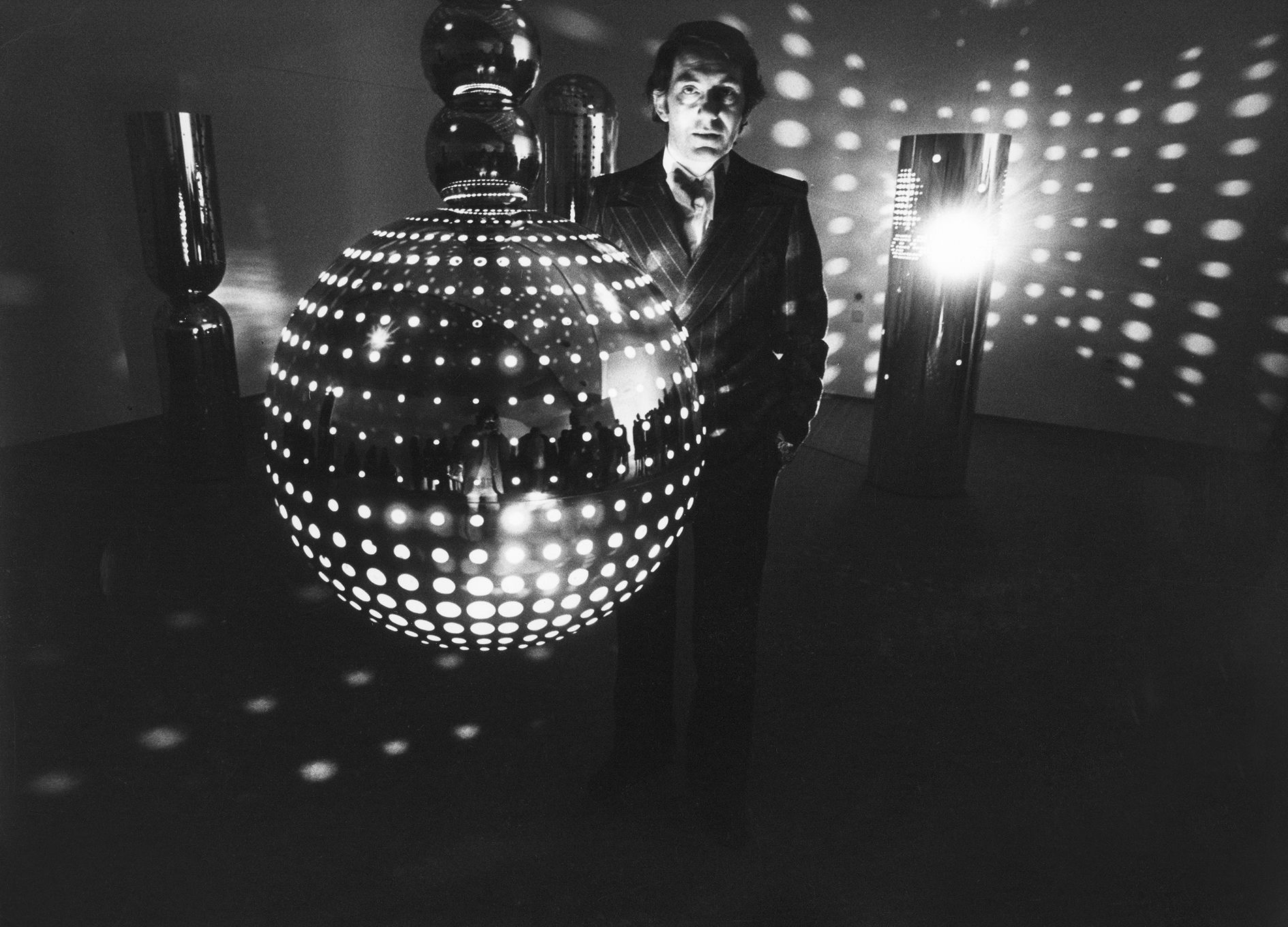
For the inaugural edition of Art Basel Qatar, Sprüth Magers presents the striking light installation Light Room with Mönchengladbach Wall (1963–2013). In Light Ballets like this one, Piene emerged as a choreographer of light, compelling it to “dance” across the space—initially by his own hand and later through sophisticated mechanical arrangements. His screens and stencils vary in size and intricacy; some can cover entire walls, while others are more modest spheres and cubes.


Otto Piene
Light Room with Mönchengladbach Wall, 1963–2013
One light wall and six light objects, cardboard, wood, aluminum, motors and light
Dimensions variable

Otto Piene
Light Room with Mönchengladbach Wall, 1963–2013
One light wall and six light objects, cardboard, wood, aluminum, motors and light
Dimensions variable

image/svg+xml
Details

Otto Piene
Light Room with Mönchengladbach Wall, 1963–2013
One light wall and six light objects, cardboard, wood, aluminum, motors and light
Dimensions variable

Otto Piene
Light Room with Mönchengladbach Wall, 1963–2013
One light wall and six light objects, cardboard, wood, aluminum, motors and light
Dimensions variable

Details
icon_fullscreen
1 of 1

Through these punctured surfaces, singular light sources fragment into multiple luminous points, their scale modulated by the distance between bulb and perforated screen. The resulting illumination achieves an omnidirectional quality, migrating from one wall to the next and bathing the entire room in evolving patterns of perpetual transformation, both in clarity and scale. Timers regulate the gradual emergence and recession of light sources, generating an atmospheric environment that oscillates between near-total darkness and spectacular radiance.


Otto Piene
Light Ballet
Exhibition video, Sprüth Magers, Berlin, April 29–June 10, 2017


Otto Piene
Light Room with Mönchengladbach Wall, 1963–2013 (detail)

Otto Piene
Light Room with Mönchengladbach Wall, 1963–2013 (detail)

image/svg+xml
Details

Otto Piene
Light Room with Mönchengladbach Wall, 1963–2013 (detail)

Otto Piene
Light Room with Mönchengladbach Wall, 1963–2013 (detail)

Details
icon_fullscreen
1 of 1

The artist’s deep interest in light and shadow was informed and complicated by his experience in a German air defence unit at the age of sixteen during World War II. Piene witnessed the sky altered by searchlights, smoke and fire into a scene of fear and violence, leaving a lasting impression of technology as a tool of warfare.


“The end of the war, I supposed, was also the end of all perils, and I made a detour to see the sea for the first time in my life. At noon I walked from the east up toward the dike and then through a gate: there it was, sparkling like quicksilver, pure light on the water surface, a blinding breathing coldhot [sic] plane.” –Otto Piene1

Otto Piene
Light Room with Mönchengladbach Wall, 1963–2013 (detail)

Otto Piene
Light Room with Mönchengladbach Wall, 1963–2013 (detail)

image/svg+xml
Details

Otto Piene
Light Room with Mönchengladbach Wall, 1963–2013 (detail)

Otto Piene
Light Room with Mönchengladbach Wall, 1963–2013 (detail)

Details
icon_fullscreen
1 of 1

Seeking to employ light as a source of renewal—and mitigating its potential destructive forces—the artist conceptualized Light Ballets as a way of “painting with light.” The immersive Light Room with Mönchengladbach Wall reconfigures the white cube into a cosmic expanse, where constellations of lights and shapes orbit around the viewer.


The installation embodies the explicitly positive ethos that permeates Piene’s œuvre: art should contribute to cultivating a peaceful and sustainable world—a hopeful vision of interconnectedness that remains profoundly relevant in a world fraught with conflict.

Otto Piene at Kölnischer Kunstverein, Cologne, Germany, 1973/74
Photo: Adolf Clemens
 
Sources cited:
1. Otto Piene, “Light Ballet,” in Piene: Light Ballet (New York: Howard Wise Gallery, 1965); quoted in Ante Glibota, Otto Piene (Villorba: Delight, 2011), 533.

Otto Piene at Kölnischer Kunstverein, Cologne, Germany, 1973/74
Photo: Adolf Clemens


Sources cited:
1. Otto Piene, “Light Ballet,” in Piene: Light Ballet (New York: Howard Wise Gallery, 1965); quoted in Ante Glibota, Otto Piene (Villorba: Delight, 2011), 533.


Otto Piene
Art Basel Qatar
February 5–7, 2026
Private View: February 3–4